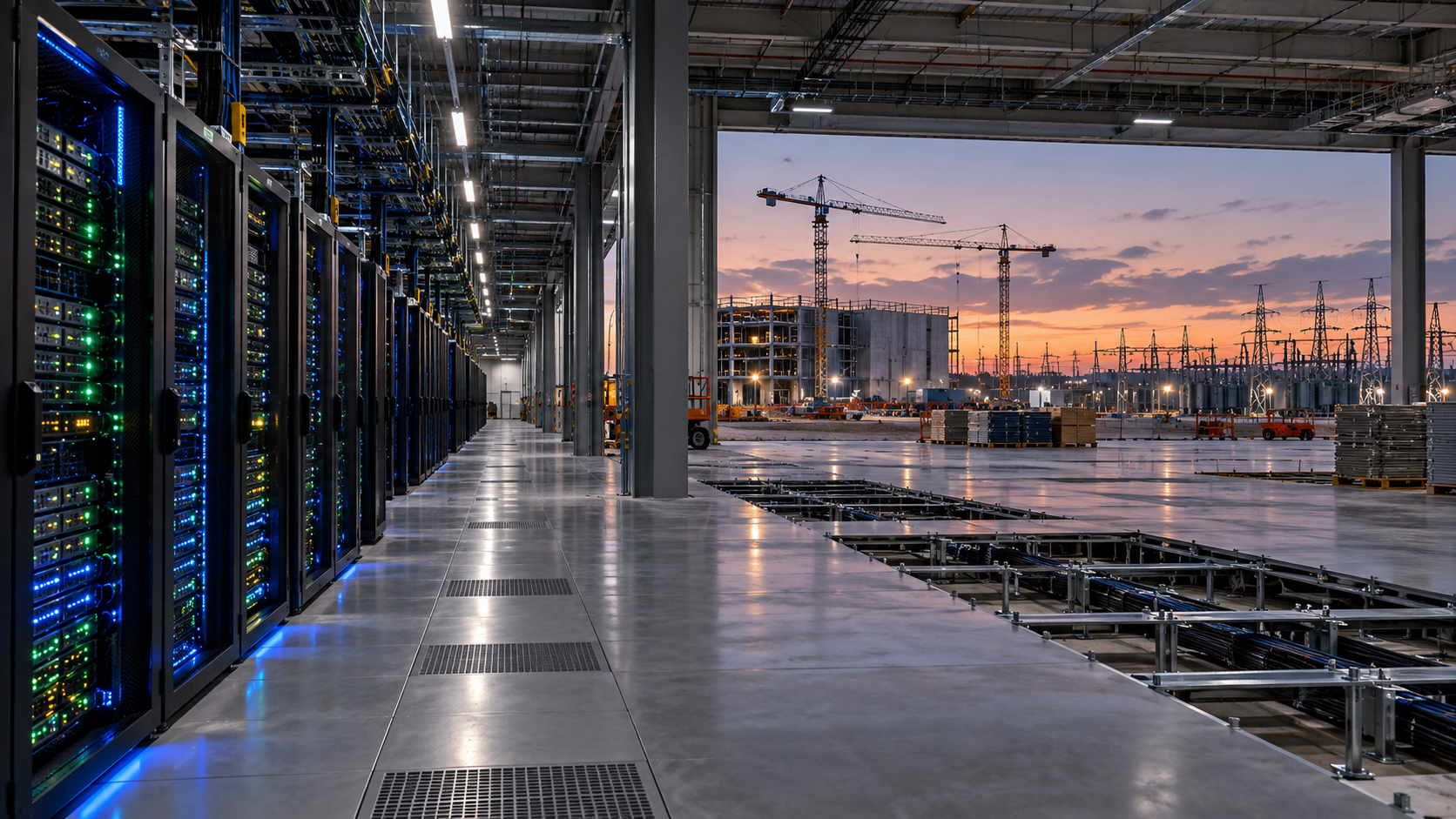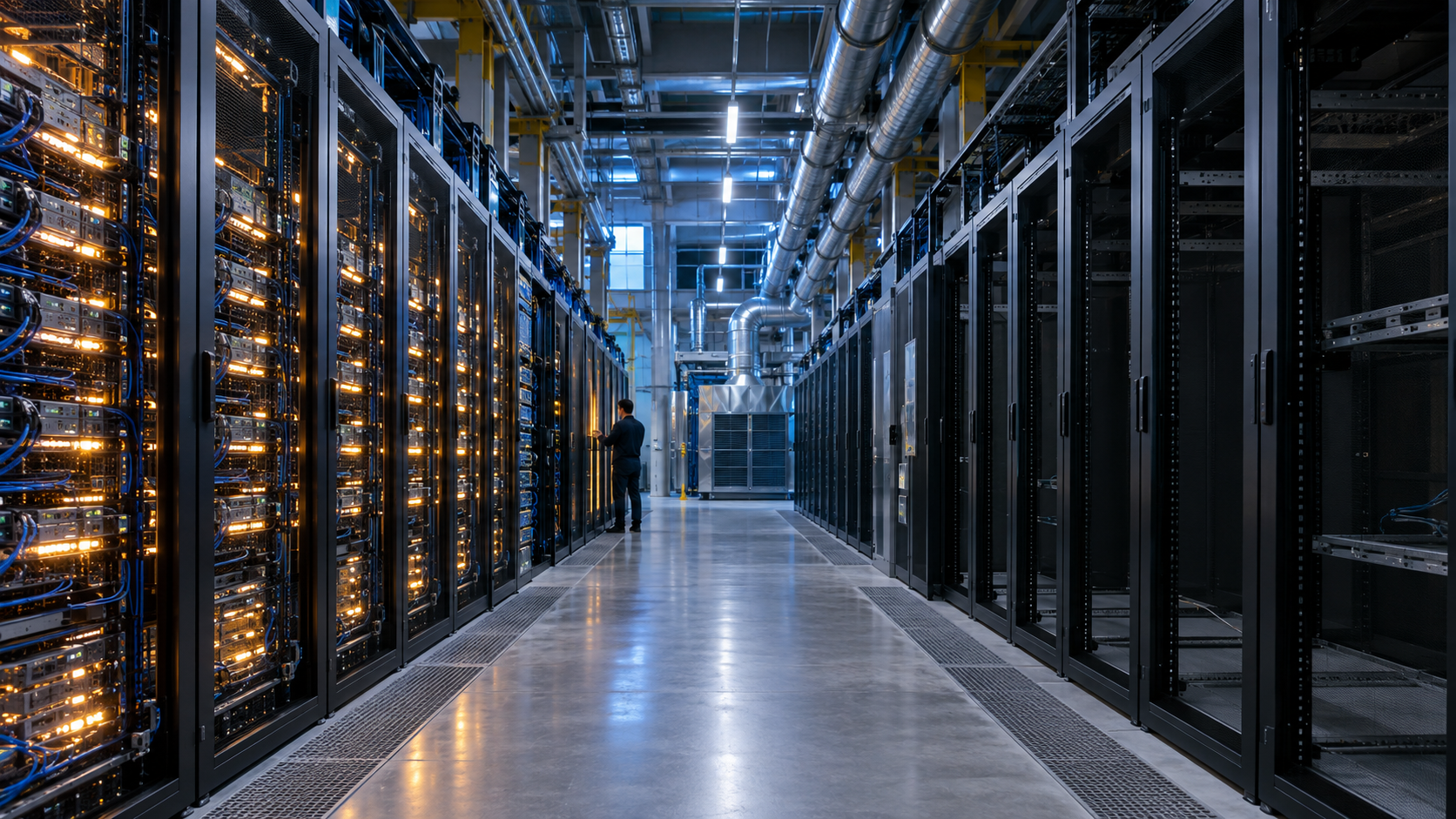
The popular story of the AI business starts with model quality and ends with subscription revenue. Between those two points sits the part that determines whether the economics work: inference infrastructure. Every answer must be scheduled onto scarce hardware, moved through memory, delivered within a latency budget, and priced before its true demand pattern is known.
That makes AI inference look less like conventional software and more like a capacity business. The closest analogies are airlines, electricity grids, and cloud infrastructure: industries where a costly asset must be installed in advance, demand varies by hour, and unused capacity cannot be stored for later sale. A token not generated during an idle minute is not inventory. It is revenue that the hardware will never recover.
This distinction is easy to miss because the user interface still looks like software. There is an input box, an API, and a monthly bill. But underneath, the operator is making physical bets about accelerators, networking, power, cooling, memory, and geographic placement. NVIDIA's own data-center portfolio shows how much of the proposition now extends beyond an isolated chip. Specialist work from SemiAnalysis likewise treats cloud total cost, networking, datacenter capacity, and token economics as connected layers.
Utilization is the hidden income statement
Consider two inference providers with identical hardware and model weights. One serves steady batch-processing workloads that tolerate flexible completion times. The other promises instant responses to consumers whose usage spikes after product launches and during working hours. The first operator can fill gaps, batch requests, and run hardware near an efficient frontier. The second must reserve headroom for peaks while paying for that capacity during quiet periods.
Their cost per useful response will diverge even before accounting for software quality. Latency is not a cosmetic product setting; it is a capacity reservation. Long context is not merely a premium feature; it changes memory pressure and scheduling. Generous rate limits are not just customer friendliness; they are an option granted to users against infrastructure the provider must hold ready.
This is why headline token prices reveal less than they appear to. A low price can reflect genuine systems advantage, an attempt to seed demand, excess capacity seeking any workload, or a subsidy from another business line. A high price can reflect scarcity, differentiated quality, or poor utilization. Without knowing load factors and service commitments, the tariff is not the unit economics.
The product can improve the infrastructure
Capacity businesses are not condemned to commodity margins. They become attractive when product design actively shapes demand. AI companies can offer lower prices for asynchronous jobs, create reserved-capacity contracts, route flexible work across regions, cache repeated computation, and use smaller models for requests that do not merit frontier reasoning. Each choice converts erratic demand into a workload that infrastructure can serve more efficiently.
The strongest product teams will therefore treat model routing and experience design as financial instruments. Asking a user whether a task is urgent sounds like interface copy; operationally, it creates a scheduling class. Letting a research job complete overnight gives the system permission to consume stranded capacity. Providing an explicit quality setting can prevent expensive reasoning from being spent on work where speed matters more.
There is also a portfolio effect. A provider serving interactive chat, background document processing, code review, and scheduled enterprise workflows may smooth demand better than one serving a single viral application. Diversity is valuable when workloads peak at different times and tolerate different delays. The infrastructure earns more because the product mix keeps it busy.
Demand quality matters more than demo traffic
The strategic error is to confuse usage with bankable demand. A spectacular demo can generate a flood of requests while revealing little about whether customers will pay enough, stay long enough, or accept operational constraints. Capacity must often be contracted before that uncertainty resolves.
Good demand is repeatable, forecastable, and connected to economic value. An automated claims workflow used every weekday is more financeable than millions of curiosity prompts after a launch. A coding system embedded in a release process is more predictable than a novelty image feature. Enterprise contracts matter not only because their prices may be higher, but because committed usage makes infrastructure planning less speculative.
For buyers, this framing suggests a better diligence checklist. Ask a vendor how it handles peak load, what happens when a preferred model is unavailable, whether quality changes under congestion, and which workloads are routed to cheaper models. Ask whether quoted latency is typical or reserved, and whether data residency fragments the provider's capacity pool. These questions reveal the operational business behind the polished API.
For builders, the lesson is sharper: model intelligence is only one source of advantage. Scheduling, batching, quantization, caching, routing, procurement, and demand design compound quietly. A competitor can access similar weights and still operate a radically better business.
AI may continue to be sold with software language, but its margins will be earned in machine rooms and queueing systems. The companies that understand this will design demand alongside supply. The ones that do not may discover that impressive revenue growth can coexist with very expensive empty racks.
Advertisement