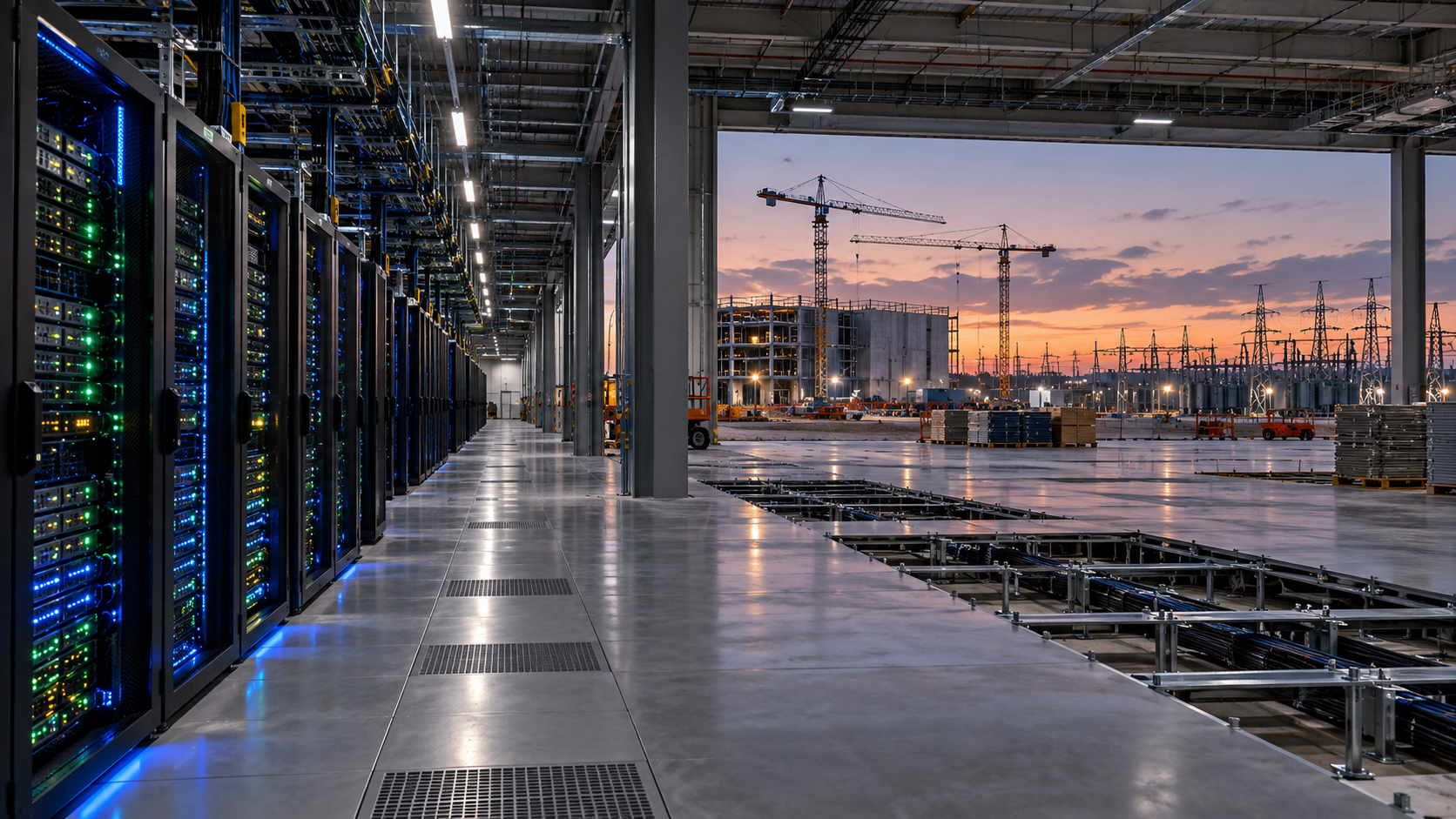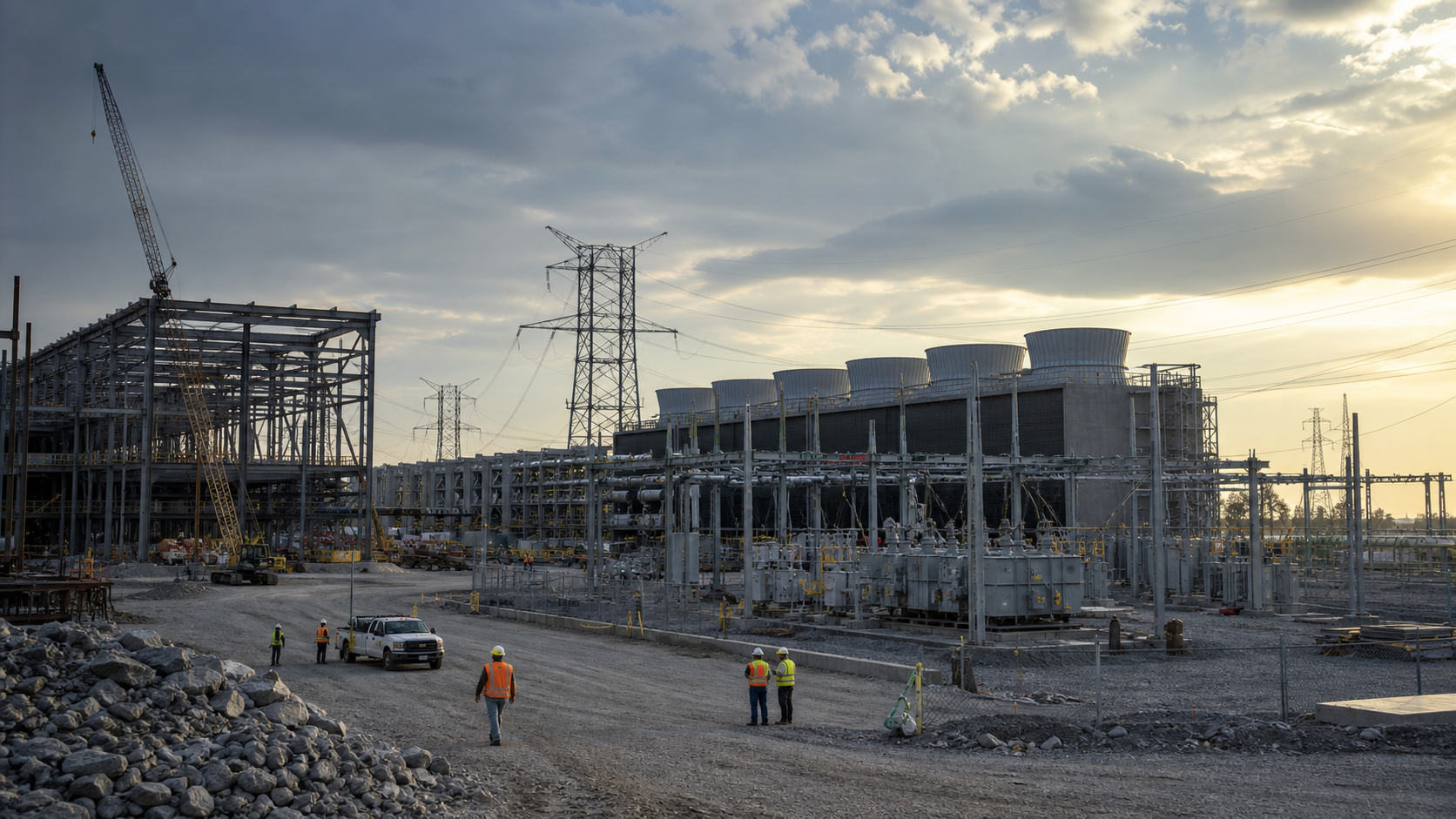
The AI industry prefers to narrate itself as a contest of ideas. Better architectures, better post-training, better products, better talent density. That story is not wrong, but it is incomplete in a way that now matters commercially. AI is becoming an infrastructure business with a software front end. Read a month of announcements from the OpenAI newsroom, the Anthropic newsroom, or Google DeepMind's blog and you can feel the pace of model competition. What you do not see as clearly in the product rhetoric is the physical substrate making those promises expensive: chips, networking, power, cooling, land, and the balance-sheet confidence to commit before demand is fully legible.
Compute Has Left the Lab
For years, compute was framed mainly as a research advantage. Bigger training runs created better frontier systems, and that was the heart of the story. Now inference has become just as strategic. Once a company offers low-latency reasoning, persistent agents, voice, image generation, coding workflows, or enterprise automation at scale, it has converted technical ambition into operating commitments. Every product promise implies concurrency patterns. Every generous usage tier implies load assumptions. Every glossy demo drags behind it a question about throughput under real demand.
That changes what it means to compete. The relevant capability is no longer only intelligence per token. It is intelligence delivered reliably, at an acceptable latency, with enough margin left to keep growing. The winning company is not simply the one with the smartest model in a lab condition. It is the one that can translate capital expenditure and procurement discipline into a durable service. Siting, utility relationships, cooling design, hardware mix, and capacity planning stop being background operations. They become product determinants.
This is why so much AI commentary still sounds one layer too abstract. Debates over open versus closed weights matter. Debates over consumer versus enterprise go-to-market matter. But those debates sit on top of a physical base that increasingly shapes the viable strategy space. Inference-heavy features such as autonomous agents, long-context workflows, and multimodal interaction do not merely increase model sophistication. They create burstier, harder-to-predict demand. If a company wants to sell autonomy, it also has to sell readiness for spikes. Bursts are not a metaphor. They are power draw, scheduling pressure, and queue management.
Capital Discipline Is Product Strategy
Traditional software companies like to imagine a clean separation between engineering and finance. In AI, that separation is dissolving. Routing a task to a cheaper model, constraining context length, caching aggressively, batching requests, distilling capabilities, or degrading gracefully during heavy load are not back-office optimizations. They are core product choices. User experience now includes what happens when the expensive path is unavailable, which requests get priority, how quality varies by tier, and whether the system stays trustworthy when the cost profile gets ugly. A pricing page is increasingly a queueing policy written in marketing language.
This reality also sharpens strategy for everyone outside the frontier labs. Many companies should stop pretending they are model platforms in waiting. Most will not win by financing their own compute narrative. They will win one layer up, by owning workflow, trust, compliance knowledge, or distribution inside a vertical market. Buying access to frontier models is not a weakness if your real moat lives elsewhere. For a studio like XioX, that distinction matters. The opportunity is not to imitate datacenter economics on a smaller budget. It is to convert model capability into business systems that solve expensive problems without inheriting every expensive layer of the stack.
Investors, meanwhile, eventually separate demo charisma from infrastructure competence. The sector has already normalized giant partnerships, supply agreements, and strategic financing because the hidden dependency is no longer hidden. Intelligence at scale is bounded by watts, cooling loops, and procurement lead times. The market may keep rewarding narrative spikes, but operating reality grades on a different curve. A company can dominate the week of a launch and still lose the year if it misprices demand or strands capital in the wrong form.
There is a policy implication here too. Local energy planning, water use, transmission capacity, and datacenter permitting are no longer peripheral to AI. They are part of the field's actual industrial footprint. Communities pushed to absorb that load will increasingly ask harder questions about jobs, tax arrangements, reliability, and environmental tradeoffs. The old software habit of acting weightless is becoming less available. Once substations and cooling towers enter the picture, the politics get grounded fast.
The next phase of AI will not belong only to the labs with the strongest demos. It will belong to the organizations that treat infrastructure as a design constraint instead of an embarrassing detail. That does not make the sector less interesting. It makes it more legible. AI is still software, but it is software whose strategic center of gravity is moving steadily toward industrial discipline.
Advertisement