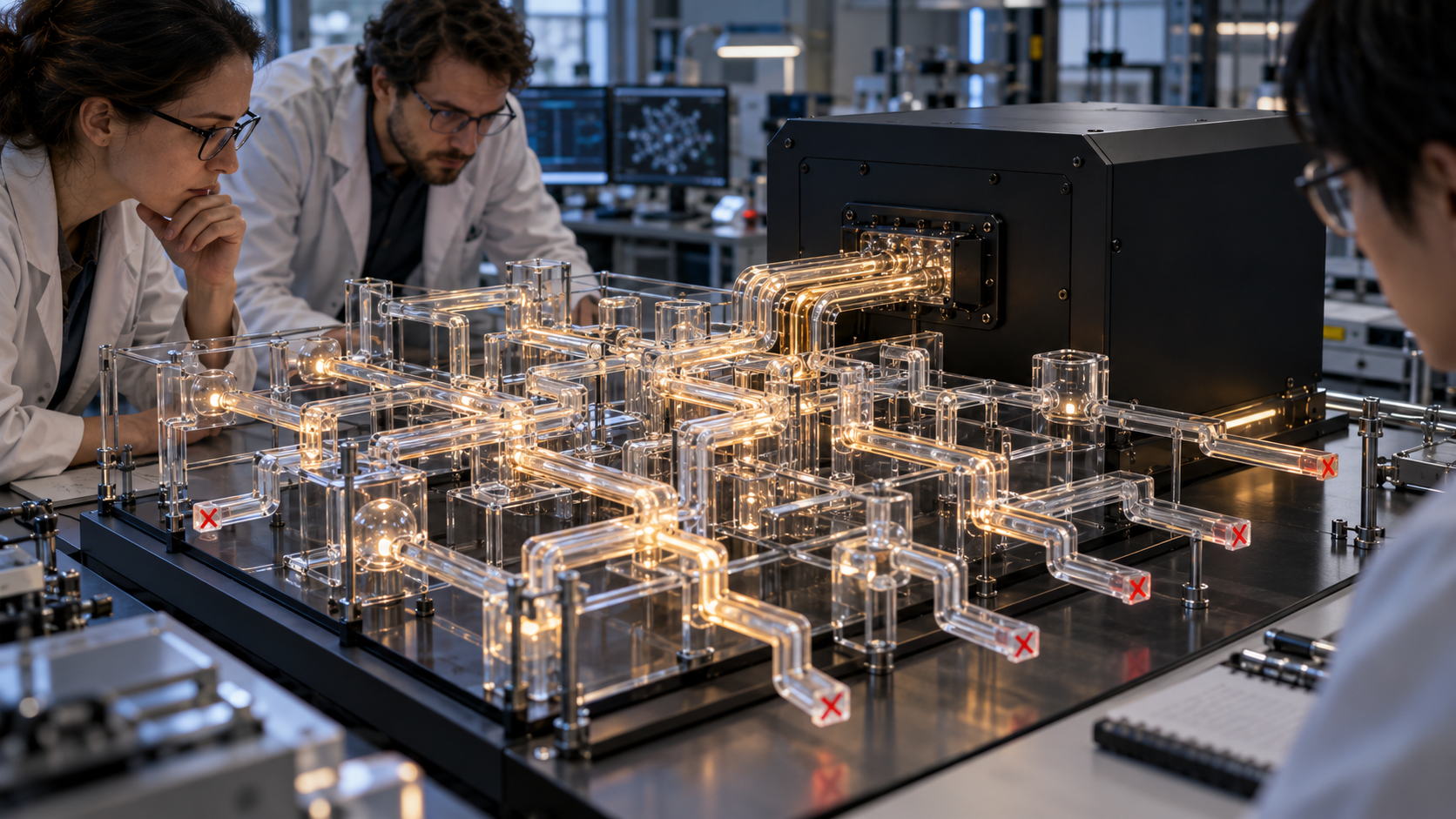
The shallow version of AI adoption is easy to recognize. A company buys coding assistants, writes a few optimistic internal memos, and expects output to rise while everything else stays the same. The backlog structure stays the same. The review process stays the same. The role boundaries stay the same. The planning cadence stays the same. Then leadership wonders why the expensive new tooling produced a burst of novelty but not a durable change in throughput or product quality.
The deeper version is less comfortable. AI does not just speed up tasks; it changes which tasks deserve senior attention and which tasks stop being economically important. That means AI-native teams will not look like slightly more efficient versions of the software teams we built for the last decade. They will have different bottlenecks, different expectations of engineers, and a different ratio between specification, generation, review, and integration.
You can see this shift emerging in the way major labs talk about productized AI work. The updates on OpenAI’s news page increasingly frame models as collaborators inside workflows, not just endpoints for prompt-response interaction. Anthropic’s newsroom shows the same pattern: the center of gravity is moving toward systems that participate in real work. Even outside the labs, coverage and research collected by places like MIT News’ AI topic page make clear that the practical question is no longer whether people can use AI, but how organizations must change when they do.
The New Bottleneck Is Judgment
In a pre-AI software team, the scarce resource was often implementation bandwidth. There were always more tickets than engineering hours, more one-off integrations than time to build them, more documentation debt than anyone wanted to own. In an AI-assisted team, raw implementation becomes less scarce. A good engineer with the right tools can generate draft code, test scaffolding, migration scripts, refactors, interface variants, and internal docs at a pace that used to require multiple contributors. That sounds like pure upside until you notice the bottleneck moving upstream and downstream.
Upstream, the scarce resource becomes specification quality. Vague tickets generate vague systems. Ambiguous acceptance criteria produce fast but untrustworthy output. If a team cannot describe what good looks like, AI will happily produce large volumes of plausible mediocrity. Downstream, the scarce resource becomes judgment: review quality, architectural coherence, operational safety, and the ability to tell when generated work is merely fluent instead of correct. Put differently, AI compresses typing time and expands the value of taste, verification, and decision-making.
This will change hiring and leveling. The engineer who thrives in an AI-native environment is not necessarily the person who can manually grind through the most tickets. It is the person who can frame a problem cleanly, decompose it into verifiable pieces, interrogate generated output, and know when to trust the machine versus when to override it. Seniority will increasingly mean leverage over system quality, not just possession of more implementation tricks. Teams that keep rewarding sheer volume without distinguishing between generated motion and validated progress will get noisier, not better.
Product management changes too. A PM who writes fuzzy requirements and relies on engineers to “figure it out” becomes a liability when generation is cheap. The organization needs sharper problem framing because sloppy framing now creates bad output faster. Design changes as well: interface exploration becomes cheaper, which means the strategic value of design shifts from producing artifacts to setting interaction principles, constraints, and quality bars. QA changes from mostly catching regressions late to participating earlier in scenario design and automated evaluation. The whole team becomes more specification-heavy and more review-intensive.
There is also a sequencing mistake many companies make. They deploy AI tools at the individual level before redesigning work at the team level. That produces isolated productivity gains but not compound advantage. One engineer gets faster at boilerplate; another drafts docs more quickly; a third automates test generation. Useful, but limited. The bigger gains come when the team redesigns interfaces between roles: clearer task briefs, smaller review units, structured evals for generated code, explicit escalation rules, better context packaging for agents, and a tighter connection between production incidents and future prompts or guardrails. AI leverage is organizational before it is personal.
XioX’s view is that the highest-performing AI-native teams will look more editorial than artisanal. They will still build, but they will spend a larger share of effort directing, curating, and validating streams of machine-generated work. That does not reduce the importance of engineering talent. It raises the bar for it. Weak teams will use AI to manufacture more output than they can responsibly absorb. Strong teams will use AI to widen the gap between intent and shipped quality in their favor.
This is why the “Will AI replace engineers?” framing is so dull. It asks the wrong unit of analysis. The interesting question is how many people a strong team can now support per high-judgment reviewer, how much faster architecture can evolve when implementation is cheaper, and which recurring coordination costs disappear when machines can handle the first draft of everything. Some roles will narrow, some will expand, and some routine work will become hard to justify economically. That is real change. But it is not best understood as simple replacement. It is a redesign of where leverage lives.
Companies that recognize this early will reorganize around decision quality, not prompt theater. They will treat AI as a force that rewrites team mechanics, not just a tool that trims hours off familiar tasks. Everyone else will keep buying faster keyboards for an operating model that has already started to expire.
Advertisement