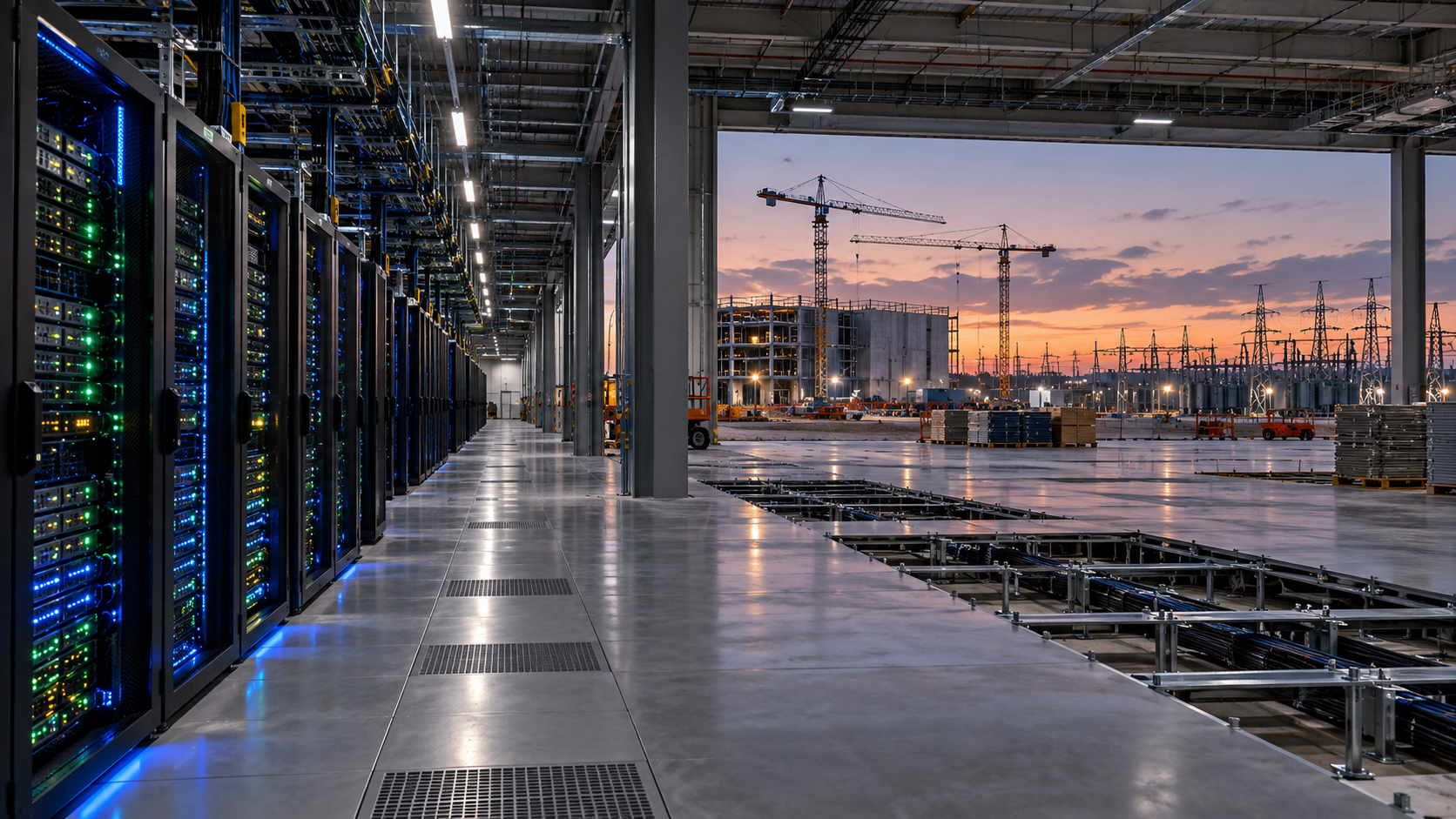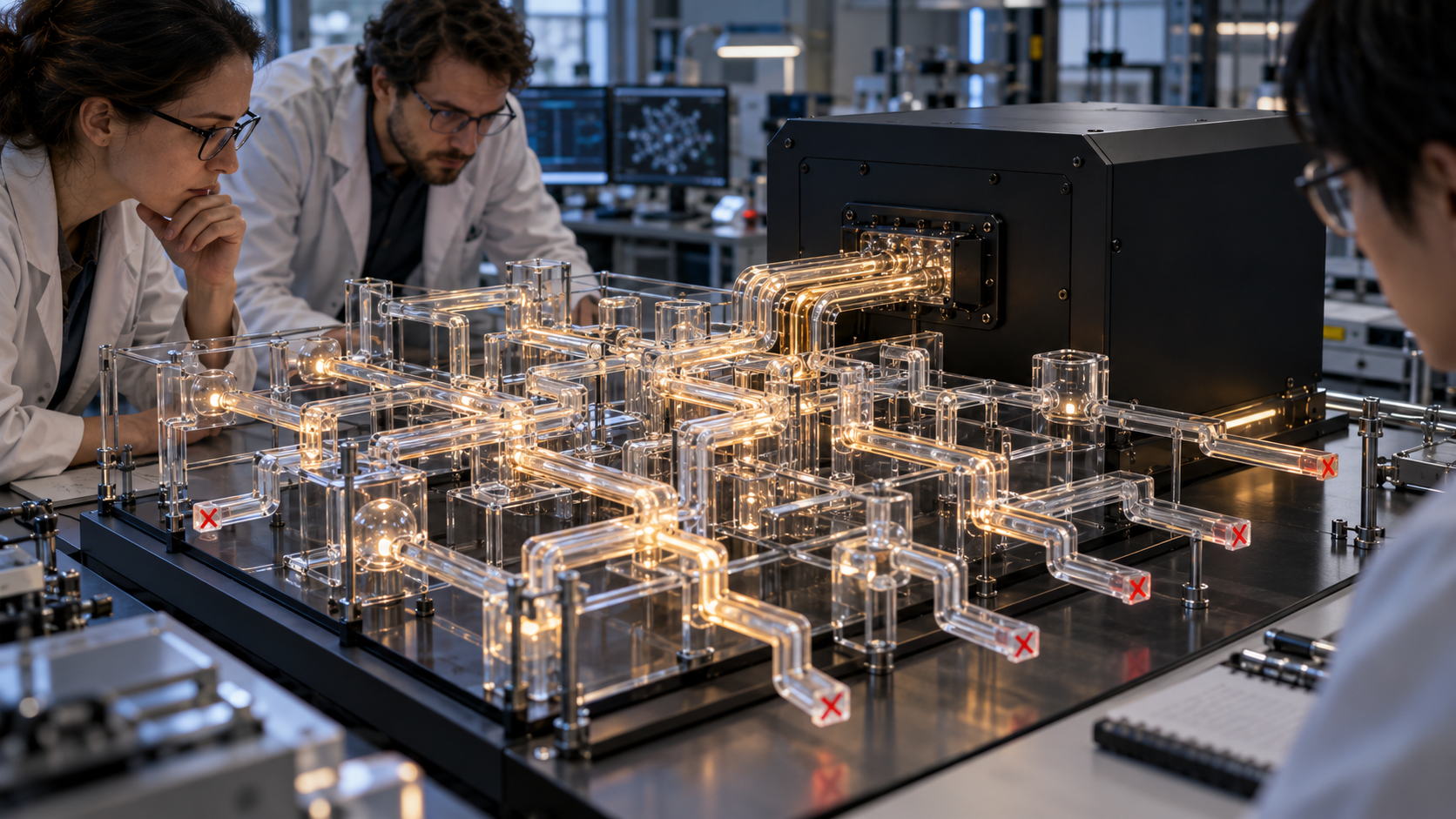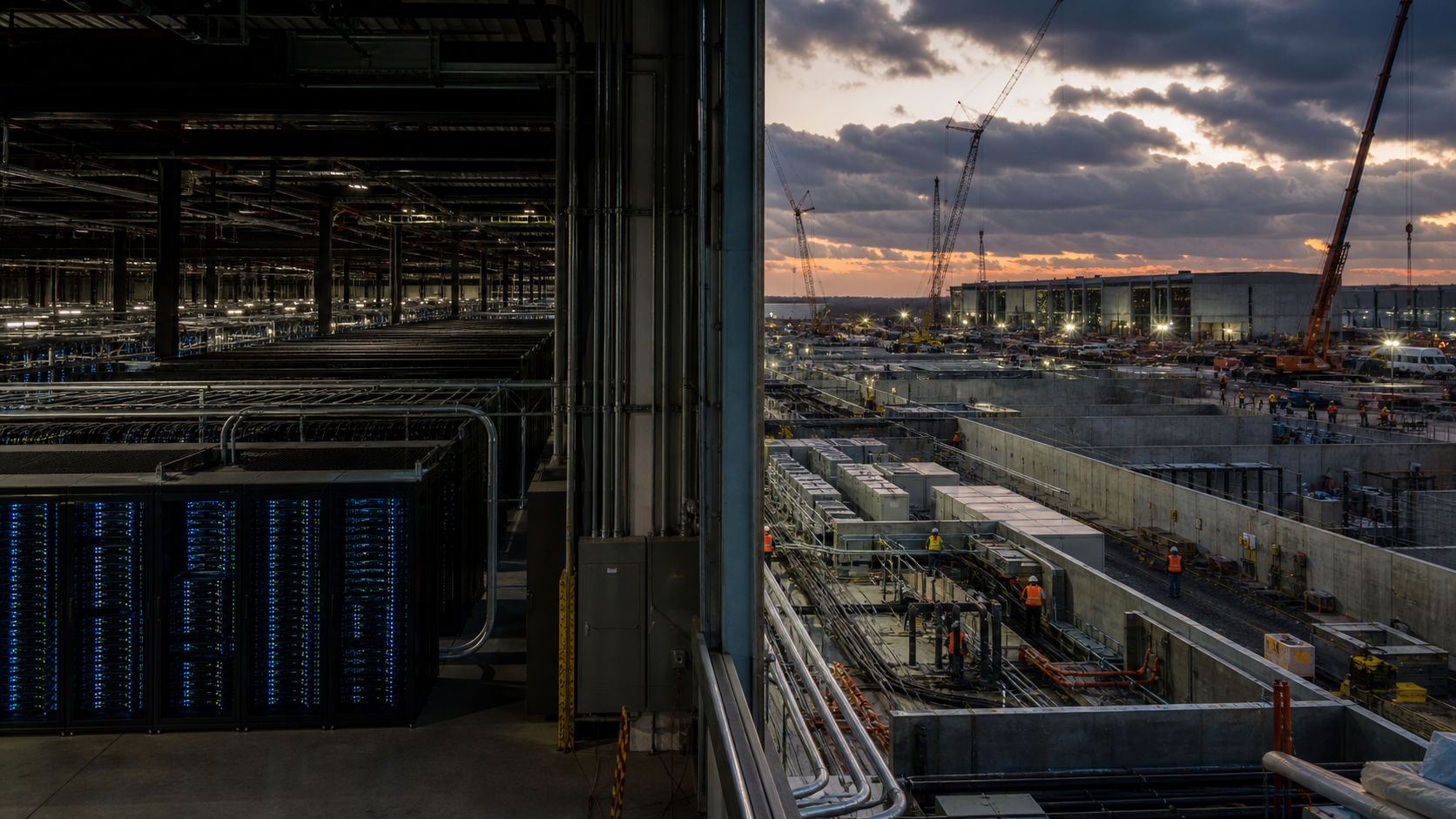
The AI industry likes to describe compute as if it were a liquid commodity: add capital, receive intelligence. The physical reality is slower and less forgiving. A modern AI campus is a negotiated stack of land, grid access, transformers, generation, cooling, networking, accelerators, construction labor, permits, and financing. Every layer runs on a different clock.
A model architecture can change between budget approval and ribbon cutting. A chip generation can alter rack density before the cooling plant is commissioned. The interconnection queue can outlast the useful life assumed in the financial model. The central business question is therefore not simply how much infrastructure to build. It is how much technological uncertainty a fixed asset can absorb.
Compute demand does not eliminate asset risk
The bullish case is easy to understand. The International Energy Agency’s Energy and AI report describes rapidly rising datacenter electricity demand and the growing contribution of accelerated servers. OpenAI’s Stargate announcement made the scale of industry ambition explicit: AI capacity is being planned through partnerships that span model developers, cloud operators, chipmakers, investors, and builders.
But strong aggregate demand does not guarantee that every asset earns an attractive return. Rail traffic can grow while the wrong rail line fails. Mobile data can surge while a spectrum buyer overpays. AI infrastructure will create similar divergences between strategically located, adaptable capacity and facilities designed around a narrow snapshot of current hardware.
The popular shorthand “a megawatt is a megawatt” obscures the problem. For AI workloads, the commercial value of power depends on when it is available, how reliably it can be delivered, what heat density the site can reject, how quickly network capacity can expand, and whether the building can accept the next system without major reconstruction. Nameplate capacity is not usable compute.
The depreciation schedule is an engineering opinion
Financial models turn construction costs into neat annual charges. Yet the assumed useful life of an AI facility is partly a judgment about technology. If future accelerators require different voltage distribution, liquid-cooling topology, floor loading, or network architecture, portions of a recently completed site may become economically obsolete before they become physically worn out.
This is why analysis of the sector increasingly descends below corporate capital-expenditure totals. Specialist work such as the SemiAnalysis datacenter research examines power, facilities, cooling, accelerator deployments, and cloud economics together. That integrated view is closer to reality than treating servers as one investment and the building around them as another.
There are at least three separate clocks to price:
- The accelerator clock, measured in short product generations and changing performance per watt.
- The facility clock, measured in years of design, construction, and operation.
- The grid clock, often measured in long planning, permitting, and interconnection cycles.
The winning projects will not make these clocks agree. They will create interfaces that limit the damage when the clocks diverge.
Optionality should be designed, not narrated
Developers frequently claim that a campus is “future-proof.” That phrase is usually marketing varnish. No facility can be proof against an unknown computing future. A more credible objective is affordable conversion.
Can electrical rooms accept new distribution equipment without taking an entire hall offline? Can the cooling system support a range of inlet temperatures and rack densities? Are network paths and cable trays accessible? Can unfinished shells be completed only after hardware requirements become clearer? Can power agreements accommodate a slower ramp without turning unused capacity into a punitive fixed cost?
These choices can appear inefficient because spare conduits, modular plants, redundant routes, and phased construction add cost before they add revenue. Yet they function like real options. Management pays a visible premium today to avoid a much larger forced decision tomorrow.
Contract structure matters just as much as concrete. The party that controls the site may not control the chips; the tenant may not control grid delivery; the financier may rely on a customer commitment whose economics assume falling inference costs. Risk does not disappear inside a partnership. It moves to the participant least able to renegotiate when assumptions fail.
Utilization will separate infrastructure from monuments
The industry conversation tends to celebrate capacity announcements because capacity is legible. Utilization is harder. It varies by workload, time, geography, software efficiency, and customer demand. It can also be disguised by internal transfer pricing or strategic workloads that would not justify the same expense in an open market.
Operators should report and manage a richer set of economics: time to energized capacity, deliverable rather than contracted power, accelerator availability, workload-adjusted utilization, cooling constraints, network bottlenecks, and revenue durability. None is a perfect metric, but together they reveal whether a site is productive infrastructure or an expensive symbol.
The local dimension also matters. The IEA emphasizes that datacenters can have concentrated effects even when their share of global electricity remains limited. A project competing for constrained power, water, or transmission capacity needs a social license as well as a utility agreement. Communities will reasonably ask what remains if the hardware ages quickly or the tenant leaves.
AI’s infrastructure buildout is real, necessary, and unusually ambitious. That does not suspend the laws of capital allocation. The best builders will behave less like speculators racing to pour concrete and more like platform engineers designing for change. In a market defined by rapid technical turnover, the most valuable feature of a datacenter may be its ability to become a different datacenter.
Advertisement