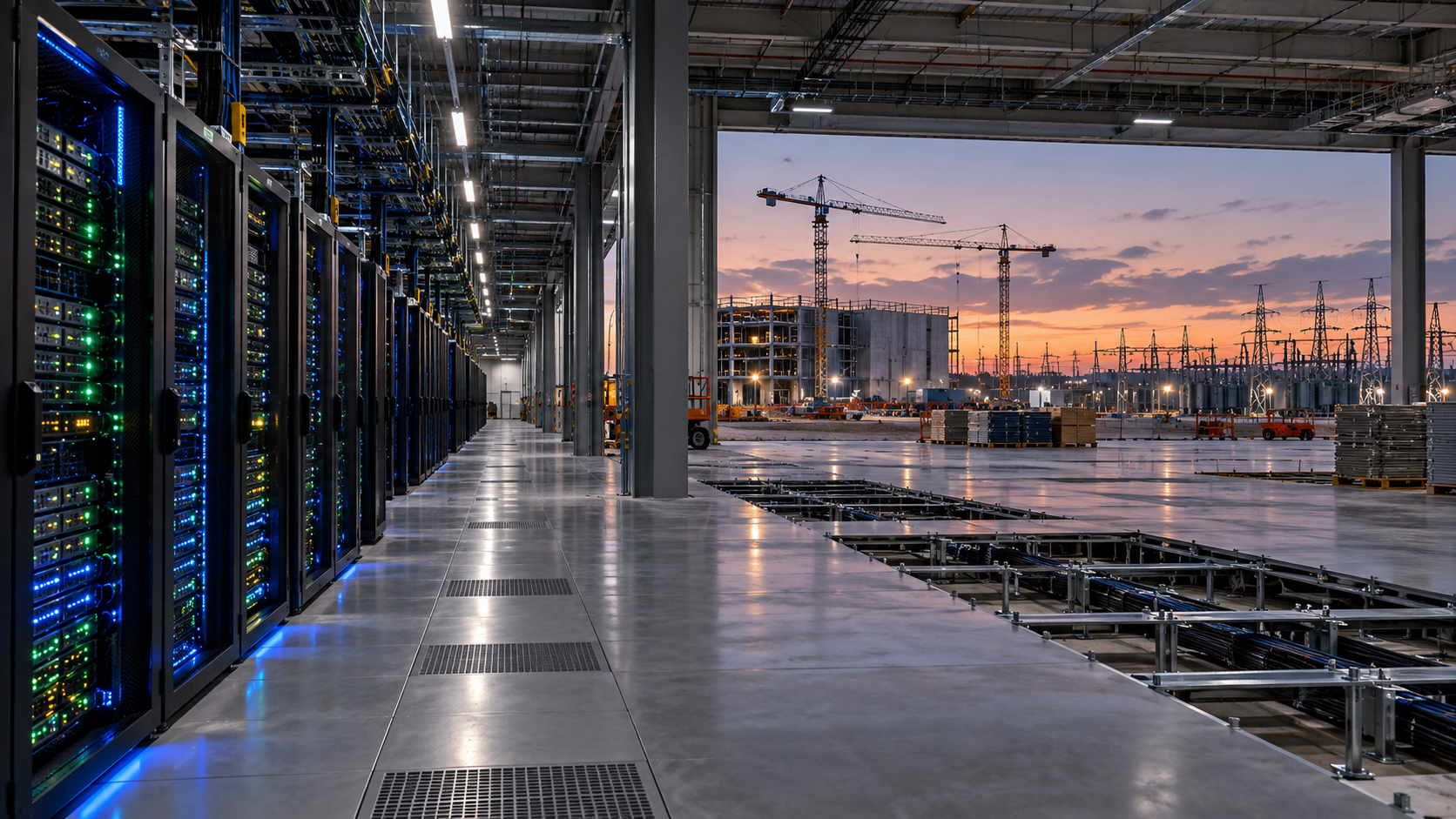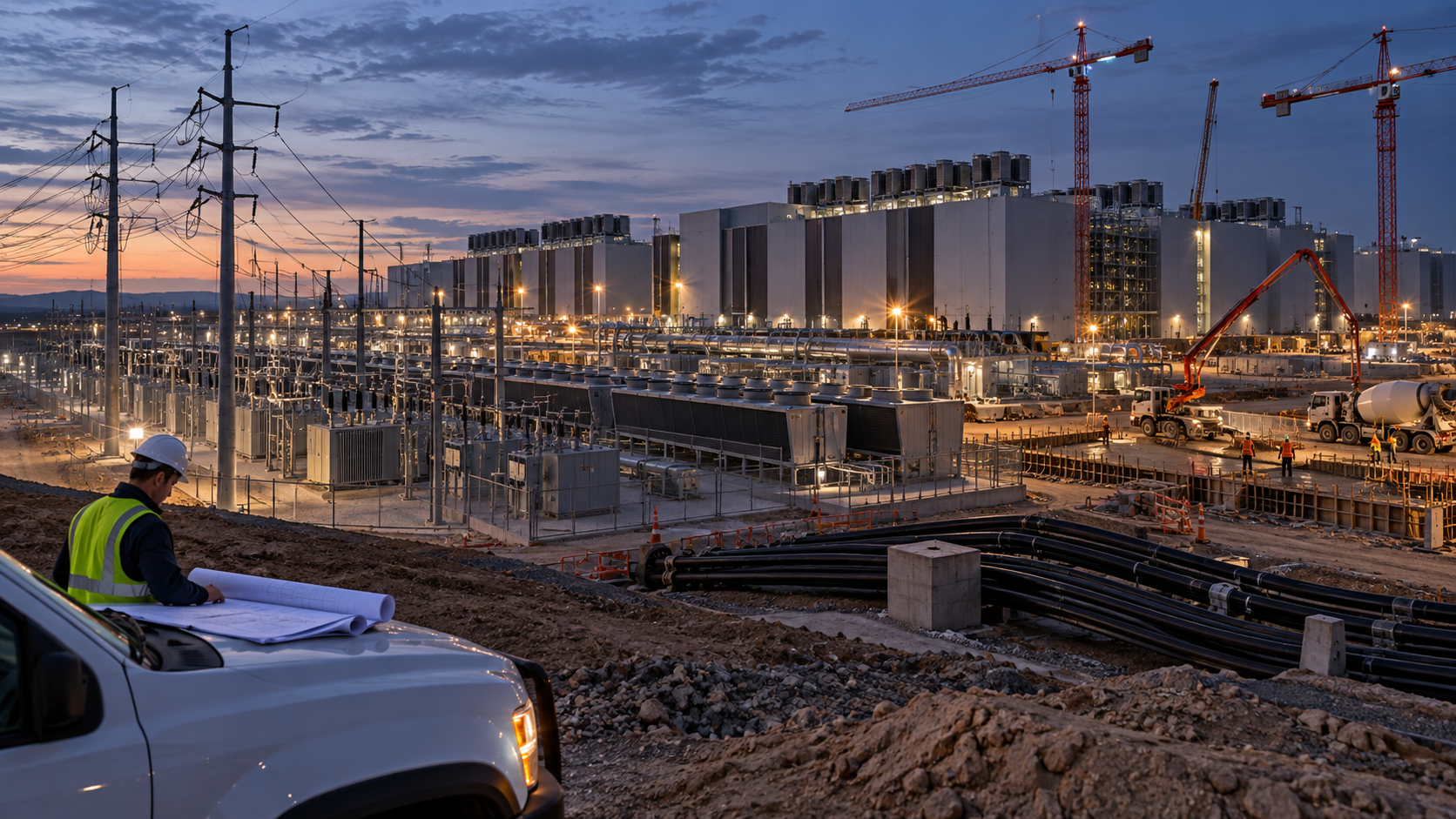
Software companies learned to prize optionality. Ship small, observe demand, and scale the parts that work. The physical buildout behind modern AI follows a different clock. Data centers take years to permit and construct. Power agreements, cooling systems, networking equipment, and specialized chips require commitments long before anyone knows which applications will justify them.
That mismatch is becoming the defining business tension of the AI industry. Demand is uncertain and fast-moving; supply is lumpy and slow. The companies placing infrastructure bets are not simply buying more servers. They are choosing a view of future workloads, model architectures, utilization rates, energy availability, and customer willingness to pay.
This makes AI less like conventional software and more like an industrial system wrapped in an API. The API conceals the concrete, substations, cooling loops, fiber routes, financing structures, and depreciation schedules beneath each generated token. Customers see a variable usage charge. Providers inherit a portfolio of long-duration commitments.
Utilization is the number beneath the narrative
The market tends to discuss AI capacity in terms of headline chip counts or capital expenditure. Those numbers are visually impressive but economically incomplete. The crucial variable is useful utilization: how much installed capacity is performing paid, valuable work at acceptable latency.
Training can absorb enormous clusters in concentrated runs. Inference is messier. Demand changes by hour, geography, model, context length, and service tier. Capacity reserved for peak traffic may sit idle. A newly launched model can make yesterday's hardware allocation awkward. Efficiency improvements can reduce cost per task while simultaneously encouraging customers to use more AI. The result resembles an airline network more than an infinitely elastic cloud.
Technical work such as the Chinchilla scaling study helped establish that model quality depends on choices about both compute and training data, not parameter count alone. The broader commercial lesson is that inputs are substitutable at the margin. Better algorithms, smaller specialized models, caching, quantization, and routing can sometimes create more usable capacity than another building. Infrastructure strategy therefore cannot be separated from research strategy.
The industry's specialist analysis increasingly treats compute as a supply chain rather than a magical commodity. SemiAnalysis has made this physical stack—accelerators, memory, networking, packaging, power, and data centers—central to understanding AI competition. That perspective should spread beyond investors. Product leaders need it too, because architecture choices now carry infrastructure consequences.
The cheapest token may be the most expensive strategy
A provider can lower unit prices to stimulate adoption, but aggressive pricing is not automatically evidence of superior economics. It may reflect temporary excess capacity, a bid for developer loyalty, a product subsidized by another business, or confidence that future optimization will repair today's margins. Buyers should welcome falling prices while remaining alert to the durability of the service beneath them.
The opposite mistake is treating every compute shortage as permanent. Hardware improves. Software extracts more work from hardware. Workloads migrate from frontier models to smaller systems once teams understand the task. Batch processing shifts demand away from peaks. A capacity plan based on today's inefficient application patterns can turn scarcity into surplus surprisingly quickly.
This is where contracts become strategic technology. Long-term chip purchases, energy agreements, cloud commitments, and customer reservations distribute risk across the ecosystem. A contract promising priority access may be more valuable than a nominally lower token price. A take-or-pay deal may stabilize supply while becoming painful if model efficiency leaps forward. The balance sheet is quietly becoming part of the AI product architecture.
Smaller AI companies should resist imitating the infrastructure posture of hyperscalers. Their advantage is not ownership of every layer. It is the ability to remain portable: evaluate several model families, separate application logic from provider-specific features, route workloads by economic value, and preserve the option to bring stable high-volume tasks onto cheaper infrastructure later.
That portability is not free. The lowest common denominator can erase useful model capabilities, while migration tests and observability require engineering effort. But dependence also has a price, and it becomes visible precisely when capacity is constrained or pricing changes. The right goal is not abstract vendor neutrality; it is bargaining power proportional to the importance of the workload.
AI's industrial phase will produce real economies of scale, but also real fixed costs and stranded-asset risk. The winners will not necessarily be those that build the most. They will be those that connect physical capacity to defensible demand, preserve room for technical change, and understand that every token is ultimately a claim on machinery, electricity, and time.
Advertisement