The AI industry talks about compute as though it were a single substance: acquire more of it, train a larger model, and capability follows. That framing suited the training race. It is much less useful for the business of serving millions of unpredictable requests. Inference is not merely smaller-scale training. It is a queueing, capacity-planning, and product-design problem in which idle accelerators and extravagant latency promises can quietly consume the margin.
This distinction matters because a training run has a beginning and an end. Production inference does not. Demand arrives unevenly. Prompts vary in length. Outputs expand one token at a time. Agents generate bursts of tool calls and follow-up reasoning. Hardware must be reserved for peaks even when the median hour is calmer. The commercially important question is therefore not, “How many accelerators does the company own?” It is, “How much valuable work can the company schedule through them without damaging the user experience?”
The expensive resource is reserved capacity
A GPU producing useful tokens is an asset. A GPU waiting for a request is inventory. A GPU blocked because one workload has an oversized context or strict latency target is a scheduling failure. The same physical machine can support radically different unit economics depending on batching, model architecture, quantization, cache policy, and the shape of customer demand.
That is why headline chip counts reveal less than they appear to. Hardware suppliers’ filings, collected on NVIDIA’s annual reports page, are valuable evidence of the capital flowing into data-center systems. They do not tell us whether every buyer will turn that capital into profitable inference. Purchasing scarce infrastructure and operating it efficiently are different competencies.
The analogy is not software-as-a-service but aviation. An airline does not win because it owns the most aircraft. It wins by matching routes, schedules, maintenance, pricing, and load factors to demand. AI operators face a similar problem, except their “passengers” have wildly different context windows, latency tolerances, and reliability requirements. A background document classification job can wait and batch. An interactive voice assistant cannot. Serving both through the same undifferentiated capacity pool is an invitation to overpay.
Product promises become infrastructure liabilities
Many AI products advertise one premium experience for every task: the strongest model, immediate response, long context, and generous usage. Each promise narrows the operator’s scheduling freedom. Low latency reduces batching opportunities. Long contexts enlarge memory pressure. Uncapped agent loops create uncertain demand. Defaulting to the largest model spends premium capacity on requests a smaller system could handle.
The next generation of defensible AI products will expose fewer of these infrastructure choices to users while making more of them internally. A request router can send routine work to a compact model, difficult work to a reasoning model, and asynchronous work to a discounted queue. Responses can be cached at semantic and prefix levels. Context can be retrieved selectively instead of repeatedly transmitted. Quality checks can escalate only uncertain cases. None of these techniques is glamorous, but together they determine gross margin.
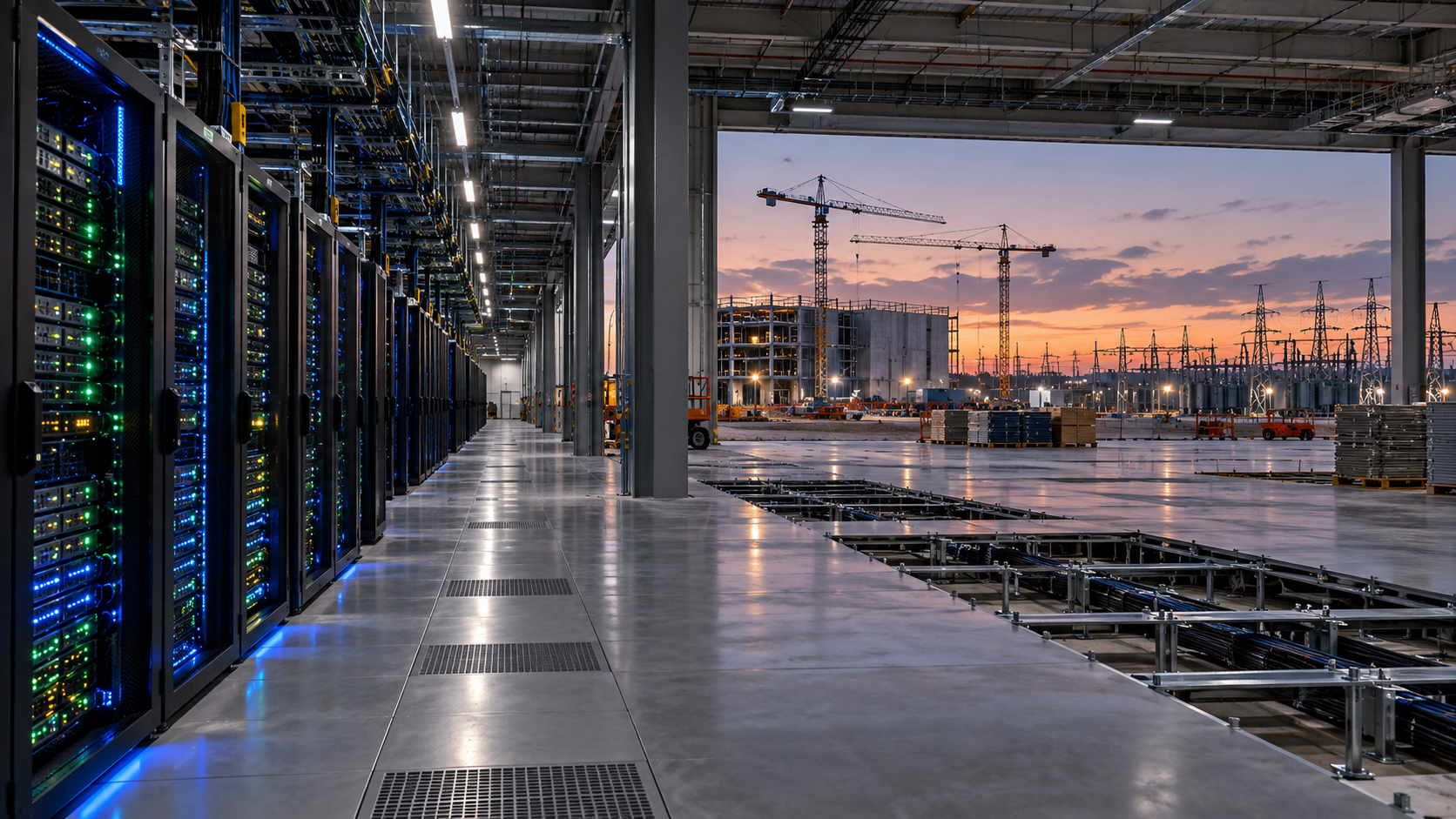
Energy and grid access make the problem physical. The International Energy Agency’s Energy and AI report describes data centers as significant, concentrated electrical loads and emphasizes the infrastructure needed to supply them. Chips can be manufactured and shipped; power generation, substations, transformers, cooling systems, and grid connections often move on slower timelines. An operator may possess accelerators that cannot be deployed where or when expected. The bottleneck is increasingly a chain of dependencies rather than one scarce component.
Efficiency gains do not guarantee lower spending
There is a tempting story in which more efficient models automatically solve the economics. They help, but efficiency frequently stimulates demand. Lower token costs make previously absurd applications plausible: persistent assistants, continuous document processing, large-scale synthetic data, and agents that attempt a task several times before returning an answer. When the price of a unit falls, product designers consume more units.
This means investors and customers should distinguish technical efficiency from expenditure discipline. A model may require fewer operations per response while the product generates far more responses per user. An agent may reduce employee effort while multiplying machine effort through planning, search, verification, and retries. The relevant metric is not cost per token in isolation. It is compute cost per successful business outcome.
That metric can produce uncomfortable findings. A cheaper model that creates more review work is expensive. A sophisticated agent that succeeds only after unpredictable retries may be hard to price. A premium model that resolves a case correctly on the first attempt can be economical. Token prices are ingredients, not the meal.
The winners will operate mixed fleets
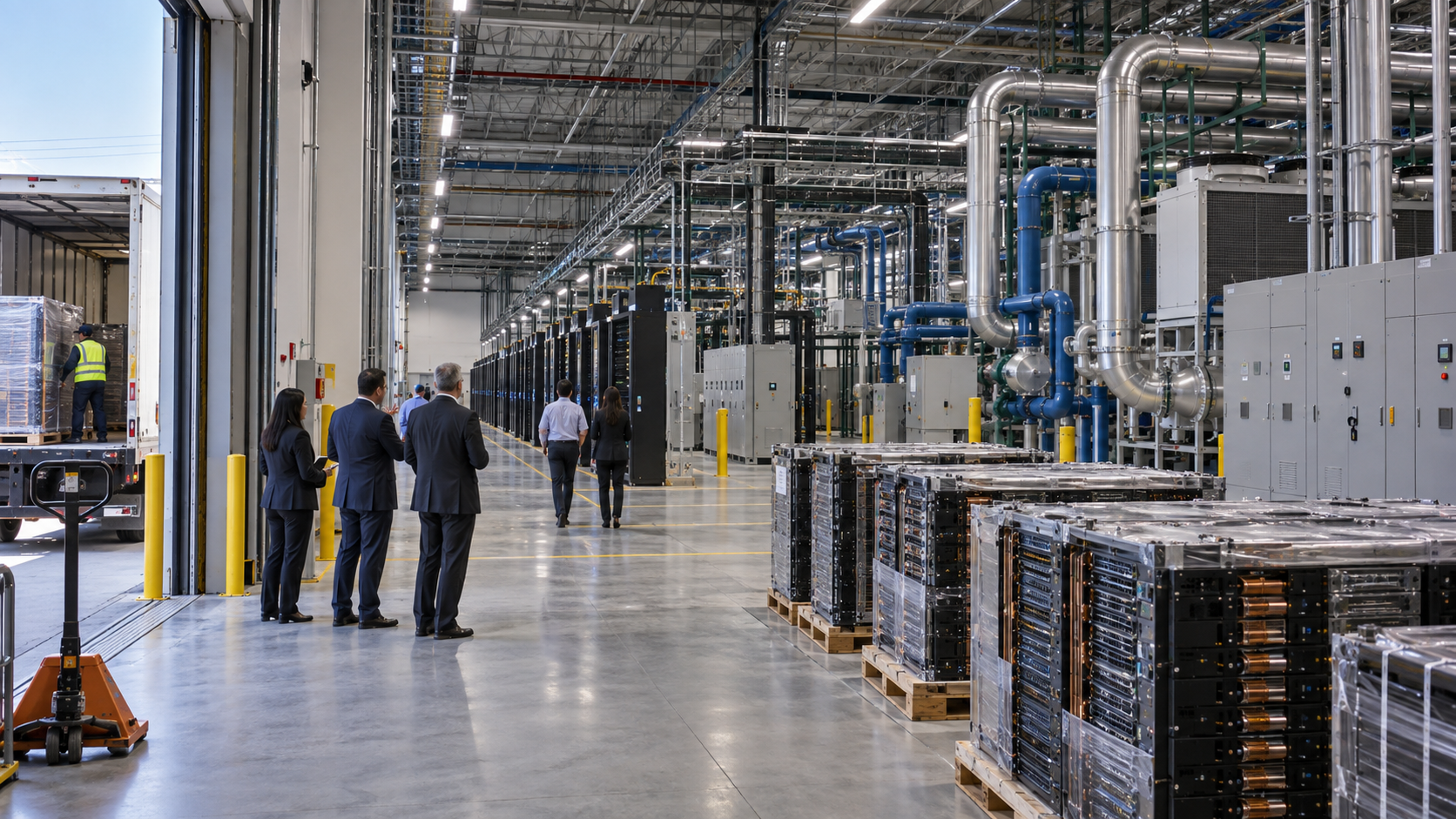
Companies should expect inference infrastructure to become heterogeneous. Different accelerators, model sizes, serving engines, and geographic regions will suit different workload classes. The operational advantage will come from moving work across that fleet without breaking quality guarantees. This is partly a systems problem and partly an organizational one: product teams must express what quality and latency a feature truly requires, rather than simply requesting the best available model.
At XioX, our view is that AI architecture reviews should now include an inference budget alongside the user journey. Teams should model peak demand, retries, context growth, fallback behavior, and human-review costs before declaring a feature economically sound. They should also design graceful degradation: smaller models during pressure, delayed completion for nonurgent work, and explicit limits on runaway agent loops.
The training race created the industry’s icons. The inference race will create its businesses. Its decisive work happens in schedulers, routers, cooling plants, procurement contracts, and product defaults—in the queue between a user’s request and a machine’s response. That queue looks like an implementation detail. Increasingly, it is the income statement.
Advertisement