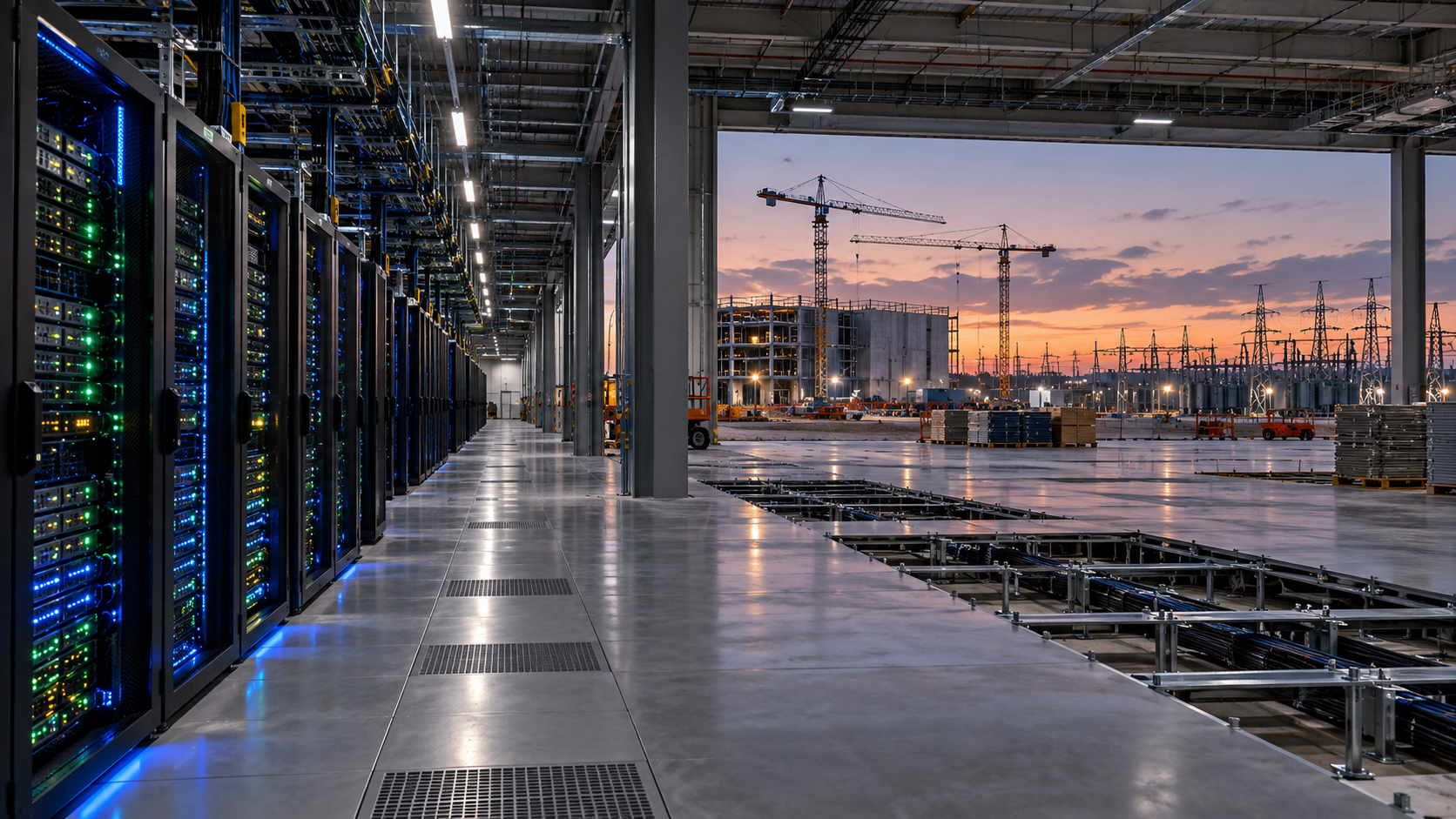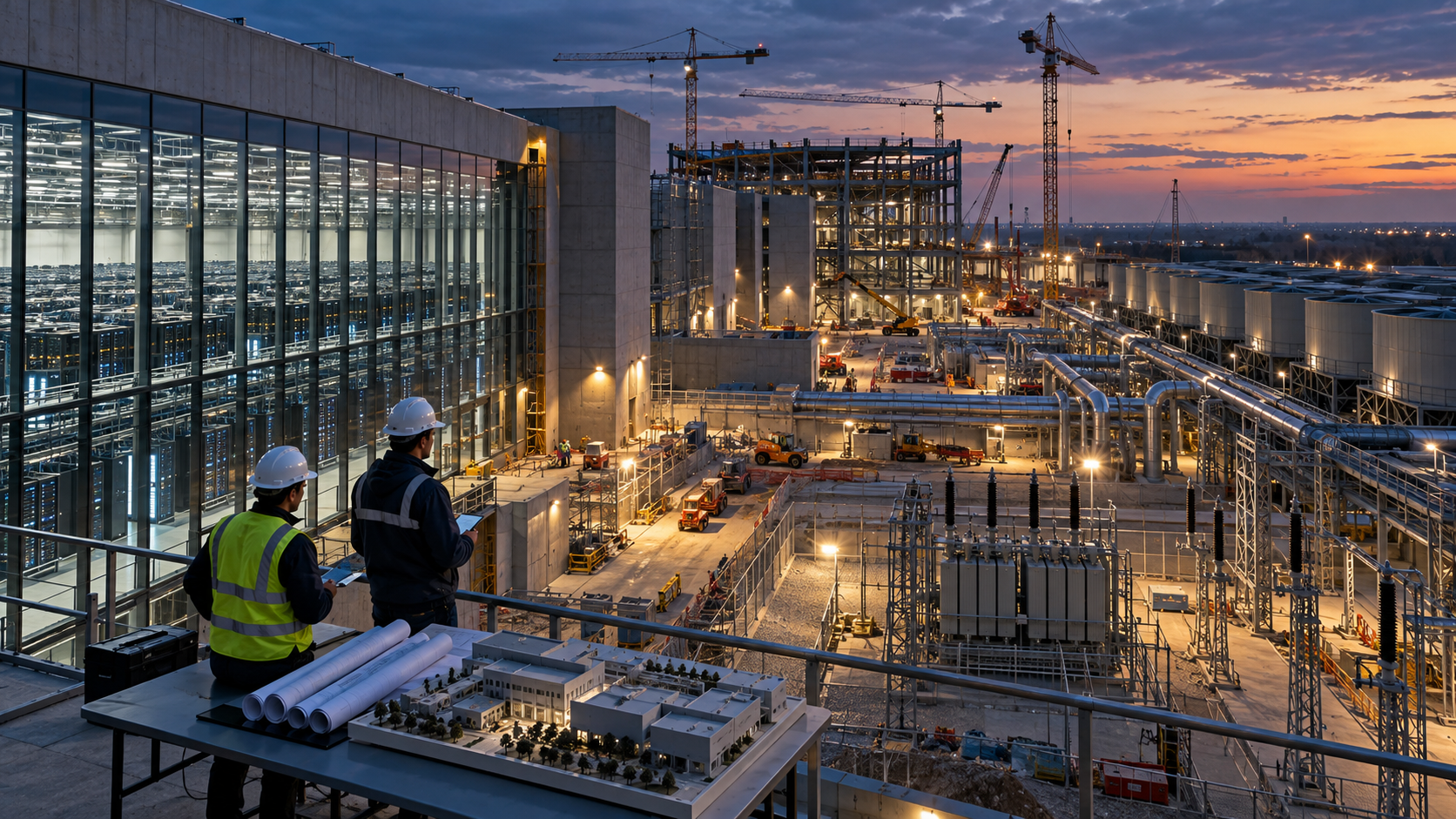
The visible symbol of the AI boom is the model. The durable financial commitment is the building behind it: land, power contracts, substations, cooling equipment, networking, accelerators, and the debt or equity used to assemble them. These assets are being planned on construction timelines while AI workloads change on software timelines. That mismatch deserves more attention than another argument about which chatbot is temporarily ahead.
The central risk is not that demand for computation disappears. It is that supply is built for the wrong demand, in the wrong place, with the wrong operating profile. A data center can be full of expensive equipment and still disappoint economically if its useful utilization is low, its energy availability is intermittent, or its hardware becomes unattractive before the financing period ends.
“Compute demand” hides several different markets
Training, fine-tuning, batch inference, interactive inference, and scientific computing do not consume infrastructure in the same way. Frontier training favors huge clusters with fast internal networks and the ability to run synchronized jobs. Interactive products care intensely about latency, geographic proximity, redundancy, and traffic peaks. Batch workloads can move through time and sometimes across regions. Treating them as one undifferentiated appetite encourages bad capacity decisions.
This distinction matters because the headline measure—accelerators installed—does not reveal accelerators usefully occupied. A chip awaiting a network dependency, a power allocation, or a customer workload still incurs capital cost. So does spare capacity reserved for peaks. The infrastructure operator’s real craft is turning volatile, heterogeneous demand into sustained productive work without making service brittle.
Specialist analysis from SemiAnalysis has helped make the physical AI stack legible, from accelerators and networking to cooling and power. The lesson is not simply that more infrastructure is required. It is that system-level bottlenecks determine the return on the most celebrated component. Buying scarce chips without solving power delivery, data movement, and workload scheduling is an expensive way to own a queue.
Power is becoming a product constraint
The International Energy Agency’s work on energy and AI places data-center growth inside the larger electricity system rather than treating power as an unlimited input. That frame is essential. Grid connections, generation, transformers, permitting, and transmission upgrades operate on their own timelines. Software companies accustomed to elastic cloud abstractions are encountering distinctly inelastic physical systems.
This changes product architecture. Teams that can shift batch work to lower-demand periods, reduce inference cost, cache repeated results, or route requests among model sizes are not merely optimizing a cloud bill. They are increasing the amount of useful service a constrained power envelope can produce. Efficiency becomes capacity.
There is a perverse incentive in boom markets to dismiss efficiency because falling unit costs stimulate more consumption. That rebound may occur at the industry level while individual operators still live or die by cost per useful task. A provider that halves the compute required for a workload can serve more customers with the same constrained site. Demand growth does not repeal margins.
Obsolescence is subtler than replacing old chips
AI hardware does not become useless the moment a new generation arrives. Older accelerators can remain valuable for smaller models, fine-tuning, or latency-insensitive inference. The economic problem is allocation: can the operator continuously match each workload to the cheapest adequate hardware, or is its software stack so rigid that every job expects the newest cluster?
A flexible fleet needs model portability, robust schedulers, observability, and pricing that communicates scarcity. These sound like software details, but they decide whether a capital asset enjoys a second life. The winner may not be the company that purchases the largest number of accelerators. It may be the one that can keep several generations busy without forcing developers to understand the fleet’s every quirk.
The Stanford AI Index provides a useful annual view of how model development, investment, and adoption are moving together. Yet aggregate growth can obscure firm-level mistakes. A rising market can contain stranded sites, poor contracts, and underused clusters. Rail traffic grew while individual railways failed; internet usage exploded while many network investments destroyed capital. Secular demand is not a waiver from underwriting.
Ask for yield, not acreage
Boards and investors should ask infrastructure operators for more than megawatts secured and accelerators ordered. They should ask how capacity maps to workload classes, what proportion can be shifted in time, how utilization is measured, which dependencies can strand installed hardware, and how older equipment will be redeployed. They should also ask what happens if model efficiency improves faster than expected—or if inference demand grows faster than grid access.
For software buyers, the implication is equally practical. Architecture choices now carry infrastructure exposure. Committing a core workflow to one oversized model, with no routing or caching strategy, is a bet on someone else’s capital abundance. Designing for a portfolio of models and explicit service levels creates bargaining power and resilience.
The AI build-out is real, necessary, and likely to remain large. But “more compute” is not a business model. The scarce capability is converting costly, location-bound, rapidly aging machinery into reliable units of customer value. The infrastructure boom will ultimately be judged not by how much concrete was poured, but by the useful work produced per dollar and per watt.
Advertisement