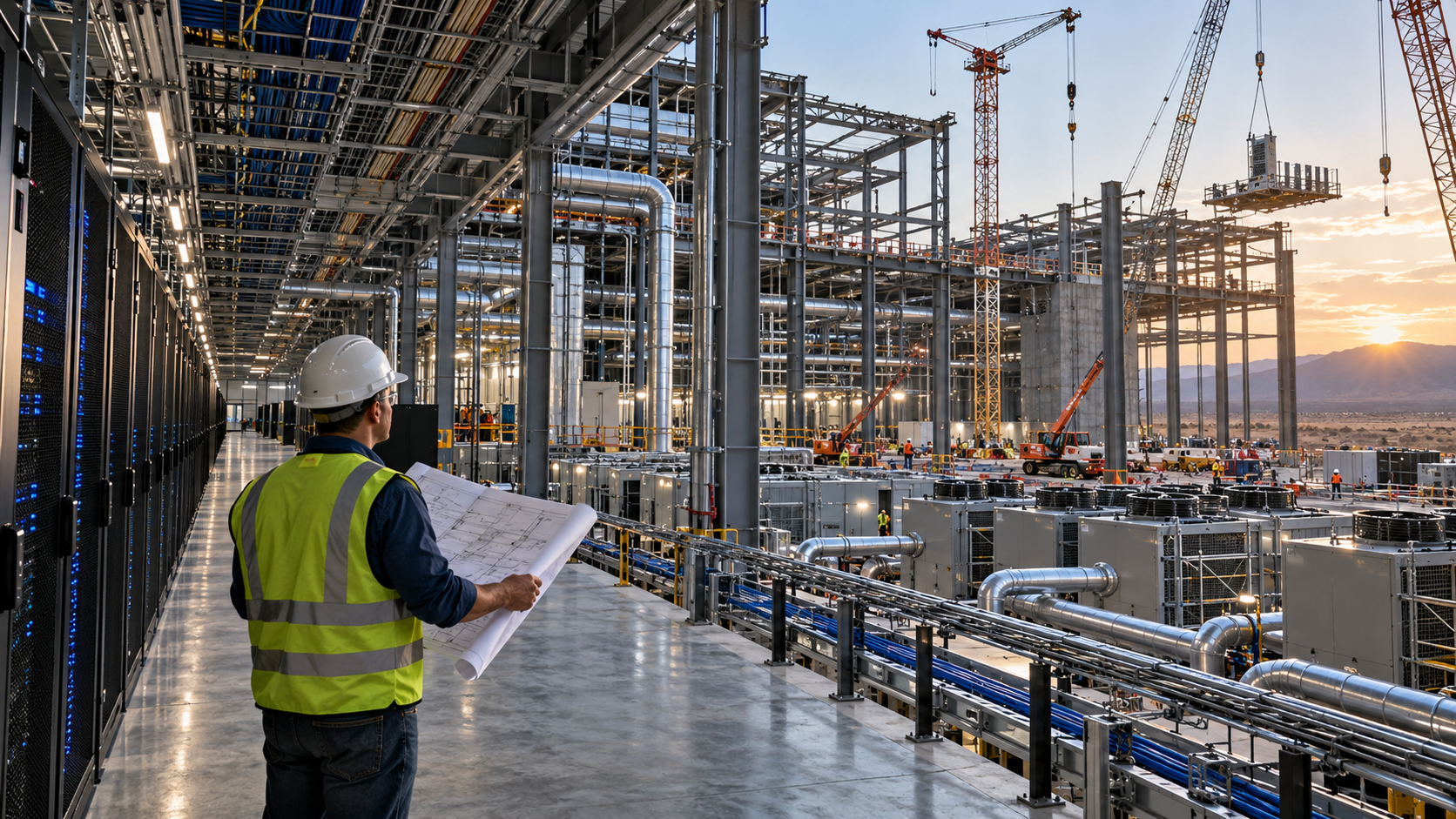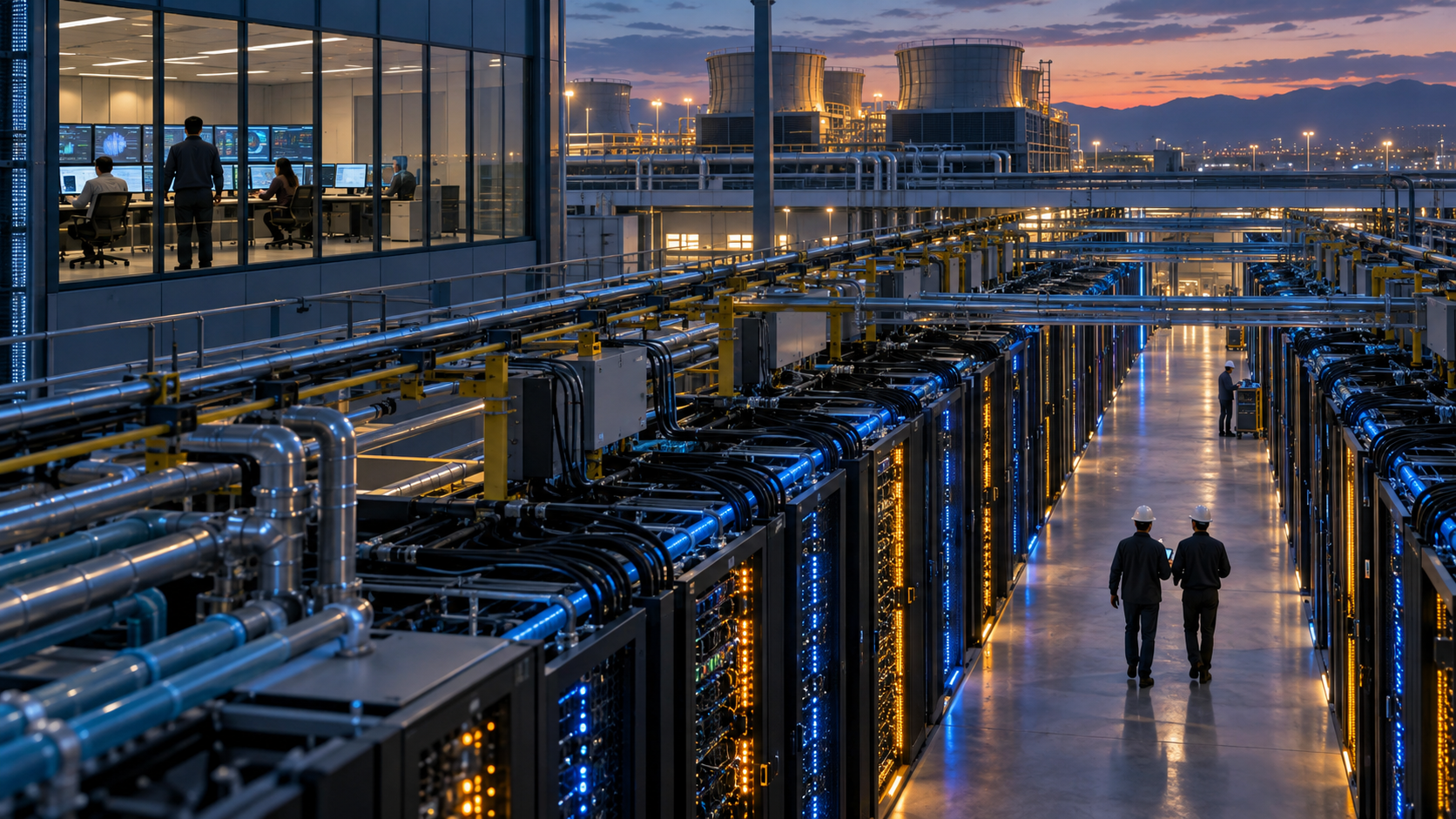
AI infrastructure is usually photographed as a monument: endless accelerator racks, immense cooling systems, and enough electrical hardware to make software feel like heavy industry. The dominant story says that whoever assembles the largest training cluster gets the strongest model and therefore wins the market.
That story is not false. It is simply becoming less complete. Training is an episodic bet: enormous capital is concentrated into a bounded run that produces a new model. Inference is an operating business. It must answer unpredictable demand every hour, accommodate different latency expectations, preserve quality under load, and earn more from each workload than it consumes in compute. As AI products mature, that serving discipline becomes the harder moat to copy.
A token is an industrial output
Software companies are accustomed to near-zero marginal distribution costs. AI complicates that assumption because every response schedules scarce hardware, moves data through memory, consumes power, and occupies capacity that could serve another request. Reasoning systems amplify the effect: the visible answer may be short while the computational path behind it is long.
The relevant business metric is therefore not simply cost per token. It is useful work per constrained resource. A cheap response that fails and must be regenerated is expensive. A fast model that forces a human to redo the task has poor economics. Conversely, a costly run that prevents an engineering incident or completes a high-value workflow may be an excellent trade.
This is why the serving stack is fragmenting into specialized decisions: model routing, quantization, batching, cache management, speculative decoding, workload scheduling, and graceful degradation. A company that treats every request as deserving the largest model at the highest reasoning setting is not offering premium intelligence. It is neglecting operations.
Hardware is becoming workload-shaped
Infrastructure providers increasingly distinguish between training and inference rather than treating accelerators as interchangeable units. Google’s description of its purpose-built training and inference TPUs makes the logic explicit: serving latency, memory bandwidth, and cache behavior create different design pressures from large synchronous training jobs.
The distinction matters beyond chip architecture. Agentic workloads are bursty and sequential. A model plans, calls a tool, waits for an external system, interprets the result, and continues. Expensive accelerators can sit idle during those gaps unless the serving layer multiplexes work intelligently. Tiny inefficiencies repeat across every step of every trajectory. At scale, orchestration quality becomes physical utilization.
That gives vertically integrated companies an advantage, but not an automatic victory. Owning chips, datacenters, models, and consumer distribution creates opportunities for co-design. It also creates enormous fixed commitments. Hardware development and power construction move more slowly than model architectures. A perfectly optimized facility for today’s workload can become an inflexible asset if tomorrow’s models use memory, networking, or sparsity differently.
Capacity is a portfolio, not a pile
The scale of planned investment makes flexibility a strategic requirement. OpenAI’s Stargate announcement framed AI infrastructure in terms of capital, energy, construction, and partnerships—not merely accelerator procurement. That is the right frame. A working AI campus is a supply chain of substations, permits, cooling equipment, fiber, replacement parts, financing, and skilled operators.
The winners will not necessarily be those that reserve the most theoretical compute. They will be those that match a mixed portfolio of resources to changing demand. Training can tolerate some scheduling rigidity; interactive inference cannot. Batch document processing can wait for cheaper capacity; a voice assistant cannot. Sensitive workloads may require a particular jurisdiction. Smaller models may run economically on older hardware that would be unattractive for frontier training.
This portfolio view changes application architecture, too. Product teams should design for heterogeneous models rather than binding their economics to one premium endpoint. They need measurement at the level of user outcomes: how often routing succeeds, when escalation improves results, which context is worth retrieving, and where latency changes user behavior.
- Use small models for classification, extraction, and predictable transformations when they meet the quality bar.
- Reserve expensive reasoning for ambiguity, synthesis, and decisions with real value at stake.
- Cache stable intermediate work rather than paying to rediscover it.
- Measure complete task cost, including retries, tool calls, review time, and failure recovery.
The application layer can still build a moat
Infrastructure concentration can make software studios feel like price takers. That conclusion is premature. Most customers do not buy tokens; they buy resolved cases, shipped features, reconciled accounts, inspected documents, or faster decisions. A well-designed application can reduce compute consumption while increasing the value of the result.
The defensible layer is the system that knows when intelligence is needed, assembles the right context, constrains the action, verifies the result, and learns from exceptions. Model providers will continue lowering unit costs, but falling prices do not erase operational differentiation. Cloud computing became cheaper and more standardized without making architecture irrelevant.
AI’s next infrastructure contest will still involve astonishing buildings. Yet the decisive numbers may look mundane: queue depth, cache hit rate, watts per completed task, recovery time, and gross margin after inference. Training creates possibility. Serving discipline turns possibility into a business.
Advertisement