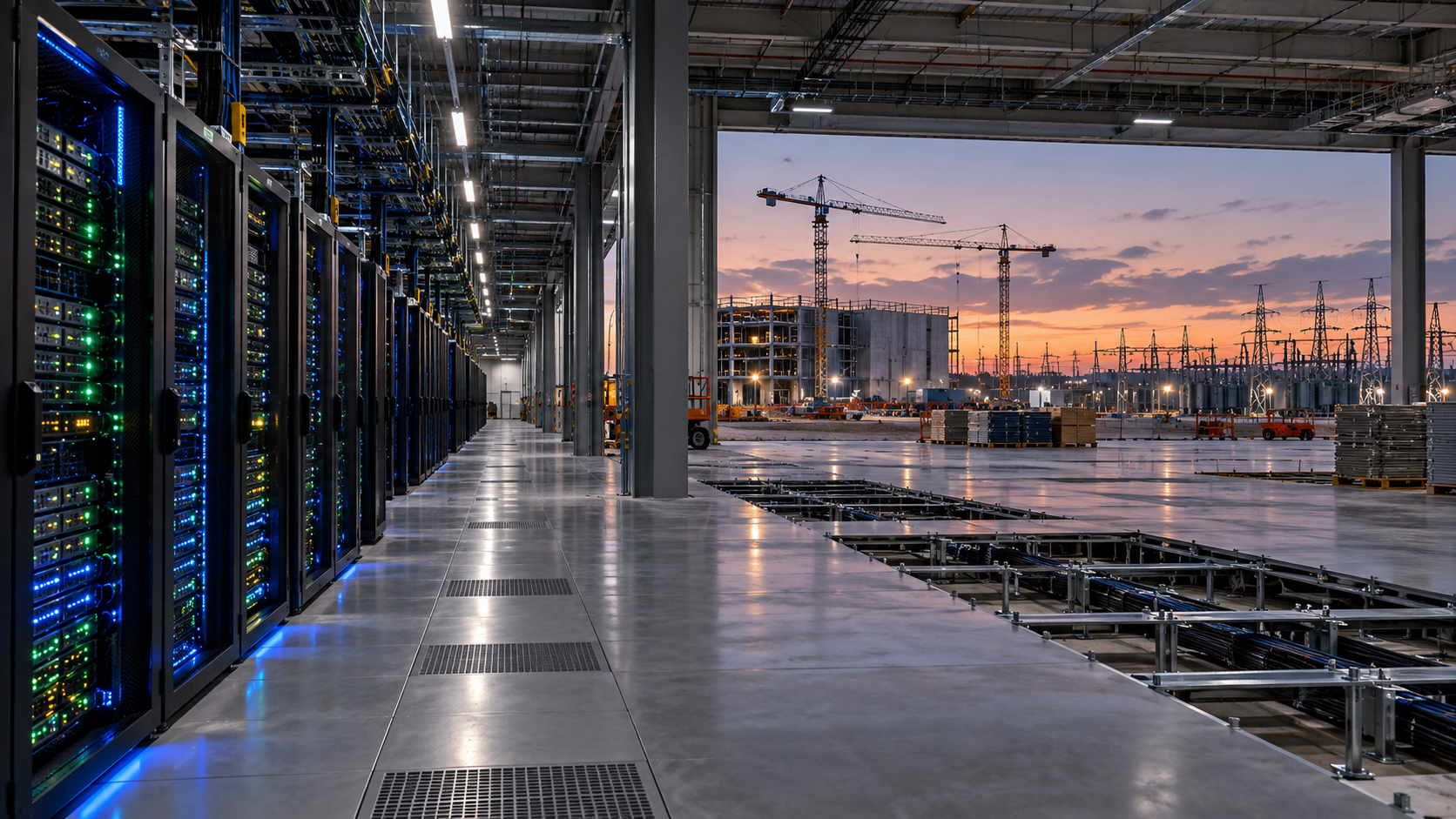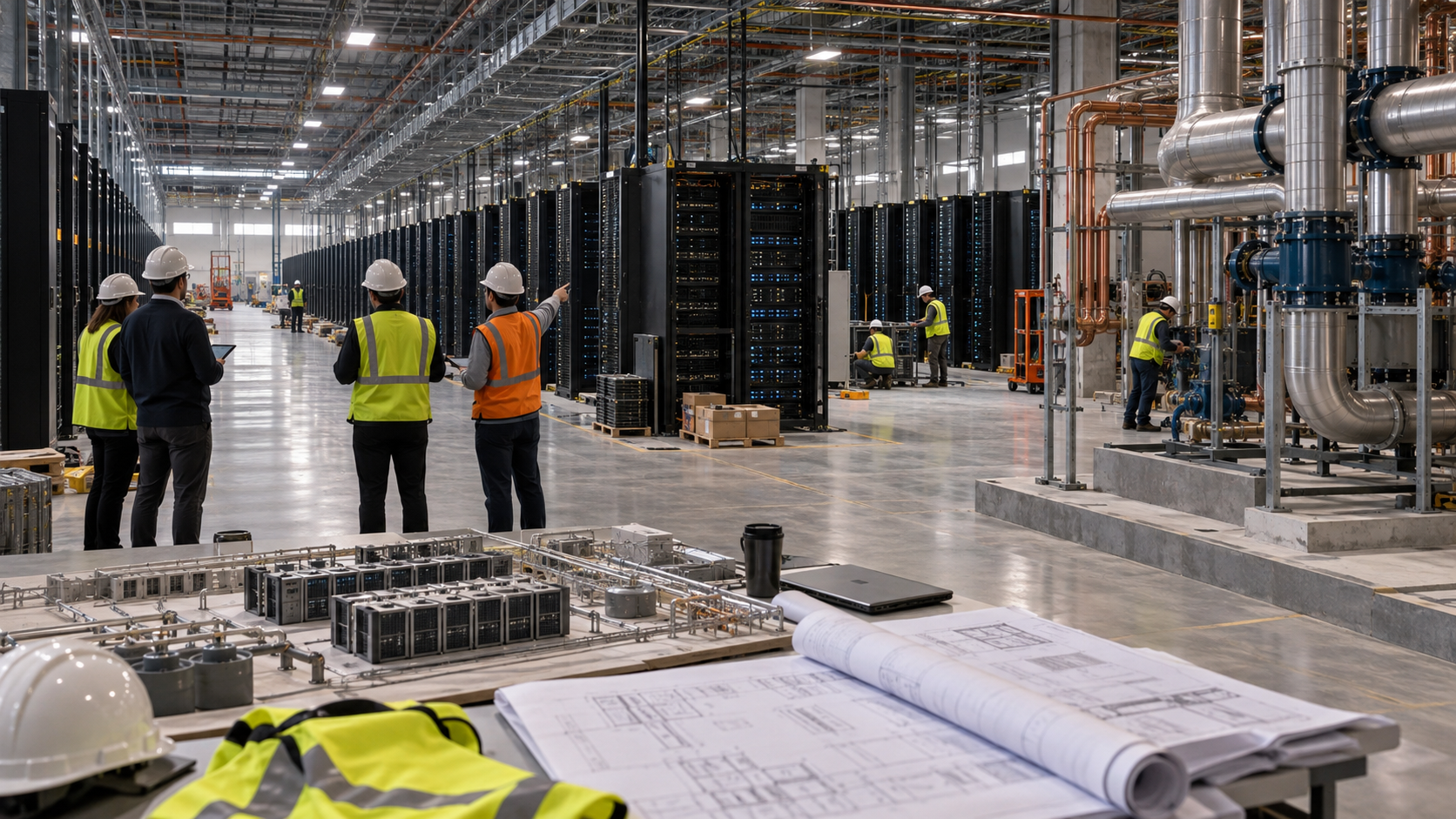
The AI infrastructure race is usually narrated as a hunt for scarcity: scarce accelerators, scarce power, scarce land, scarce transformers, scarce networking equipment. That framing makes acquisition look like strategy. If compute is difficult to obtain, owning more of it must be an advantage.
But ownership and productive use are different achievements. An accelerator waiting for data, blocked by networking, stranded behind an unavailable power connection, or reserved for a workload that never arrives is not strategic capacity. It is expensive inventory aging in place. The next phase of AI competition will expose which organizations built functioning compute factories and which merely accumulated impressive equipment.
The technical roots of this distinction are visible in systems research. The FlashAttention paper showed that performance depends not only on arithmetic capacity but also on how computation moves through the memory hierarchy. The widely used vLLM paper focused on memory management and serving throughput. Both point toward the same business truth: nominal hardware capability is not delivered capacity.
Utilization is a whole-system property
Finance teams like utilization because it appears to be one clean percentage. AI systems resist that simplicity. A fleet can report busy devices while doing low-value work. A training cluster may execute continuously but lose days to unstable runs. An inference service may maximize batch throughput while producing latency that users reject. A team may reserve capacity to guarantee availability, making idle time an intentional insurance premium.
The useful measure is therefore not raw activity. It is valuable completed work per constrained resource. Depending on the product, that might mean accepted tokens per watt, resolved customer cases per accelerator-hour, successful coding tasks per dollar, or experiments completed before a research decision. The denominator matters because the constraint may be electricity, memory bandwidth, network fabric, human review, or capital rather than chip count.
This is where infrastructure strategy becomes inseparable from software engineering. Better batching can reduce serving cost. Quantization can fit a workload onto cheaper hardware. Caching can eliminate repeated inference. Speculative decoding can change latency economics. Smaller specialized models can absorb routine traffic while frontier models handle ambiguous cases. None of these choices produces a dramatic photograph of a new data center, but together they determine whether the building earns its keep.
The depreciation clock is faster than the concrete
Data centers combine assets with radically different lifetimes. Land, buildings, substations, cooling loops, network cabling, and accelerators do not age on the same schedule. Construction moves slowly; model architectures and chips move quickly. A design optimized around one hardware generation can open into a different market, power envelope, or serving pattern.
That mismatch creates a strategic option problem. A company can build tightly for maximum present efficiency or preserve flexibility for future hardware. The first approach may lower today’s unit cost. The second may avoid tomorrow’s stranded capacity. Good infrastructure planning assigns an explicit value to adaptability: rack density ranges, cooling headroom, network topology, workload portability, and the ability to mix accelerator types.
Official engineering material from Meta’s data-center engineering teams illustrates how much operational work sits beneath visible AI products. Google’s publications on Tensor Processing Units likewise show that useful compute arrives as an integrated system of hardware, interconnects, compilers, and software—not as an isolated chip.
The financial mistake is to model accelerators like generic servers with predictable demand. Frontier training, fine-tuning, batch inference, and interactive serving have different shapes. Some workloads tolerate queues; others require immediate capacity. Some can move across regions; others are pinned by data governance or latency. Blending them intelligently can raise effective utilization, but only when schedulers, contracts, and application architectures permit it.
Model choice is now a capital-allocation decision
Engineering teams often choose models by quality first and negotiate cost afterward. At scale, this reverses causality. Model architecture determines memory requirements, serving hardware, concurrency, power use, and fallback design. A small quality difference can impose a large infrastructure commitment; a model that looks cheaper per token may be more expensive per successful outcome if it requires retries or extensive human correction.
The right procurement unit is not the token. It is the completed unit of business value. That requires measuring the entire path: preprocessing, retrieval, inference, tool calls, verification, failed runs, idle reservations, and human handling. A model router that sends easy work to a modest model may create more value than negotiating a marginal discount on the largest one. Likewise, improving prompts and context selection may be an infrastructure optimization because it reduces wasted computation.
This perspective also changes build-versus-buy decisions. Owning hardware can make sense for steady, predictable workloads with strong operational competence. Renting can make sense when demand is uncertain or hardware generations are turning quickly. Hybrid arrangements preserve optionality. There is no universally superior answer, only a requirement to price flexibility honestly rather than treating ownership as prestige.
The quiet operators will compound
Much of the market currently rewards visible commitments: enormous facilities, supply agreements, and headline capital budgets. Those investments may prove farsighted. They may also conceal weak workload discipline. The distinction will emerge as AI products mature and customers demand reliable economics instead of demonstrations.
The durable operators will know why each workload exists, what quality threshold it needs, where it should run, and how quickly its hardware is becoming obsolete. They will make model developers, application engineers, and facilities teams share metrics. They will treat cooling, scheduling, caching, evaluation, and product design as parts of one economic machine.
AI compute is not valuable because it is scarce. It is valuable when it converts scarce capital and power into outcomes someone will pay for. The winner of the infrastructure race may own a tremendous amount of hardware. More importantly, it will have learned how rarely that hardware should be allowed to do useless work.
Advertisement