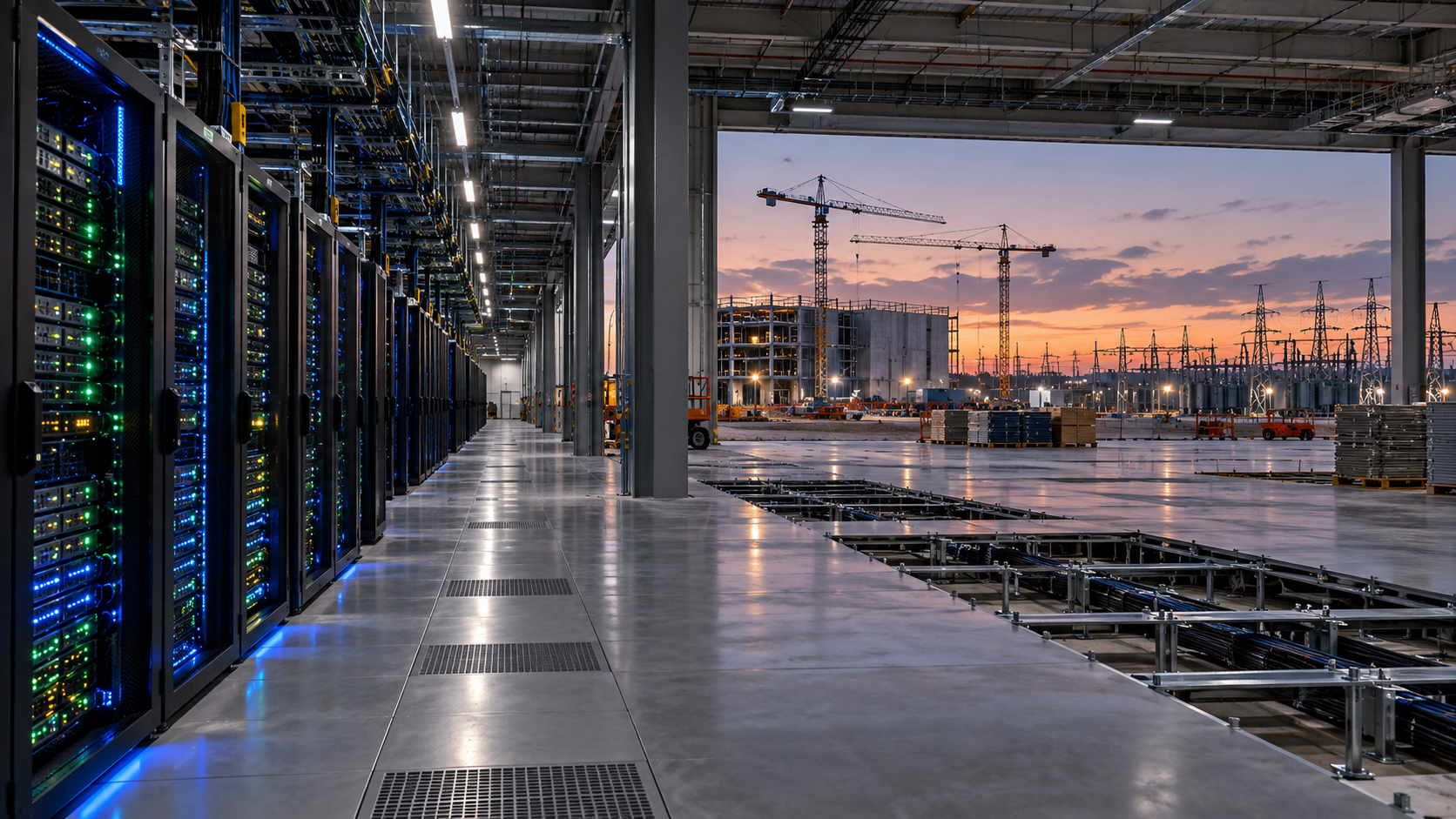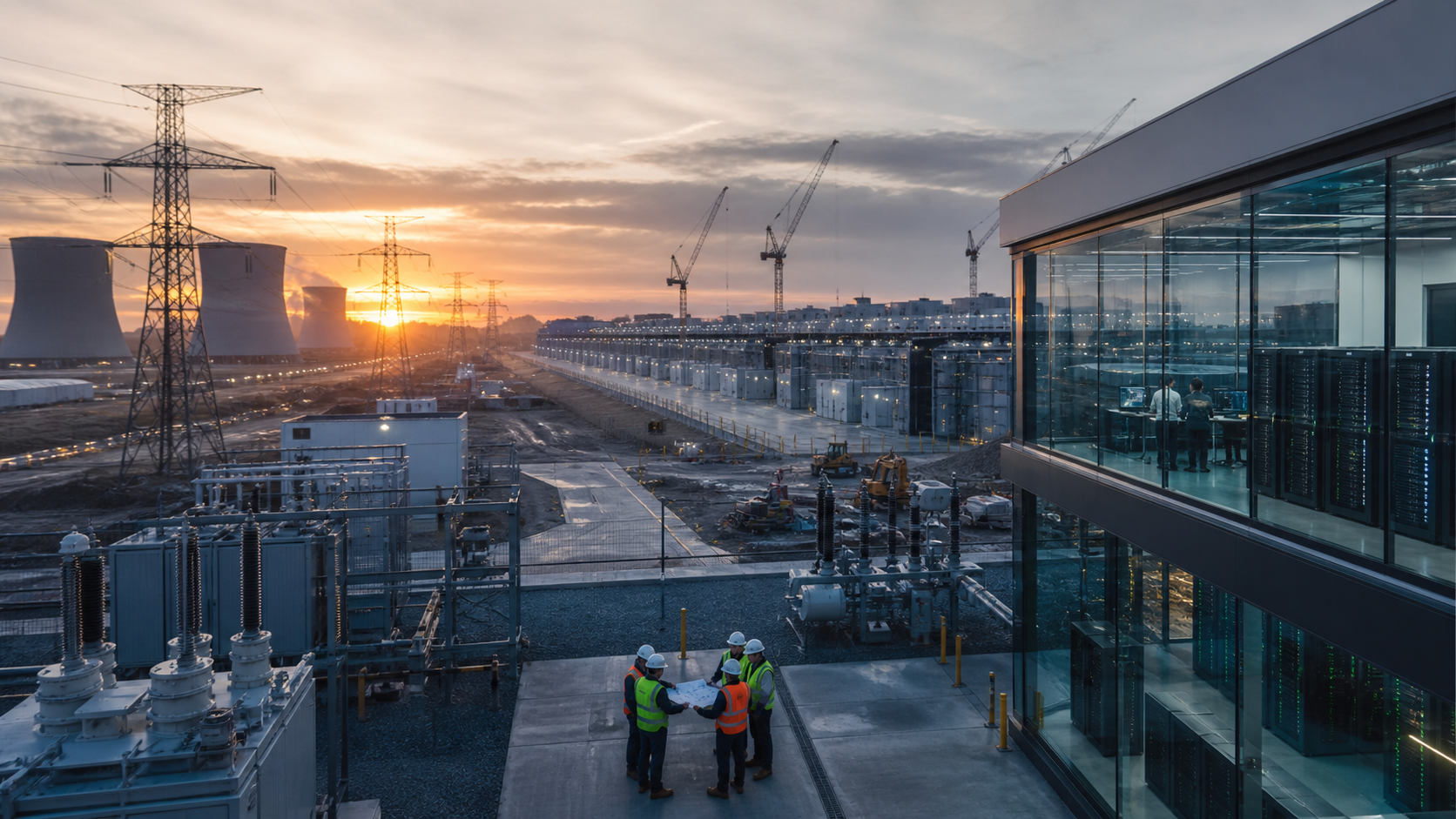
The AI industry likes to describe itself as a software race. That description is now incomplete enough to be misleading. By August 29, 2026, the companies shaping the frontier are still launching models, agent frameworks, and developer tooling, but the deeper contest increasingly looks like an infrastructure business wearing a software brand. The scarce assets are no longer just talent and ideas. They are power, land, transformers, cooling systems, financing capacity, and the operational competence required to turn all of that into dependable compute.
This matters because many investors and operators still reason about AI as if it behaves like classic cloud software. In ordinary SaaS, a better product can sometimes outrun incumbents with sharper design, faster iteration, and cheaper distribution. In frontier AI, the floor is much heavier. When training and serving costs are large, inference demand is spiky, and enterprise buyers expect reliability, the balance sheet becomes part of the product. The model might be the thing users touch, but the utility agreement is quietly determining which companies can keep improving it at the pace the market has come to expect.
If you want to see the shape of the industry, it is useful to read beyond launch announcements and watch the institutions telling on themselves. The OpenAI newsroom, Anthropic newsroom, and Google DeepMind blog obviously highlight research and products. Read them with a second lens. Notice how often the subtext is scale, deployment, enterprise readiness, and long-horizon platform building. Then contrast that with the broader framing in Reuters AI coverage, where the capital and policy dimensions are impossible to ignore for long. The story underneath the story is that AI leadership now depends on industrial coordination.
Compute is now a capital discipline
That industrial turn changes what a moat looks like. A moat used to mean proprietary data, elite research talent, or network effects. Those still matter. But a modern AI moat may also include who can secure multi-year infrastructure commitments without blowing up pricing, who can absorb demand spikes without degrading experience, and who can negotiate from strength with hyperscalers, chip vendors, and enterprise buyers at the same time. In other words, the moat is becoming partly financial. Not financial in the narrow sense of quarterly optics, but financial in the older sense of marshaling large resources against a long build cycle.
This has second-order effects across the stack. It favors firms that can plan like manufacturers rather than app studios. It rewards leadership teams willing to make boring decisions early, such as choosing sites, diversifying supply relationships, and treating capacity planning as a strategic function instead of an infrastructure footnote. It also creates room for a different kind of specialization. Not every company needs to own the entire compute pipeline. But every serious company now needs a credible answer to the question of where its next two years of capacity will come from, at what cost, and under what operational constraints.
That answer influences product behavior more than many teams admit. When compute is abundant, product managers can indulge slow chains, wide context, and expensive fallback logic. When compute tightens, the rhetoric around intelligence often gives way to ruthless prioritization: narrower workflows, stricter routing, more caching, stronger retrieval, and heavier human review on the highest-cost tasks. The user experiences that emerge from those decisions are not just technical artifacts. They are economic artifacts. The best AI products of the next phase may look less magical not because the models are worse, but because disciplined economics produced a sharper product boundary.
There is also a geopolitical and geographic dimension. Power availability and permitting timelines are not evenly distributed. The same is true of public tolerance for datacenter buildout. That means AI capability will not spread like ordinary software did. Some regions will attract disproportionate investment because they can support energy-intensive infrastructure. Others will focus on downstream application layers, domain adaptation, or regulated verticals where smaller but more efficient deployments matter more than raw scale. The market will remain global, but the physical substrate beneath it will be lumpy.
The strategic mistake many buyers still make
Enterprise buyers often evaluate AI vendors as if they are choosing features on a procurement checklist. That misses the more durable question: which vendors are structurally positioned to keep service quality high while the market's demand curve keeps climbing? A clever demo is easy to buy. Sustained capacity is harder. Buyers should ask how the vendor thinks about model routing, infrastructure resilience, pricing durability, and failure under peak load. Those questions are not secondary. They reveal whether the vendor is running a business prepared for prolonged AI demand or merely enjoying a moment of market attention.
XioX's view is that the next great sorting mechanism in AI will not be who can produce the most impressive launch video. It will be who can convert capital, energy access, and operational discipline into compounding product advantage. That may sound less romantic than the myth of pure algorithmic brilliance. It is also much closer to reality. AI is still software. But at the frontier, it is increasingly software attached to a very physical machine. Companies that understand that will build more realistic strategies. Companies that do not will keep mistaking temporary product momentum for durable position.
The phrase to keep in mind is not bigger model. It is stronger supply chain. Once that clicks, a lot of current market behavior starts to look less confusing. Pricing pressure, partnership announcements, regional buildouts, and strange-sounding infrastructure deals are not distractions from the AI story. They are the AI story.
Advertisement