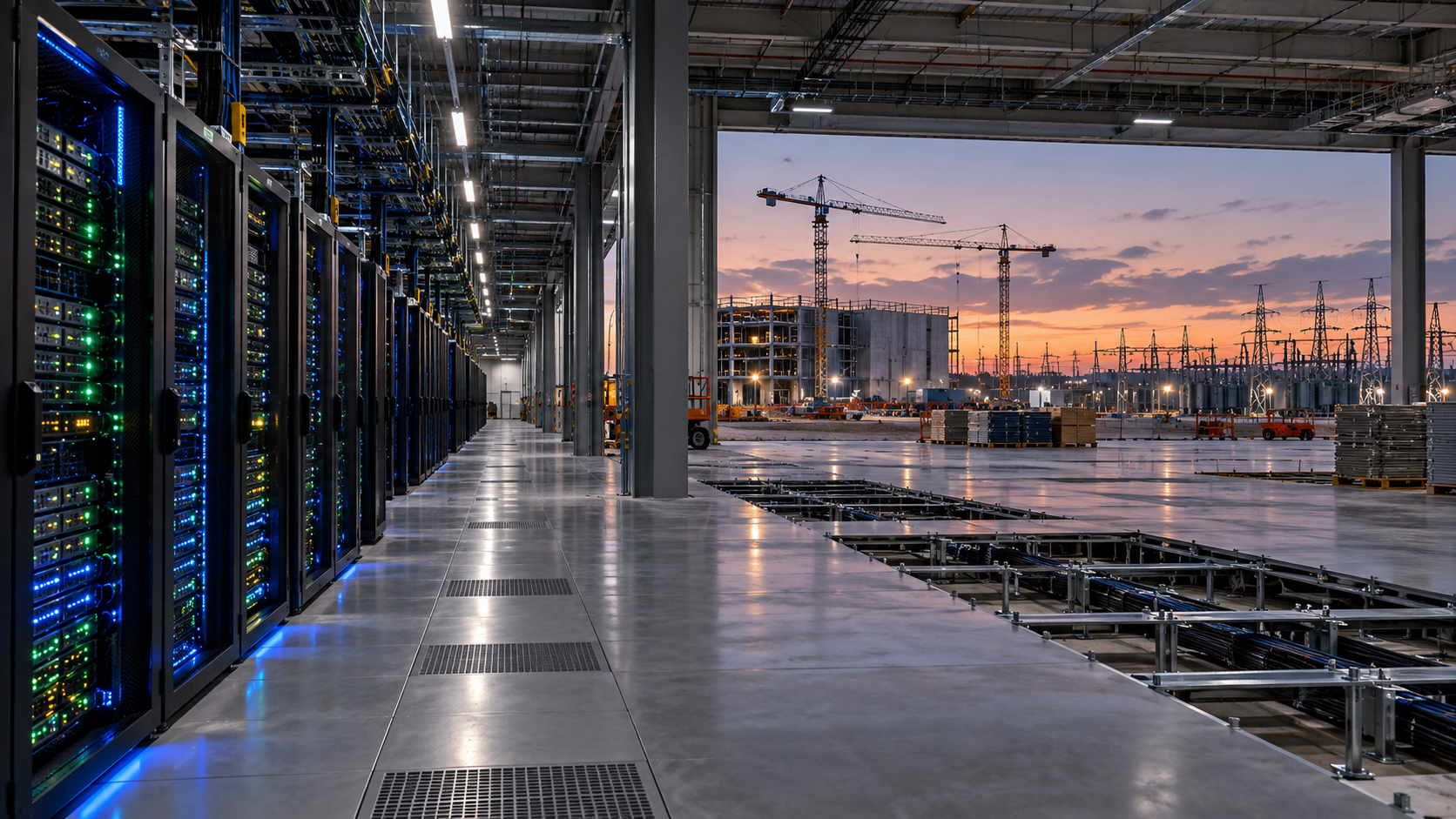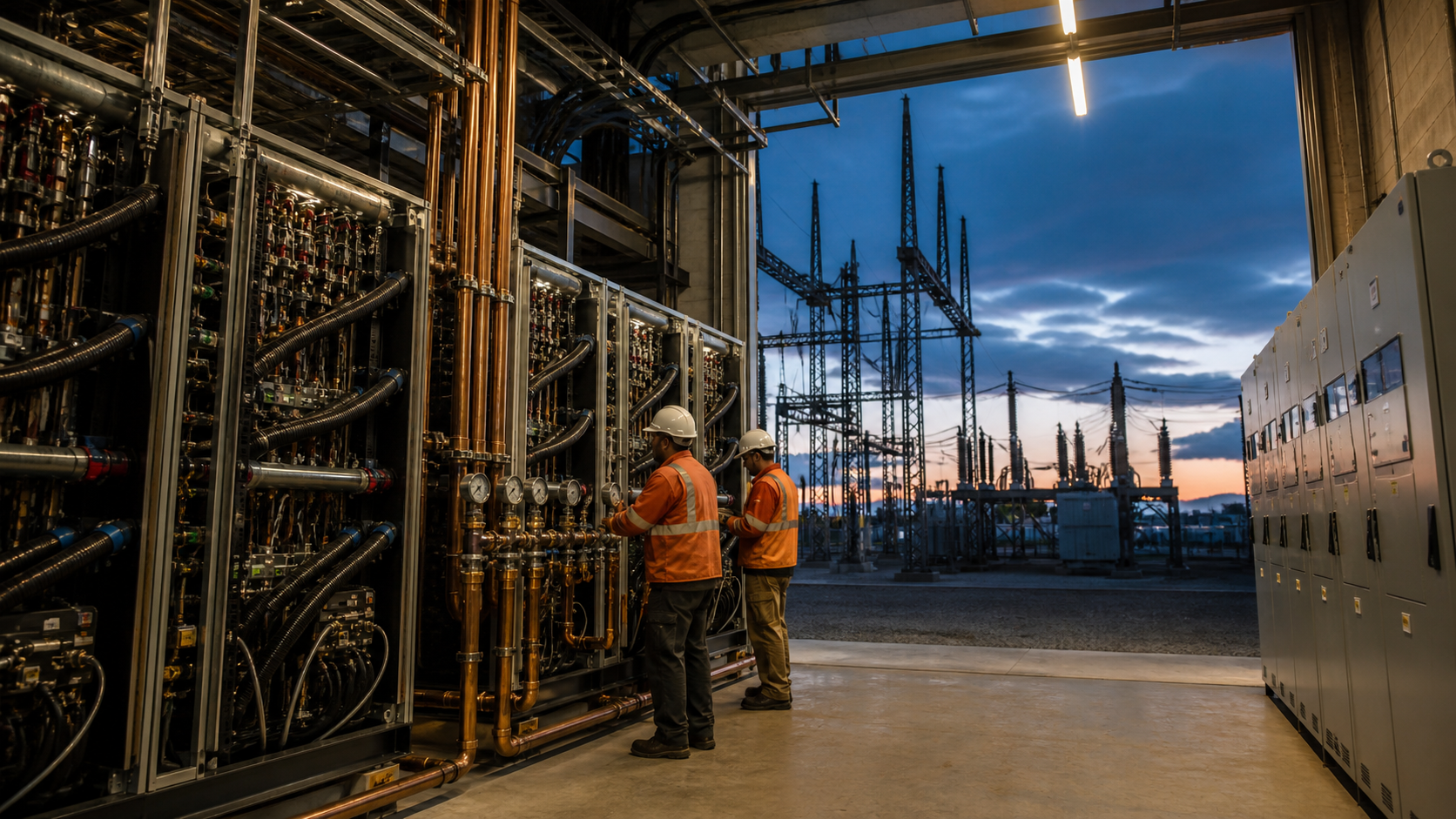
The first phase of the AI infrastructure race rewarded possession. If a company could secure scarce accelerators, investors treated the hardware inventory as both moat and strategy. That logic made sense when training runs dominated attention and access to top-end chips was the obvious bottleneck. It becomes less convincing when the business shifts toward serving millions of irregular, latency-sensitive inference requests every day.
An accelerator sitting idle is not strategic capacity. It is depreciating equipment attached to a power bill. The next infrastructure winners will be distinguished less by how many chips they announce than by how effectively they turn constrained electricity, memory bandwidth and cooling into useful tokens at a predictable service level. This is an operations business wearing a software valuation.
The physical constraint is no longer a footnote. The International Energy Agency’s Energy and AI analysis describes data centers as participants in the energy system, not weightless endpoints of the internet. Its breakdown of data-center electricity demand also shows why counting accelerators alone is misleading: servers share the facility budget with cooling, networking, storage and resilience equipment.
Utilization is the hidden income statement
Inference economics begin with a scheduling problem. Demand rises and falls by hour, customer and model. Interactive applications require fast first responses but may generate later tokens more slowly. Batch jobs tolerate delay. Agent workloads arrive as bursts separated by tool calls. Long contexts consume memory that might otherwise serve several shorter requests. A fleet can look fully allocated on paper while wasting valuable capacity through fragmentation.
The operator that combines these workloads intelligently can lower cost without changing hardware. Batch traffic can fill troughs. Prefix caching can avoid repeated computation. Requests can be routed by latency requirement rather than sent reflexively to the largest model. Quantization and speculative decoding can improve throughput when quality tolerances permit. None of these techniques produces a photogenic warehouse, but together they decide whether the warehouse earns money.
This is why benchmark peak throughput is an inadequate commercial metric. NVIDIA’s own inference performance hub emphasizes measures including tokens per watt, cost per token and per-user responsiveness. Buyers should go further and ask what those figures look like under variable arrivals, mixed context lengths, failures, maintenance and contractual latency guarantees. A system optimized for a smooth benchmark stream may behave poorly under human demand.
The moat moves outside the server
Once several operators can buy similar accelerators, durable advantage migrates into the surrounding system. Grid interconnection dates matter. So do transformer availability, coolant design, fiber paths, spare parts and the ability to move work between regions without violating data rules. Software remains central, but it is software for an industrial plant: capacity forecasting, admission control, observability, failure isolation and energy-aware scheduling.
The analogy to a utility is useful because utilities sell reliable service from expensive, shared infrastructure. Customers usually do not care which turbine produced an electron. Similarly, most AI application teams will not care which exact accelerator produced a token if quality, privacy, latency and price stay within contract. Infrastructure brands built primarily around access to a particular chip generation will discover that hardware identity fades as supply broadens and newer generations arrive.
That does not mean inference becomes a commodity. Electricity is standardized; intelligence is not. Model behavior, context handling and tool-use reliability still vary. The commercial opportunity lies in joining differentiated model capability to disciplined capacity operations. Providers that understand only one side will struggle: labs may underprice physical constraints, while traditional hosting companies may underestimate how model architecture changes fleet efficiency.
Contracts should expose the real trade
Customers can accelerate this transition by purchasing outcomes instead of vague compute units. An inference contract should define response-time distributions, supported context bands, availability, data residency and what happens under overload. It should distinguish cached from uncached pricing where that matters and explain whether capacity is reserved or merely prioritized. A low token price without a useful latency commitment can be an expensive bargain.
Providers, meanwhile, should resist promising that every workload receives premium silicon. Routing a simple extraction task to the most costly model is not quality; it is failed product design. A mature platform will treat models and accelerators as a portfolio, selecting the least expensive configuration that meets an explicit acceptance threshold. The resulting margin comes from measurement and orchestration, not from quietly degrading output.
There is also a strategic implication for smaller infrastructure companies. Competing head-on with hyperscalers for undifferentiated capacity is a punishing capital contest. Specialization offers a better path: sovereign deployments, tightly regulated workloads, unusually long contexts, low-latency regional service or deep integration with a specific model stack. The niche must create scheduling or trust advantages strong enough to offset smaller scale.
The industry has spent years asking who owns the most advanced chips. The more revealing questions are becoming mundane: Who has firm power? Who keeps expensive equipment busy? Who can shed nonurgent load without breaking promises? Who understands the cost of a failed request? Inference turns AI infrastructure from a procurement story into an operating discipline. The balance sheet buys admission; the control room decides the winner.
Advertisement