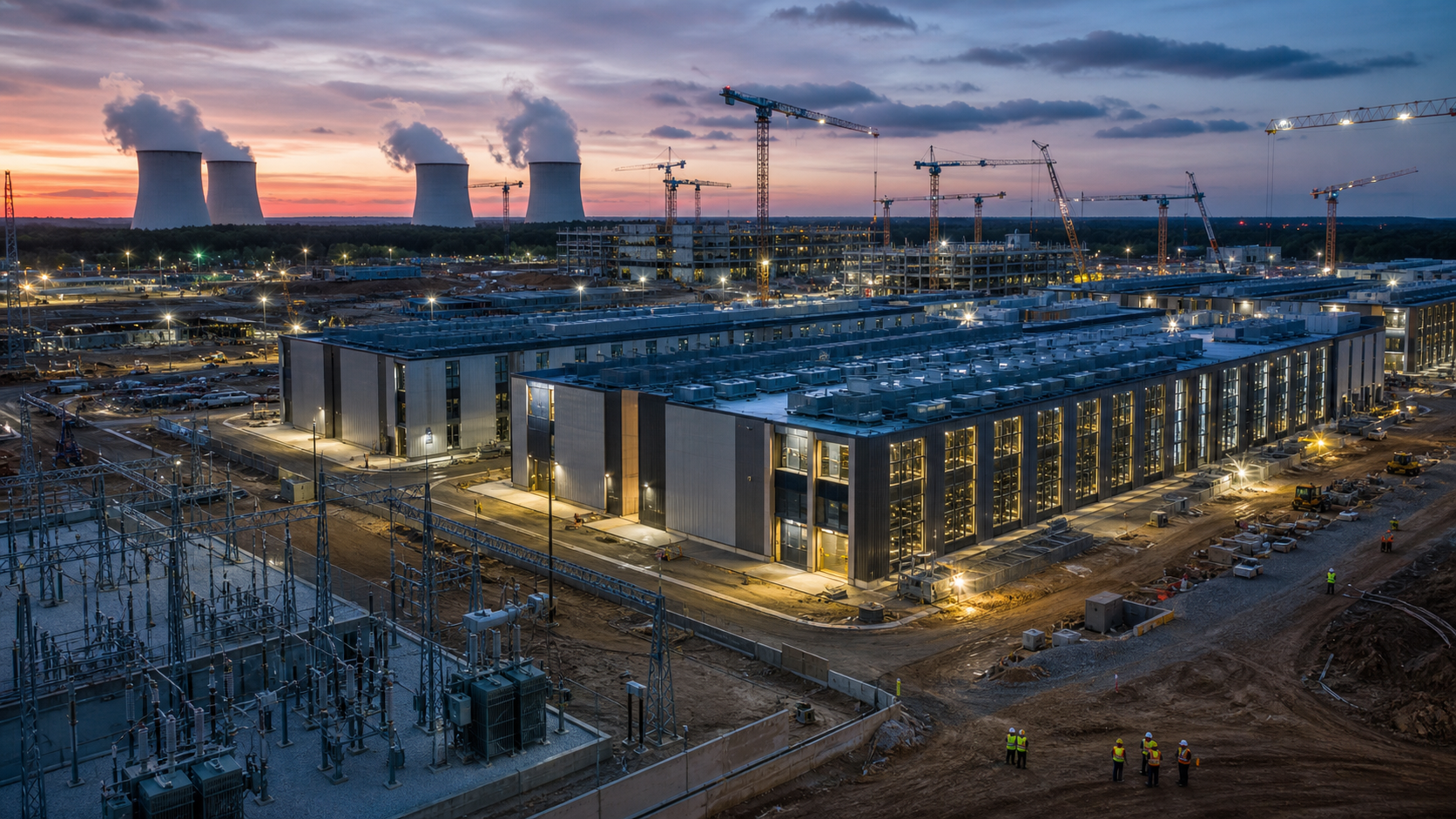
Most commentary about AI competition is still trapped at the model layer. Which lab has the strongest reasoning benchmark? Who shipped the better coding assistant? Which release moved the chatbot rankings? Those questions matter, but they are not where the deepest strategic leverage is forming. The real platform war is happening one level down, in the plumbing that connects models to tools, data, permissions, and business processes.
This is why infrastructure moves that might look technical or niche are actually commercial signals. When Anthropic introduced the Model Context Protocol and documented it as a standardized way for applications to provide context to models through shared interfaces, it was not just a developer convenience story. It was a statement about where power may settle in the next phase of the market. Standards decide who gets adopted quietly, repeatedly, and at scale.
The Market Is Moving From Models to Surfaces
Early AI adoption was driven by novelty. A user typed into a box, the model responded, and the wow factor carried the product. That phase trained the market to think in terms of model quality alone. Enterprise adoption is different. Once a system touches procurement, legal review, software delivery, customer support, or operations planning, the question is no longer “Which model sounds smartest?” It becomes “Which stack can be integrated, governed, observed, and swapped without tearing up the workflow?”
That shift changes what counts as a moat. A raw model advantage can compress quickly. A better workflow surface is harder to dislodge. If a company becomes the default way an enterprise exposes internal documents, ticketing systems, databases, approval flows, and tool permissions to AI systems, that company has moved upstream in a meaningful way. It is no longer just selling tokens or seats. It is shaping how work becomes legible to machines.
There is a lesson here from previous platform eras. Operating systems, cloud providers, app stores, and payment rails all looked boring relative to the products built on top of them. They also accumulated disproportionate leverage because they controlled the junction where many participants had to pass. AI is now building its own junctions. Connector standards, observability layers, retrieval interfaces, security boundaries, and workflow runtimes may sound less glamorous than a frontier model launch, but they are where the enterprise buying decision gets concrete.
This is also why open standards are strategically ambiguous. On the surface, an open protocol reduces friction for everyone. In practice, the company that defines a useful standard often earns soft power even when the standard is open. Developers learn its abstractions. Vendors align to its mental model. Buyers start asking whether products support it. A standard can be open and still reorganize the market around the organization that made it legible first.
XioX’s view is that many AI companies are still narrating themselves incorrectly. They talk as if they are in a pure intelligence race when they are really in a systems race. The winning stack will not just answer questions well. It will make enterprise context portable, policy-aware, and operationally boring. “Boring” is important here. The biggest budgets in AI will not be spent on delightful demos. They will be spent on software that lets risk-conscious organizations plug models into existing work without creating a governance nightmare.
That helps explain why the industry suddenly cares so much about orchestration, tool use, and connected context. A standalone model can impress a buyer. A model that reliably traverses systems, respects permissions, leaves an audit trail, and degrades safely can get through procurement. Those are different economic categories. One is entertainment-adjacent. The other is infrastructure.
There is another consequence: model vendors and software vendors are starting to converge. Cloud providers want more application gravity. SaaS platforms want more intelligence inside their workflows. Model labs want control points beyond the API. The boundaries are getting blurry because everyone sees the same prize. The most durable value may belong not to the firm with the single best model, but to the firm that owns the default interface between models and institutional reality.
That does not mean models stop mattering. It means model quality becomes one input into a larger commercial stack. Buyers are increasingly purchasing a system of access, control, and reliability, not just a pretrained artifact. The AI company that understands this will design products differently, invest differently, and tell a different strategic story.
The industry is still in the habit of rewarding visible breakthroughs over invisible architecture. That will fade. As adoption moves from experiments to core operations, the market will care less about who won the week and more about who became hard to replace. In AI, replacement cost will be created less by the model itself than by the layer that turns raw capability into integrated work. That is the real platform war, and it is already underway.
Advertisement