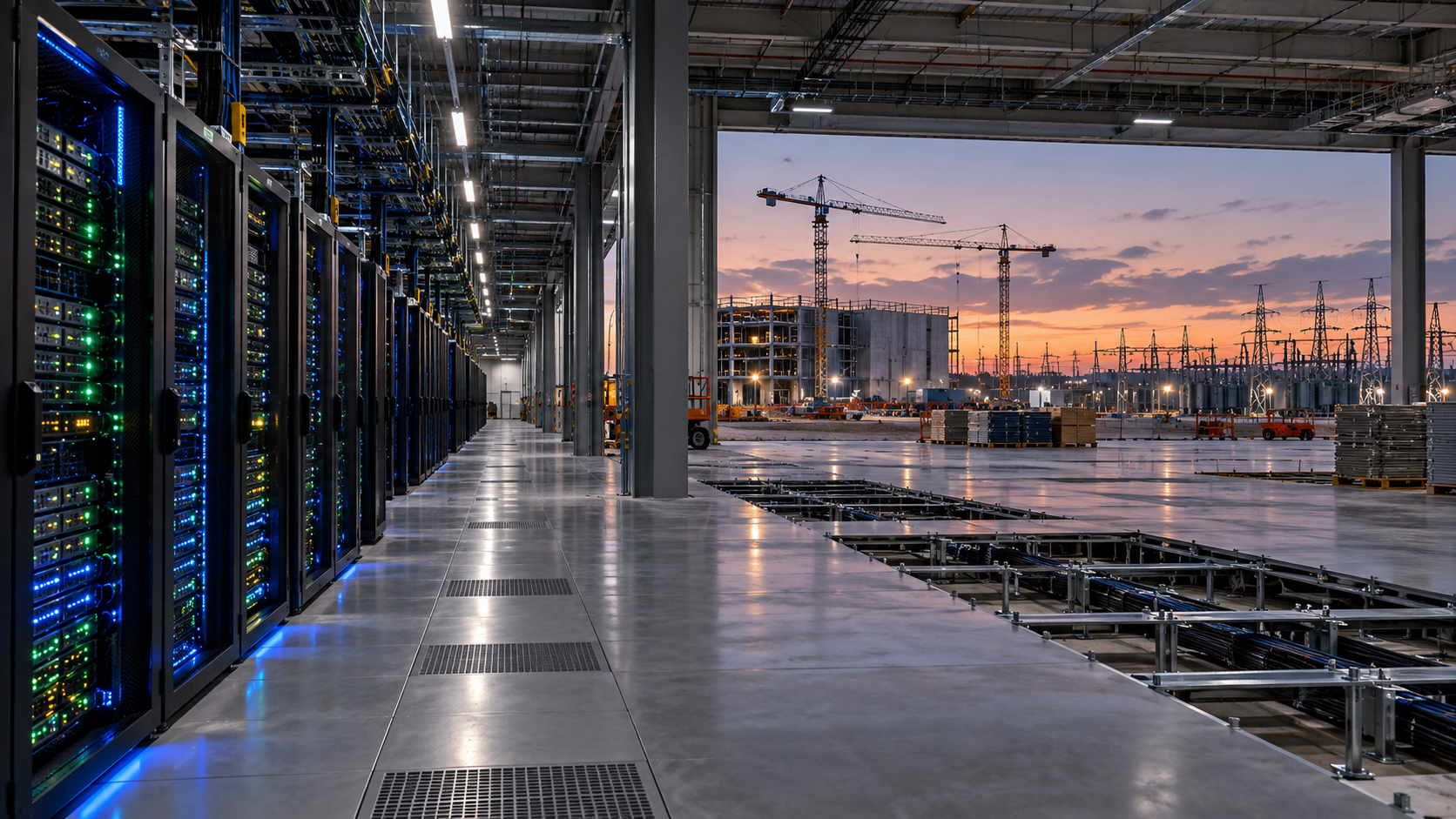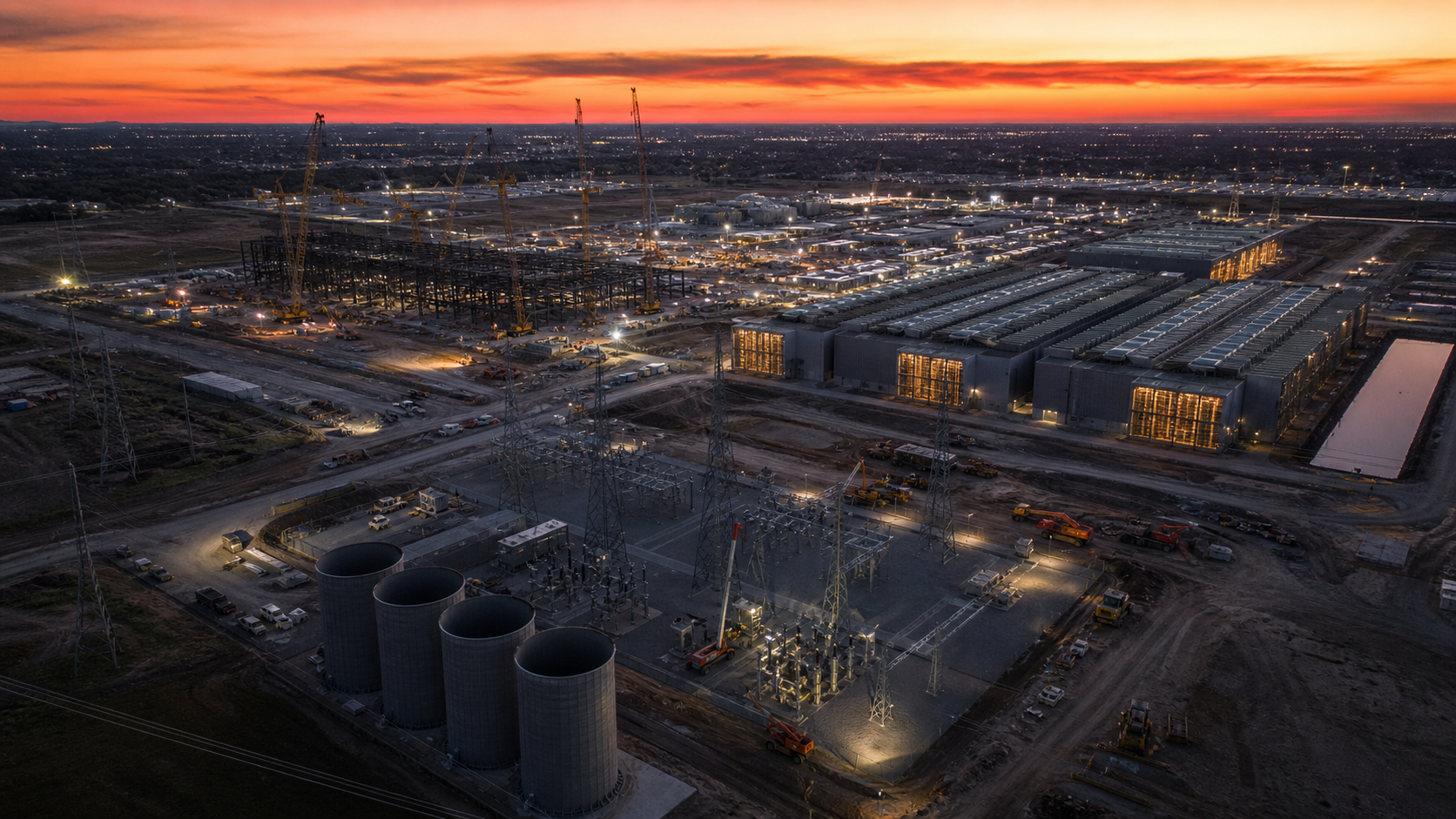
For years, software liked to flatter itself with a simple story: the hard part was product, distribution, and talent; infrastructure was mostly a cloud bill. AI is breaking that story. The industry now talks about models, agents, and developer experience on the surface, but underneath, the real contest is increasingly about substations, interconnect queues, cooling loops, transformer lead times, and who can finance a campus before a county has fully decided what it thinks about another giant load landing on the grid.
That is not a temporary distortion. It is the shape of the business. Training and serving advanced models pull AI toward the world of heavy industry. Once a company depends on large clusters, the economics stop looking like classic SaaS and start looking more like a hybrid of utilities, real estate, and capital markets. You can see the pressure in the public language of major labs and platform companies through places like OpenAI's newsroom, Anthropic's newsroom, and the wider reporting orbit around MIT Technology Review's AI coverage. The recurring themes are no longer just smarter models. They are capacity, deployment, demand, and access to compute.
The New Scarcity Is Physical
Software people are used to digital bottlenecks. AI introduces physical ones. If a promising product suddenly finds demand, the next constraint may not be inference architecture. It may be whether a site can secure enough electricity at the right reliability level, whether the local water strategy is politically viable, whether network connectivity is adequate, and whether the financing stack can survive a longer payback cycle than consumer internet investors historically tolerated.
This matters because physical scarcity behaves differently from cloud-era scarcity. You cannot solve every problem by hiring another optimization engineer. Better model efficiency helps, and smarter scheduling helps, but they do not repeal lead times. If power equipment takes months to arrive, it takes months. If a region cannot provide the load, the best slide deck in the world does not create a transmission line.
That is why the AI infrastructure conversation now sounds uncannily like project finance. Who bears utilization risk? Who signs long-term commitments? How is revenue visibility translated into debt capacity? What assumptions about model turnover are safe enough to justify a buildout that will outlive at least one generation of hardware hype? These are not side questions. They are becoming central questions, because the businesses being built on top of AI increasingly depend on answers that are operationally boring and financially unforgiving.
XioX's view is that many observers still underestimate the strategic consequences of this shift. In the last software cycle, capital loved optionality. Investors rewarded teams that stayed asset-light and flexible. In the AI cycle, optionality is still valuable, but control over constrained physical inputs may become even more valuable. A company with better access to power and deployment capacity can compound faster than a rival with a slightly better model but no room to serve demand at scale.
That changes competitive maps. It also changes the kinds of partnerships that matter. Utilities, construction firms, equipment suppliers, and regional governments are no longer background characters in the AI story. They are part of the plot. The same is true for cloud providers and chip vendors, whose role is increasingly similar to infrastructure landlords in a boomtown: they are not just selling tools, they are shaping which tenants get to grow.
There is also a governance angle here that should not be ignored. Once AI turns into visible local infrastructure, communities notice. Abstract debates about artificial intelligence become concrete debates about land use, water, resilience, tax incentives, and jobs. That pushes the industry out of the comfortable mythology of pure software and into public negotiation. Some firms will handle that well. Others will discover that political legitimacy is harder to scale than GPUs.
The likely outcome is a layered market. A handful of companies will operate with utility-scale assumptions and balance sheets. Another tier will specialize, lease, or partner their way into capacity without fully owning the burden. A long tail will build thin wrappers around models they do not control and infrastructure they cannot influence, which is a much more fragile position than many current valuations imply.
This does not mean product innovation stops mattering. It means product innovation no longer decides the whole game. The software industry spent decades pretending atoms were optional. AI is the reminder that they are not. A model is an intellectual asset, but an AI business is increasingly an infrastructure business too. The companies that understand that early will look less glamorous in the short term and more durable in the long term.
The deeper lesson is simple: once compute becomes strategic, the most important economics happen below the API. The market will still celebrate demos and benchmark wins, because they are legible and exciting. But enduring advantage may belong to the organizations that can treat energy, capacity planning, and financing as first-class product concerns. That is a very different managerial discipline from the one that built most of the software world, and the companies that fail to adapt will eventually discover that intelligence is expensive not only to invent, but to physically house.
Advertisement