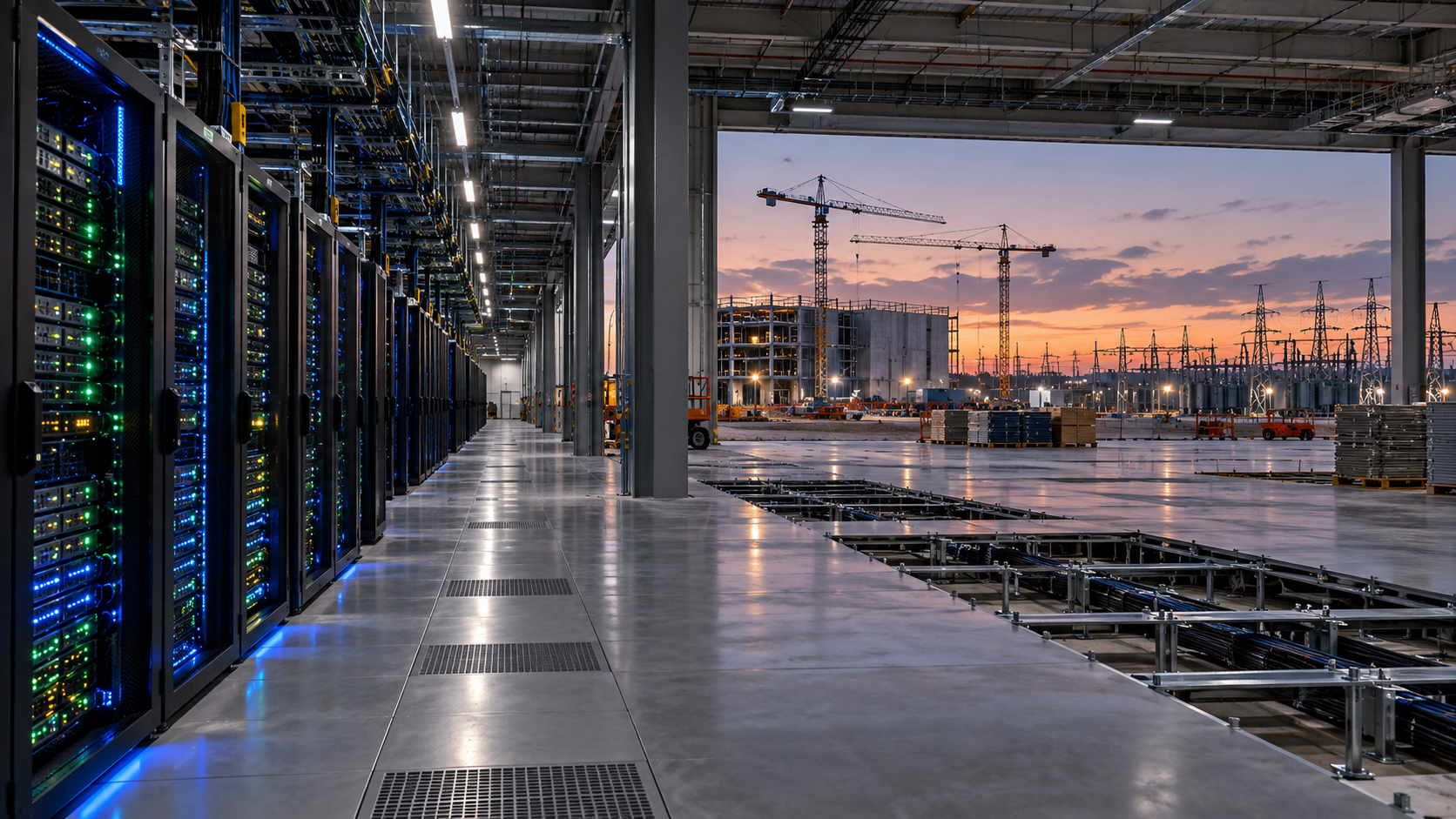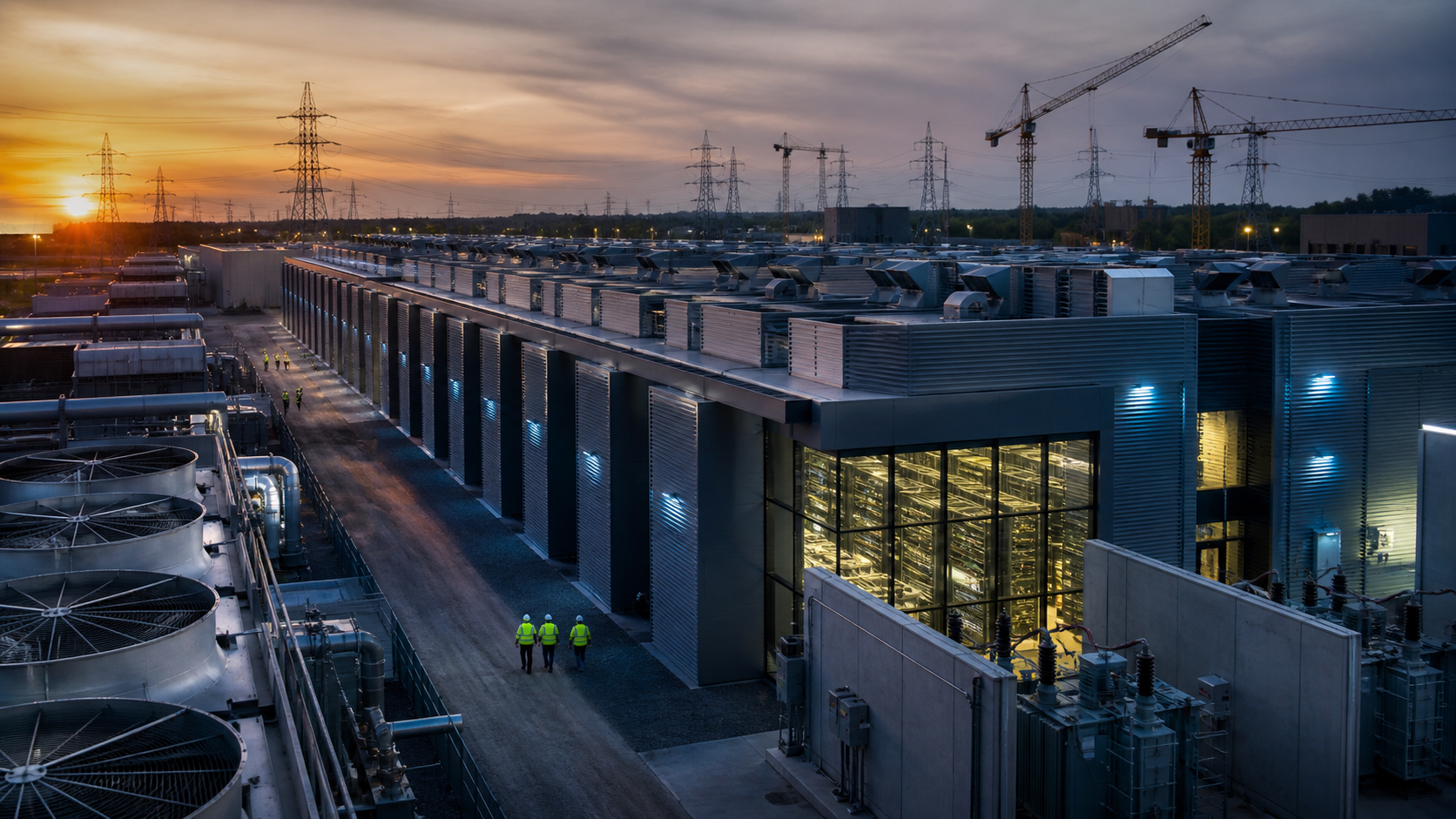
For a long time, AI inherited the mythology of software. It was supposed to scale with code, talent, and distribution. Compute mattered, of course, but it was framed as something the cloud would quietly absorb in the background. That framing is no longer credible. AI now looks less like a pure software market and more like a contest over industrial capacity.
The giveaway is where the serious conversations have moved. They are no longer only about model quality, developer ecosystems, or app-layer differentiation. They are about power contracts, utility interconnection queues, cooling design, equipment lead times, chip allocation, and who is willing to finance assets that behave more like factories than websites. Read enough coverage from Reuters’ AI reporting or broader technology analysis from MIT Technology Review and the pattern becomes unmistakable: the center of gravity is shifting from abstraction to physical constraint.
This matters because markets behave differently when the bottleneck is physical. In a classic software story, the best product can outrun incumbents because distribution is cheap and marginal cost trends down. In an infrastructure story, timing, financing, and asset control can matter just as much as product elegance. If a company cannot secure enough power or enough high-performance compute, strategy gets rewritten by facilities math. The product roadmap becomes partially subordinate to the buildout schedule.
The AI stack now includes land, transformers, and patience
That is not a metaphor. One of the clearest mistakes in current AI discourse is treating data centers as neutral containers for model progress. They are not passive boxes. They are strategic assets with long planning cycles, local political implications, and hard engineering tradeoffs. The economics of training and serving advanced models increasingly depend on where a facility sits, how quickly it can be energized, what kind of cooling it supports, and whether the surrounding grid can tolerate sustained demand growth.
Once you see that clearly, several fashionable assumptions start to break down. First, not all AI companies are competing on the same field. A firm with access to deep balance sheets, long-dated infrastructure partnerships, and patient capital is playing a different game from a startup trying to rent its way into scale. Second, cloud concentration becomes easier to understand. The biggest providers are not just selling convenient APIs. They are assembling a defensive moat made of procurement muscle, power access, networking, and construction capability. Third, national policy starts to matter more than the software industry is used to admitting. Energy regulation, permitting, trade policy, and industrial incentives now shape what kinds of AI businesses can exist at all.
This does not mean infrastructure owners automatically win. Owning expensive capacity is not the same thing as creating valuable products. But it does mean the old distinction between "platform" and "utility" is blurring. The model company that depends on an outside compute stack may find itself strategically exposed. The cloud company with plenty of capacity but weak product understanding may discover that infrastructure advantage does not guarantee customer love. The next decade in AI will be defined by who can bridge those two worlds rather than pretending one can dominate without the other.
There is also a financing angle that deserves more attention. Capital markets know how to value software growth and they know how to finance infrastructure, but AI asks them to combine those instincts in awkward ways. Investors are being asked to back assets with long useful lives in a market where model economics, customer demand, and technical paradigms still change quickly. That tension encourages strange behavior: overbuilding in some places, caution in others, and a constant struggle to decide whether a spend is a temporary race premium or a durable platform investment.
Public narratives from companies and research organizations often focus on the exciting layer of capability. Those are worth following through sources like OpenAI’s newsroom and Google DeepMind’s blog. But XioX’s view is that the more consequential story sits underneath. The firms that shape AI’s future will be the ones that understand infrastructure not as an operational detail, but as a core product dependency. If your model architecture assumes abundant cheap compute forever, your strategy is fiction. If your go-to-market plan ignores energy and hosting concentration, your margins are fiction too.
There is a more subtle consequence for the rest of the software market. As AI workloads become more capital-intensive, many application companies will need to choose which side of the line they live on. Some will accept dependence on the major platforms and differentiate at the workflow layer. Others will chase tighter vertical integration because the economics or latency requirements demand it. What will disappear is the comfortable middle, where every company gets to speak as though infrastructure were both infinite and someone else’s problem.
The cloud era trained builders to think in terms of abstraction layers. AI is teaching a harsher lesson: some abstractions hold until demand becomes strategically important, and then the steel underneath starts to dictate the business. When people say AI is changing everything, this is one of the less glamorous ways they are right. It is pulling software back into the world of real assets, long lead times, and industrial bargaining power. That shift will outlast any single model cycle.
Advertisement