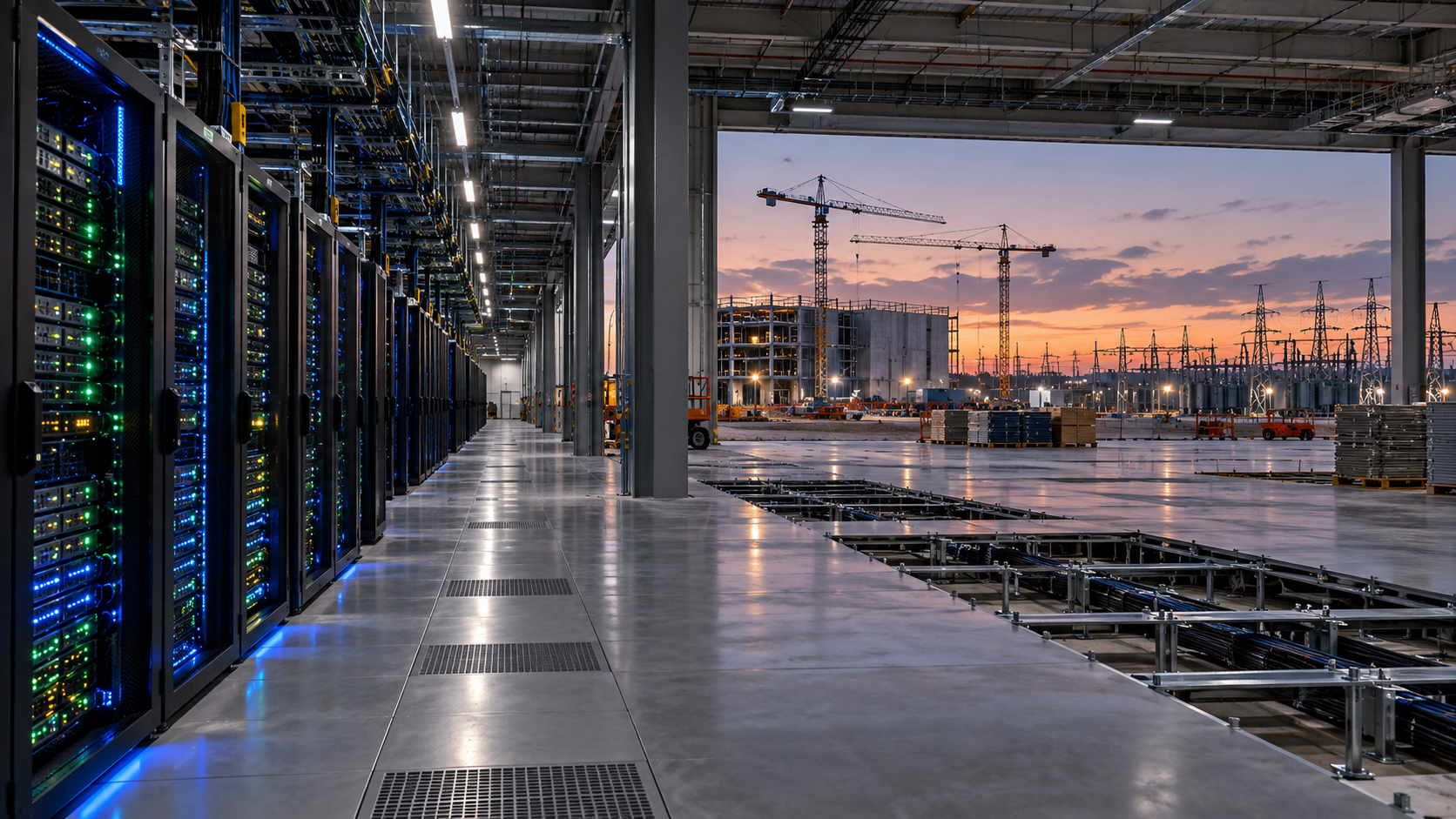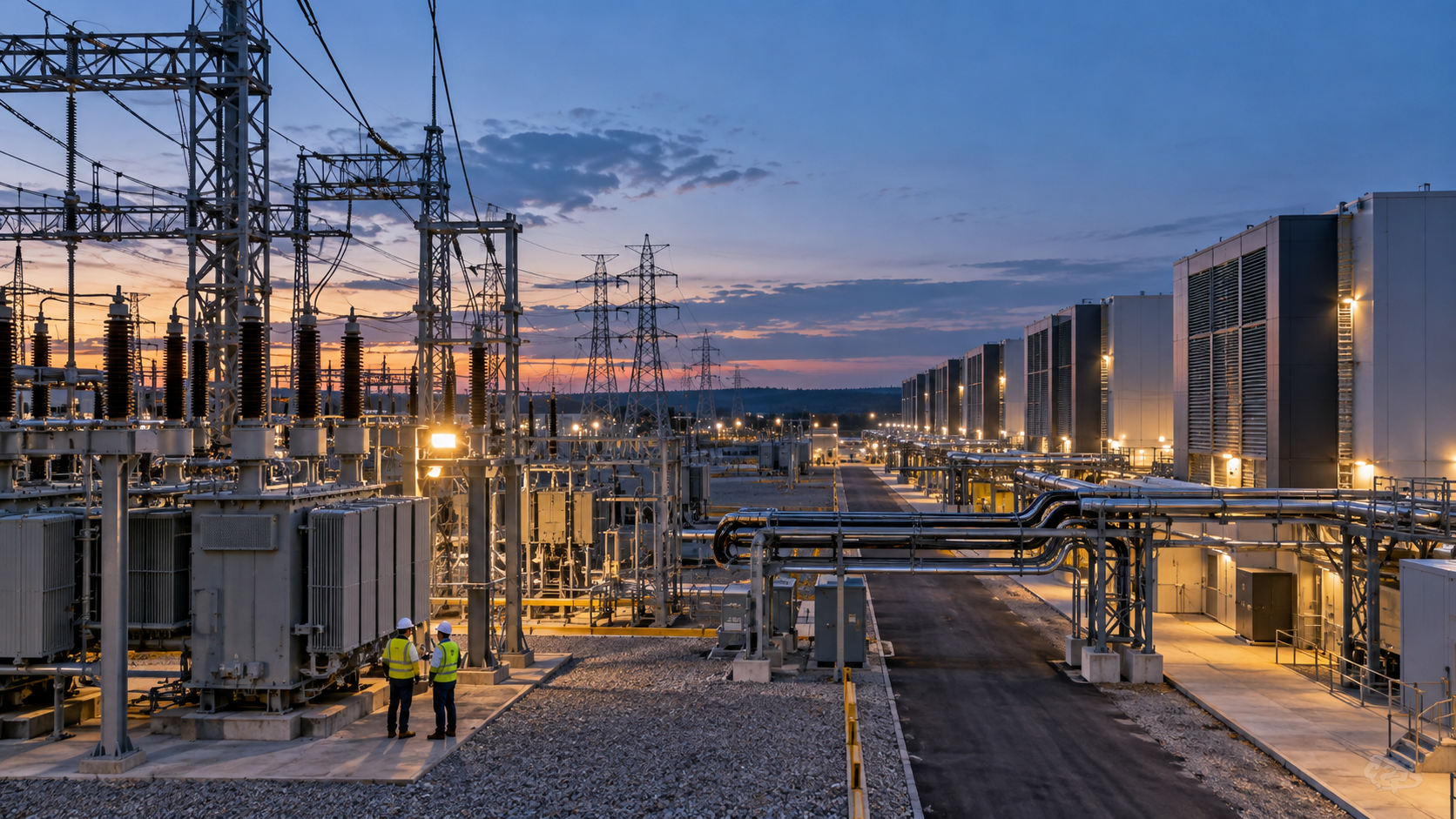
The AI industry learned to speak fluently about accelerators, memory bandwidth, and model efficiency. It is less comfortable discussing transformers of the electrical kind. Yet the physical business of delivering electricity is becoming inseparable from the digital business of selling intelligence.
A warehouse full of advanced chips is not useful capacity until it has dependable power, cooling, network access, permits, and a connection to the grid. Those inputs move on different clocks. A model architecture can change in months. A large transmission project can take years. That mismatch is turning electrical infrastructure from a facilities concern into a strategic product constraint.
Compute supply is becoming location-specific
“How much compute do we have?” sounds like a single question. In practice, compute is tied to a place, and places have different power markets, interconnection queues, weather risks, water constraints, tax regimes, and community tolerance.
The International Energy Agency’s work on energy and AI treats data centers as a significant new source of electricity demand while emphasizing that the effects will be highly concentrated. That concentration is commercially important. Global generation may be adequate in aggregate while a particular metro area cannot connect another large campus on the requested schedule.
The result is a new geography of AI. Regions with available generation and credible grid expansion can become compute exporters. Regions with congested networks may discover that favorable real estate and tax policy cannot compensate for a multi-year wait for power. Cloud architecture will still abstract machines away from software teams, but it cannot abstract infrastructure away from balance sheets.
The interconnection queue is becoming a product roadmap
For an AI provider, delayed power does not merely postpone a construction project. It can limit training schedules, inference availability, customer commitments, and the economics of a model launch. Capacity planning therefore needs to move upstream into product strategy.
This has several consequences. First, the value of an existing powered site rises because it offers time, not just megawatts. Second, long-term energy contracts become a hedge against product uncertainty. Third, smaller model and systems improvements gain financial significance: an efficiency gain can translate into more customers served from capacity that already exists.
That last point is routinely underestimated. Efficiency is often framed as an environmental virtue or a way to cut an API bill. Under a binding power constraint, it is also a revenue technology. Quantization, caching, routing, batching, speculative decoding, and purpose-built smaller models can create sellable capacity faster than a new substation can.
This is why the industry’s appetite for ever-larger models will coexist with intense work on extracting more useful computation from each watt. Scale and efficiency are not rival philosophies. When infrastructure is scarce, they become complements.
Energy claims need better accounting
Companies will be tempted to answer scrutiny with a single renewable-energy percentage. That number can conceal more than it reveals. Electricity consumed at one hour and compensated with generation at another is not physically interchangeable when a grid is constrained. Nor does an annual corporate total explain local effects on generation, transmission, water, or prices.
Google’s public environmental reporting illustrates the breadth of issues large computing operators now have to track, from energy demand to water and emissions. The next step for the sector should be more granular disclosure: where new demand appears, when it occurs, what resources serve it, and which infrastructure investments accompany it.
This is not a demand for false precision. Data-center workloads are dynamic, hardware utilization changes, and contractual power arrangements are complex. But decision-useful ranges and location-specific explanations would be better than corporate averages that make every facility look alike.
The social license cannot be procured like a GPU
AI infrastructure competes with homes, factories, hospitals, and electrification projects for grid capacity. A technically valid interconnection agreement does not settle the political question of who benefits and who bears the cost.
Communities will reasonably ask whether a project creates durable local employment, whether customers will subsidize grid upgrades, how backup generation affects air quality, and what happens during drought or peak demand. Developers that treat these questions as communications obstacles will create opposition they could have avoided.
The stronger approach is to design local value into the project: fund incremental infrastructure, support generation that adds real capacity, offer demand flexibility, publish water strategies, and make cost allocation legible. A data center able to reduce load during grid stress may be a better neighbor—and ultimately a more resilient asset—than one designed only for maximum continuous consumption.
Software leaders need an infrastructure vocabulary
The separation between software strategy and energy strategy is now obsolete for companies operating AI at scale. Product leaders do not need to become utility engineers, but they should understand firm capacity, congestion, curtailment, interconnection risk, and hourly carbon intensity. Boards evaluating large compute commitments should ask what happens if power arrives late, costs more than forecast, or becomes politically contested.
The winners of the next AI infrastructure cycle will not simply be the firms that order the most chips. They will be the ones that coordinate silicon, software efficiency, power procurement, construction, and public legitimacy as one system. Intelligence may be sold through an API, but its supply chain ends in copper, concrete, turbines, and permission to connect.
Advertisement