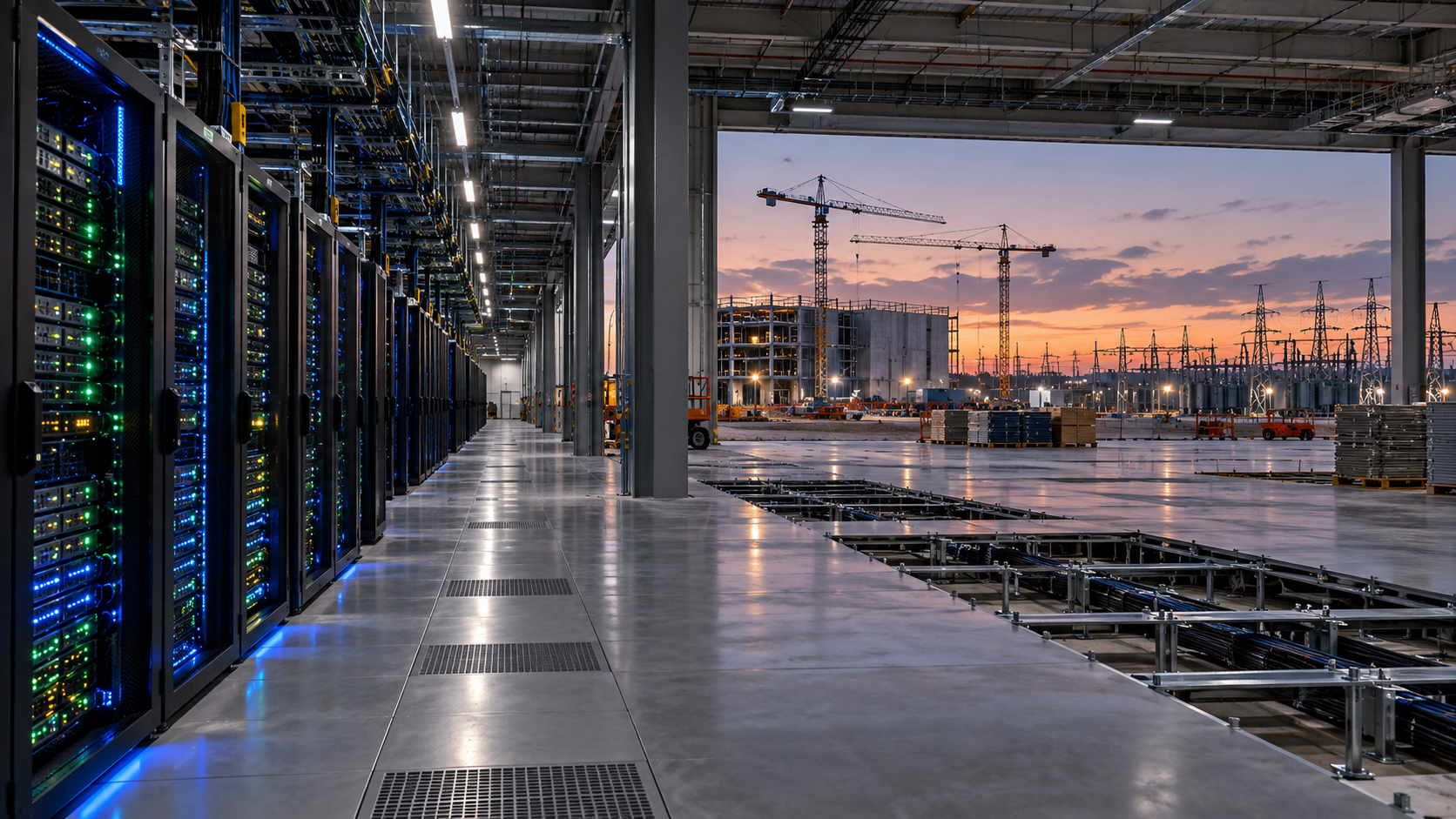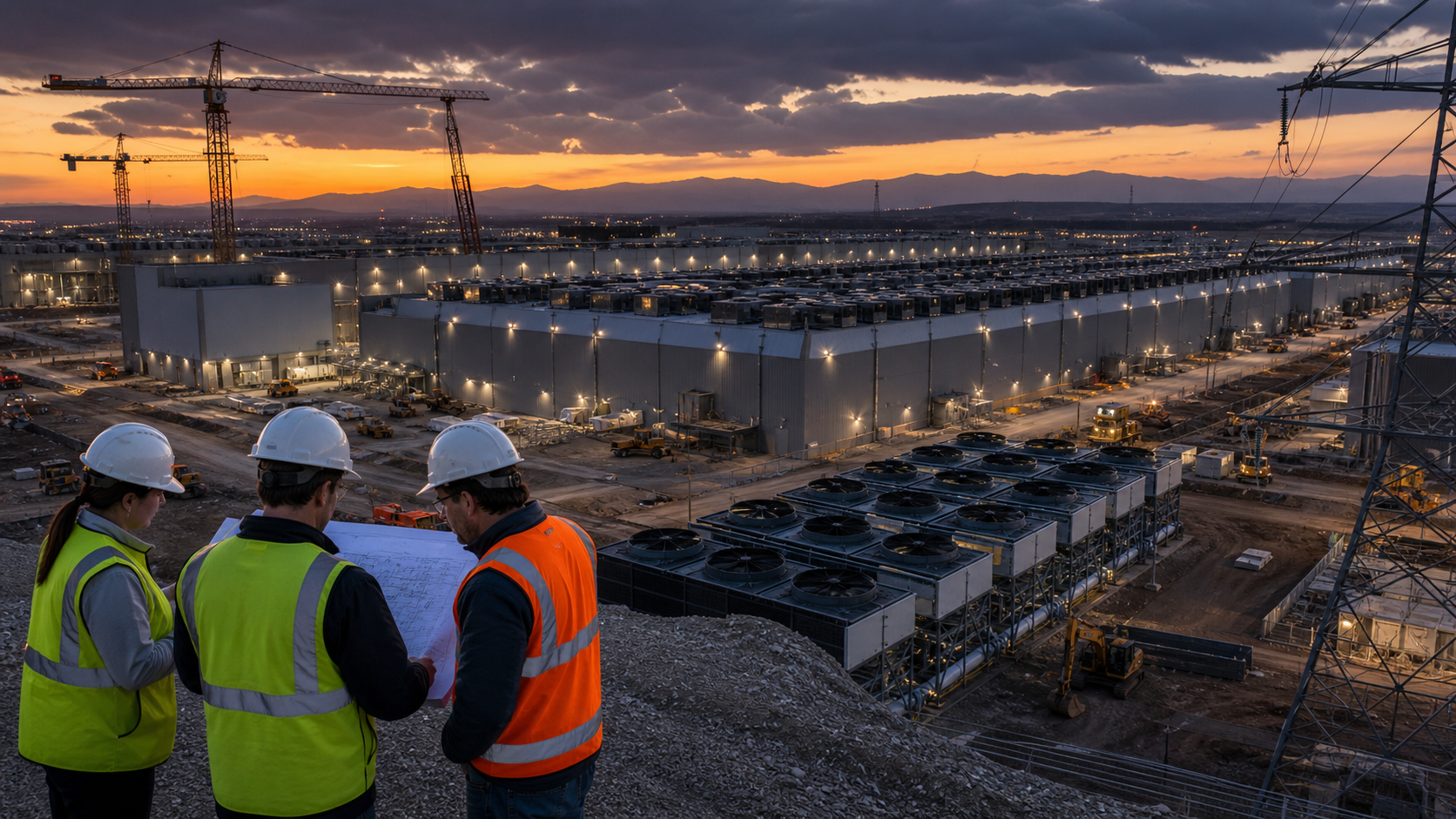
The popular story about AI is still written in software language. New model, new feature, new app, new subscription tier. That framing is incomplete to the point of distortion. The deeper story is that AI is becoming an infrastructure business: one that depends on power availability, datacenter construction, grid interconnection, cooling systems, chip packaging, financing discipline, and long-horizon supply commitments. If you want to understand where the next durable advantage will come from, stop staring only at the interface layer and start following the concrete, cables, transformers, and balance sheets.
You can see the shift in plain sight if you read the public output of the major players. The announcements on OpenAI’s news page are not just about models; they increasingly point toward the stack required to serve them. The same is true in Anthropic’s newsroom, where partnerships and compute access sit alongside model releases. Meanwhile, the broader trade press, from TechCrunch’s AI coverage to WIRED’s AI reporting, keeps circling the same question: who can actually build and sustain the physical capacity that advanced AI now demands?
That question is not a footnote. It is rapidly becoming the market. During the last generation of software, companies could often scale by renting more cloud and hiring more engineers. The binding constraints were distribution, talent, and product execution. In the current AI cycle, those still matter, but the hard ceiling often arrives elsewhere. Can you secure enough chips? Can you get power to the site? Can you cool the machines economically? Can you sign customer commitments with enough confidence to justify long-lived capital expenditure? Can you survive a world where the cost of staying at the frontier is measured not only in research salaries but in industrial-scale deployment decisions?
From SaaS Logic to Industrial Logic
That change breaks some comforting assumptions. Traditional software investors like businesses that scale with elegant margins and limited physical drag. AI at the frontier looks different. It behaves more like a hybrid of software, utilities, and heavy infrastructure. The winners will still write excellent software, but they will also need procurement sophistication, capacity planning, and operational discipline that look closer to telecom or energy than to classic venture-era SaaS. A board that only understands feature velocity will miss the actual risk profile of the business it owns.
This is why the current AI race should not be reduced to “Who has the smartest model?” That matters, but it is only one layer. A slightly weaker model with better access to infrastructure, better cost control, and a better path to dependable service can be commercially stronger than a superior research artifact trapped behind unstable economics. In mature markets, operational leverage beats technical elegance all the time. AI is moving into that phase faster than many people expected.
There is a second-order effect here for startups. A few years ago, the standard advice was to stay asset-light, avoid hard dependencies, and outsource the expensive plumbing. In AI, that advice needs refinement. Not every startup should own infrastructure, but every serious AI company now needs an explicit point of view on infrastructure exposure. If your unit economics depend on a future collapse in inference costs, say that plainly. If your product only works at scale when reserved capacity is available, say that too. Pretending the physics layer is somebody else’s problem is not strategy; it is deferred surprise.
This also helps explain why enterprise buyers are acting more cautiously than the hype cycle suggests. CIOs are not merely asking whether a model can do something impressive. They are asking whether the vendor behind it can deliver stable service, predictable pricing, compliance support, and a roadmap that survives the next cost shock. Many AI product categories still look oversupplied if you compare demos, yet undersupplied if you compare dependable, economically sustainable production capacity. That is a healthy correction. It pushes the market away from theatrical launches and toward industrial credibility.
Energy becomes central in this world, not metaphorically but literally. The conversation about AI competitiveness increasingly overlaps with grid modernization, siting politics, water use, permitting timelines, and regional power economics. That is a strange sentence only if you still think AI is mainly a clever software trick. Once you view it as a compute-intensive industrial platform, the overlap is obvious. Nations, cloud providers, and model labs are now participating in what amounts to infrastructure strategy. The policy implications are substantial, but so are the commercial ones.
XioX’s view is that this shift will separate durable companies from temporary excitement. The durable ones will not simply announce bigger models or louder roadmaps. They will show an ability to translate AI demand into sustainable service delivery. They will know when to own capacity, when to partner, when to optimize for latency, and when to optimize for cost. They will make hard tradeoffs about location, hardware mix, and customer segmentation rather than pretending every workload deserves frontier-level compute.
There is no romance in this argument, which is exactly why it matters. Markets often overvalue the glamorous layer and underprice the enabling layer until the constraint becomes impossible to ignore. AI is approaching that moment. The next chapter of competition will not be decided by who can produce the most impressive demo clip on launch day. It will be decided by who can turn intelligence into infrastructure and infrastructure into a reliable business.
Advertisement