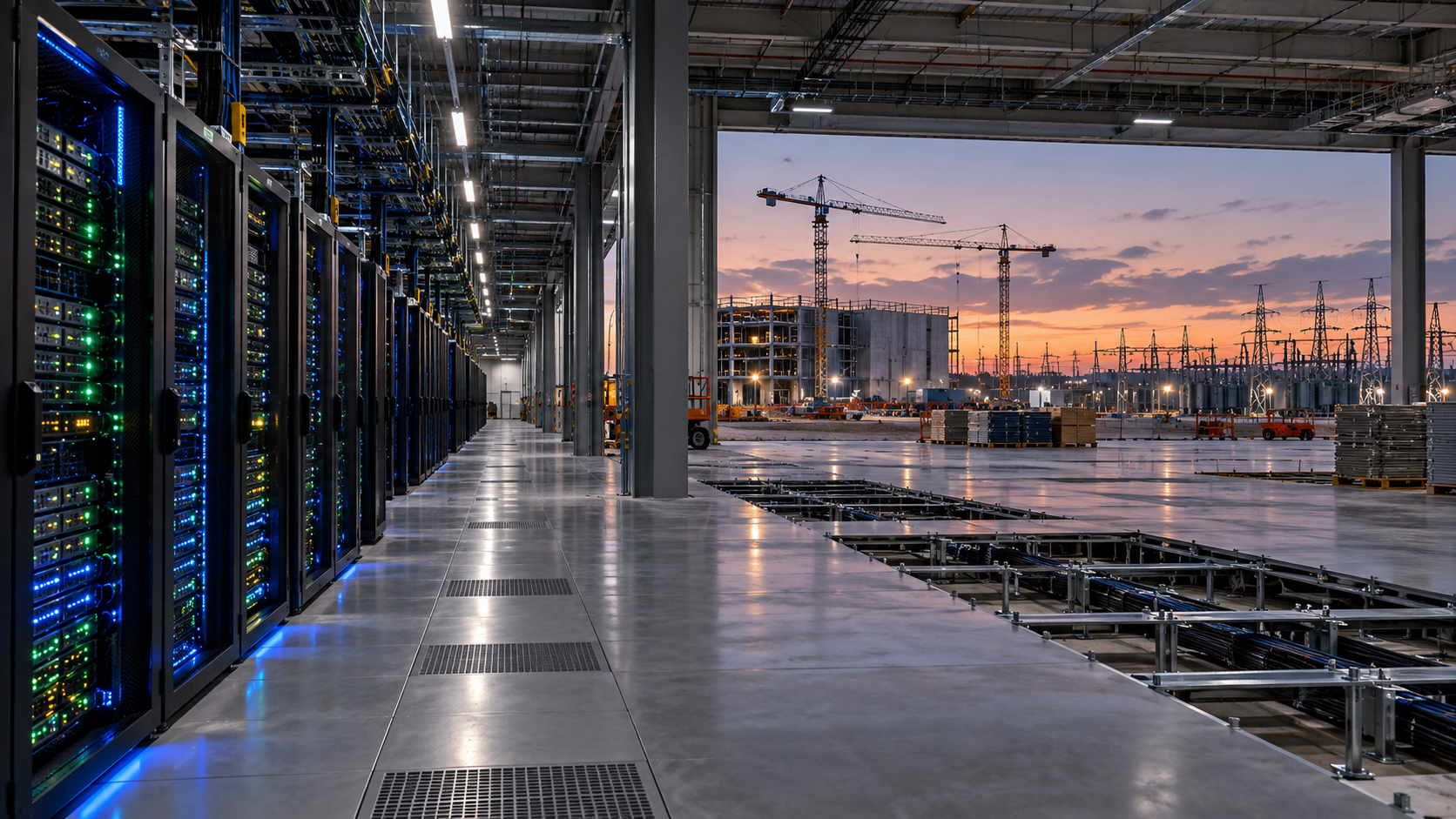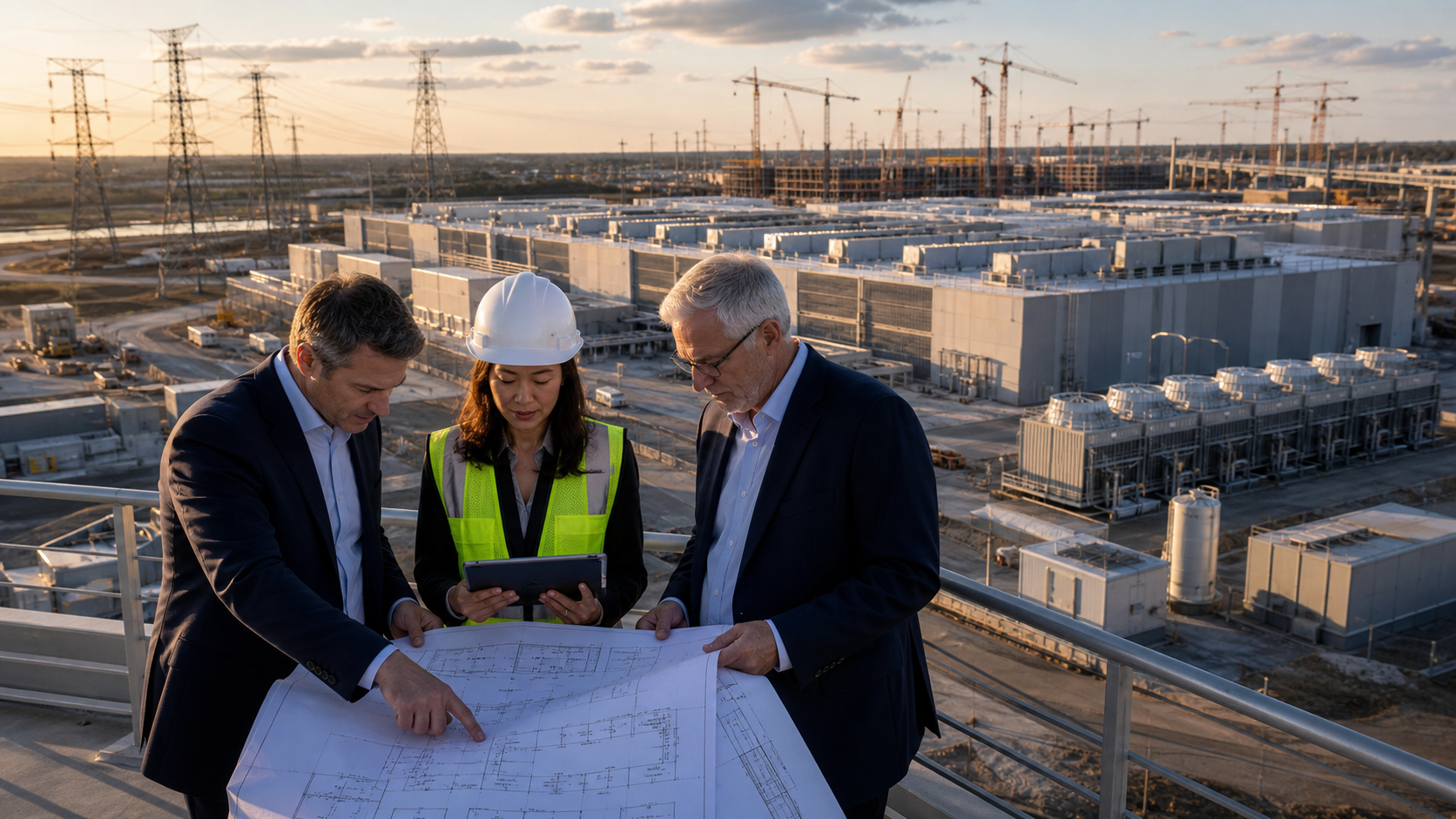
Most AI commentary still treats the market as a contest of ideas. Which lab has the smarter model? Which assistant feels more natural? Which startup ships the cleverest feature? Those questions matter, but they no longer describe the deepest competitive layer. AI is becoming an infrastructure business, and infrastructure businesses do not behave like app markets. They reward capital discipline, supply chain control, power access, and the ability to carry huge fixed costs long enough for software demand to catch up.
The shift is visible in plain sight. Read the flow of announcements from OpenAI, Anthropic, or Google DeepMind, and you are not just reading a story about model releases. You are reading a story about partnerships, compute access, enterprise distribution, and the industrialization of inference. The companies shaping AI are not merely inventing smarter systems. They are assembling the machinery required to operate intelligence at planetary scale.
Why Capital Intensity Changes Everything
That matters because capital intensity changes corporate behavior. In a traditional software market, a strong product can scale with relatively modest marginal cost. In frontier AI, the opposite pressure often applies. Every jump in capability can drag behind it new spending on chips, training runs, networking, storage, energy procurement, and reliability engineering. The more useful the system becomes, the more expensive the operational promise gets.
This creates a strange but increasingly familiar shape in the market. On one end, AI is sold with the language of frictionless software: instant answers, natural interfaces, low barriers to adoption. On the other end, it is financed and engineered like heavy industry. The mismatch confuses both founders and buyers. Founders assume capability alone will protect margins. Buyers assume model quality will keep compounding without affecting price, availability, or service constraints. Neither assumption is safe.
The key strategic question is no longer who can train a powerful model once. It is who can deliver powerful models repeatedly, with predictable latency and cost, while demand spikes, workloads diversify, and enterprises ask for stronger guarantees. That is not just a research challenge. It is an operations challenge with a balance sheet attached.
Seen through that lens, the next wave of winners may not look like pure model companies at all. They may look like hybrids: part lab, part utility, part systems integrator. They will need technical credibility, yes, but also deep competence in procurement, siting, energy strategy, security, and enterprise packaging. The AI stack is thickening, not thinning.
Why the Market Will Punish Naive Growth
There is a tendency in exuberant technology cycles to believe that demand will justify any amount of infrastructure spend. Sometimes that is true, but history is much less forgiving than pitch decks. Capacity built too early destroys returns. Capacity built too late concedes the market. AI firms are now trying to thread that needle while the underlying economics are still moving.
That creates a brutal managerial problem. If you overbuild, you carry an enormous cost base and pressure your organization into monetization decisions it may not be ready to make. If you underbuild, you become a product company trapped by your own success, unable to serve customers consistently or price aggressively. In both cases, the market's favorite narrative, rapid growth, becomes dangerous if it outruns operational reality.
This is why AI infrastructure should be viewed less as a supporting function and more as strategic doctrine. Power contracts, hardware roadmaps, data center design, and orchestration layers are not boring backend details. They are the architecture of business durability. They influence which customers you can serve, what latency envelope you can promise, how much experimentation you can subsidize, and whether your margins improve or collapse as usage rises.
XioX's perspective is that many software companies still underestimate how quickly this logic will reach them. Even teams that never train a frontier model are being pulled into the infrastructure economy through usage-based APIs, retrieval pipelines, vector storage, compliance layers, GPU-backed fine-tuning, and agent runtimes. They may not be building data centers, but they are absolutely buying exposure to someone else's capital structure.
That has two implications. First, product strategy and cost engineering can no longer be separated. If your AI feature depends on a stack whose economics you do not understand, you do not really control the feature. Second, procurement becomes part of innovation. The companies that make money with AI will not simply be the ones with imagination. They will be the ones that can convert compute into differentiated workflows before the meter runs ahead of customer value.
There is also a geopolitical edge to this story. Once AI becomes infrastructural, it stops being merely a software category and starts touching industrial policy. Power availability, semiconductor capacity, network buildout, and data sovereignty all become competitive variables. That does not mean every enterprise buyer needs to become a policy analyst. It does mean executives should stop pretending AI is just another SaaS line item.
The market will continue to celebrate model launches because launches are easy to narrate. But the firms that define the next phase of AI will be the ones that master the less glamorous disciplines behind the curtain. They will know how to finance demand, secure supply, absorb volatility, and turn capital intensity into defensible advantage. The AI race is not slowing down. It is hardening into an infrastructure contest, and that should change how every serious company thinks about product, partnership, and risk.
Advertisement