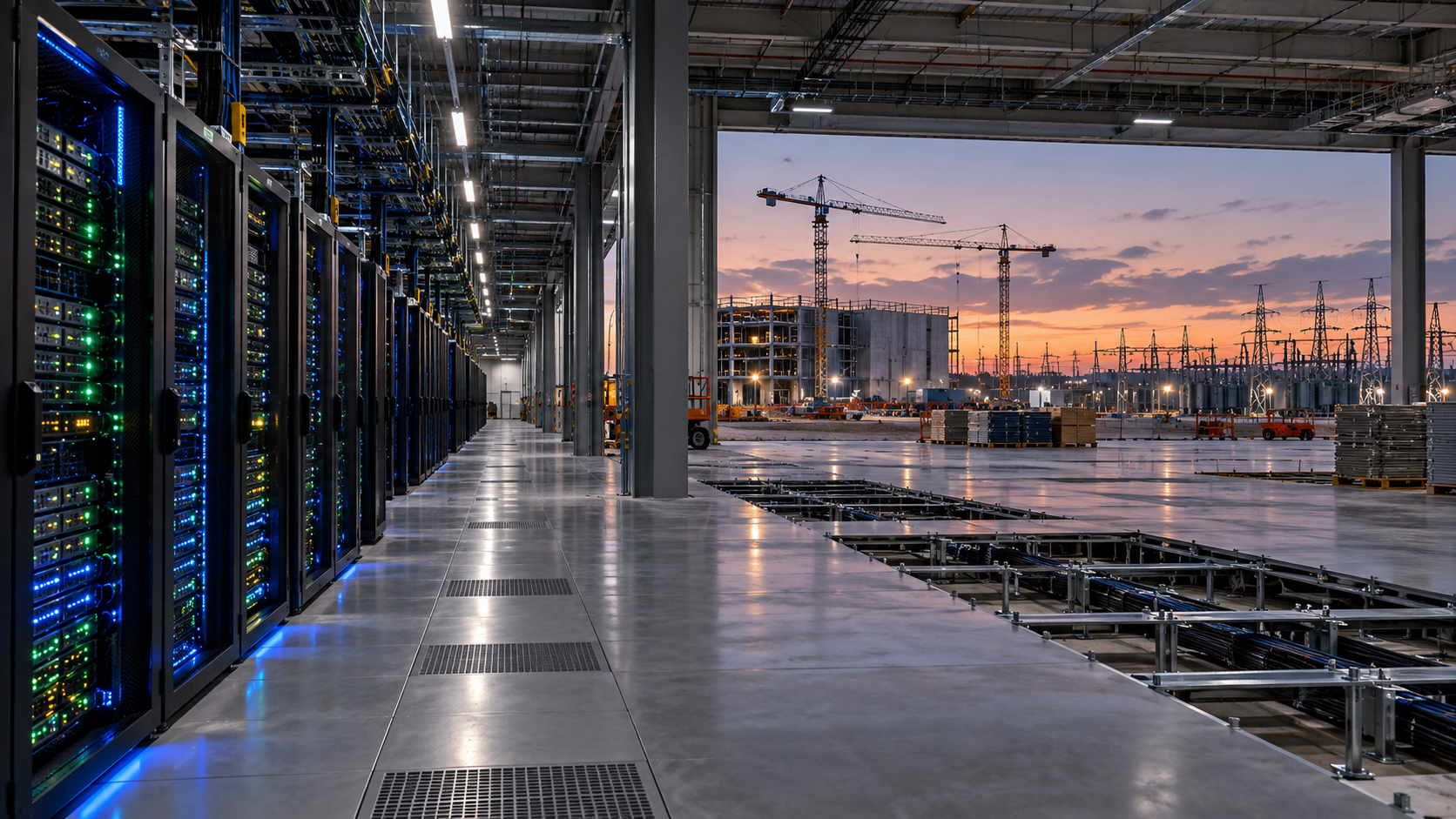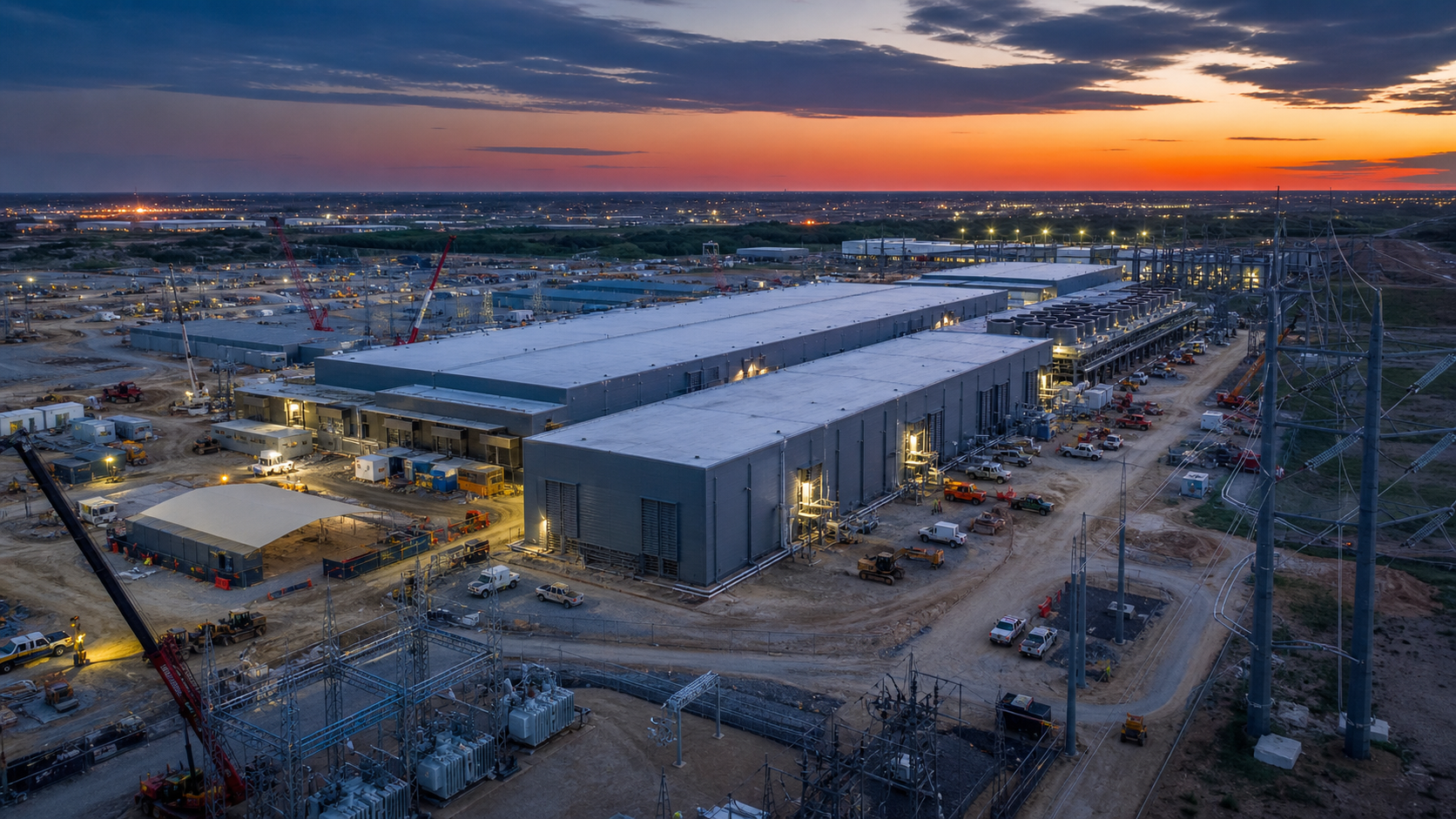
Listen to the public language around AI and you still hear the old software fantasy. Better models. Faster releases. Bigger context windows. Nicer product demos. But look at where advantage is actually being secured and a different picture emerges. The modern AI race is no longer just about algorithms or user growth. It is about who can line up power, land, cooling, chips, debt capacity, and political permission quickly enough to keep model ambition from outrunning physical reality.
That shift matters because it changes what kind of companies frontier AI firms are becoming. They still write code and train models, but they increasingly behave like hybrid entities: part software platform, part industrial buyer, part infrastructure financier. If you want to understand where the market is headed, you learn more from the cadence of Reuters' AI coverage and the steady drumbeat of company infrastructure posts on OpenAI's newsroom than from one more debate about prompt quality. The story underneath the story is capital formation.
Infrastructure Has Become Strategy
In the earlier phase of the boom, compute looked like a scaling variable. Raise more money, buy more GPUs, train a better model. That frame now looks naive. Compute is not merely an input. It is an ecosystem of binding commitments. A datacenter is a choice about geography, utility dependence, cooling architecture, supplier leverage, and time horizon. A power contract is a product decision in disguise, because it determines which workloads can be served, at what latency, and with how much headroom for future launches.
That is why AI companies increasingly sound like infrastructure operators when they discuss growth. They talk about clusters, utilization, reliability, efficiency, and throughput because those concerns have moved from the basement to the boardroom. Even older material such as Google DeepMind's work on AI for data-centre cooling feels newly relevant in this context. The point is not nostalgia. The point is that AI's economics have become inseparable from physical systems management.
Once you see this, several market behaviors make more sense. Partnerships that looked like simple vendor relationships start to resemble strategic treaties. Leasing decisions become signals about confidence and risk tolerance. Regional expansion is constrained not just by customer demand but by permits, substations, water access, transmission timelines, and local politics. The industry likes to pretend progress is purely technical because technical progress flatters its identity. Reality is harsher. A world model cannot ship through a power bottleneck.
The Balance Sheet Is Now Part of the Product
The next implication is uncomfortable for many software-minded founders: your balance sheet may matter almost as much as your research roadmap. When infrastructure commitments stretch across years, the old distinction between capex, opex, and product velocity stops being tidy. Every long-term compute agreement is a view on demand durability. Every financing structure is a bet on future utilization. Every underused cluster is not just a technical inefficiency but a strategic wound.
This is one reason broad AI commentary often feels shallow. It borrows the language of apps while ignoring the economics of assets. In ordinary software, demand can often be tested cheaply and scaled elastically. In frontier AI, companies are making commitments whose consequences arrive long after the quarterly product cycle. That is a different managerial burden. It requires people who can translate model roadmaps into bankable infrastructure plans and who understand that overbuilding and underbuilding carry different but equally serious forms of risk.
There is also a geopolitical layer that the industry still understates. Power availability is local. Grid upgrades are slow. Semiconductor supply remains concentrated. National industrial policy is back in the room. This means AI competition is not just firm versus firm; it is region versus region, permitting regime versus permitting regime, and infrastructure stack versus infrastructure stack. The result is that seemingly abstract conversations about model leadership now ride on very concrete questions: who gets first call on scarce equipment, who can finance the waiting period, and who can keep the utilization story credible enough to justify the next round of expansion?
Software Teams Need an Industrial Imagination
For builders, the lesson is not that models no longer matter. They do. The lesson is that model quality is only monetizable when the physical substrate is durable. This is why we expect more AI strategy to look boring from the outside. More energy procurement. More siting analysis. More work on efficiency rather than spectacle. More attention to throughput and scheduling. More respect for disciplines that Silicon Valley once treated as slow-moving background conditions.
XioX's view is that the winners in the next phase will be the companies that stop narrating AI as pure software and start operating like adult infrastructure businesses without losing product speed. That is a demanding combination. It requires technical excellence, yes, but also capital discipline, operational sobriety, and an honest grasp of the physical world. The market will keep rewarding stunning demos. The firms that last will be the ones that can turn those demos into sustained output without being crushed by their own utility bill.
The new AI arms race does not end in the model card. It runs through power purchase agreements, transformer lead times, cooling efficiency, debt structures, and the patient work of pouring concrete before demand is fully certain. That may sound less romantic than the mythology of genius models changing everything overnight. It is also far closer to the truth.
Advertisement