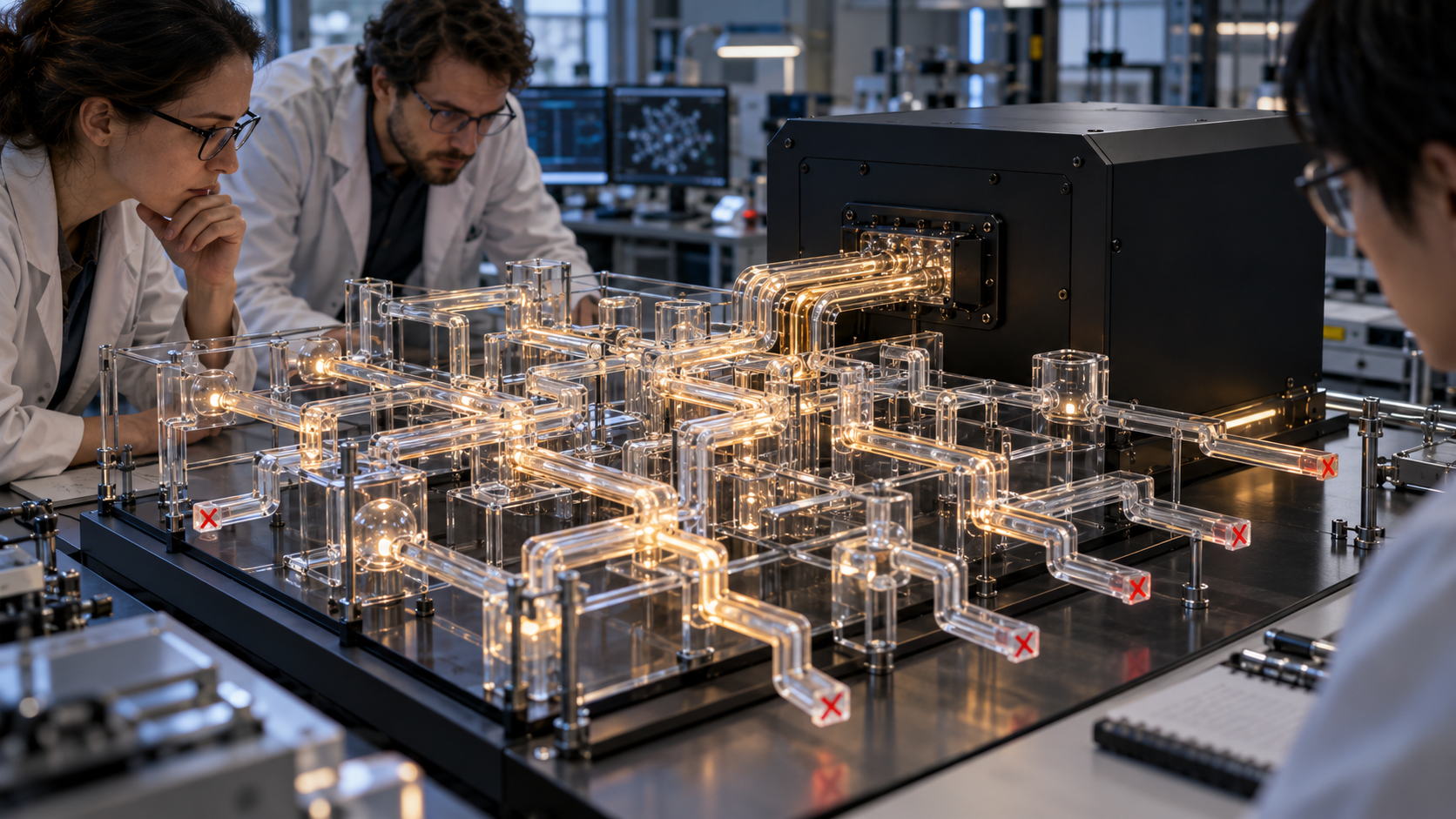
The most common mistake teams make with AI coding tools is assuming the point is to write more code. That is an understandable instinct. When a model can scaffold modules, draft tests, explain APIs, and produce respectable first passes in seconds, output becomes the visible win. But software organizations do not usually fail because they lack enough text in their repositories. They fail because they merge the wrong text, miss system interactions, and let local speed outrun global understanding. The interesting effect of AI is not that it removes engineering judgment. It makes judgment the scarcest part of the loop.
If you follow product updates from OpenAI, the ongoing experiments described by Anthropic, or the running stream of implementation work on arXiv, one conclusion keeps surfacing: models are increasingly good at generating plausible moves. Plausibility is useful, but it is not the same as architectural fit, maintainability, or operational safety. A junior engineer can now ask an AI system for five implementations of the same feature. That sounds like leverage. Sometimes it is. Sometimes it is just five ways to smuggle new risk into a codebase faster than the team can reason about it.
The new bottleneck is judgment
Once code generation gets cheap, review changes shape. It is no longer a backstop at the end of the process. It becomes the core manufacturing step. Someone still has to decide whether the generated code matches the real intent of the product, whether it respects the system's boundaries, whether the tests cover the failure modes that matter, and whether the change creates hidden maintenance debt. In an AI-assisted workflow, those questions show up more often, not less often, because the volume of candidate code rises faster than the team's ability to inspect it casually.
This is why strong teams are not simply telling everyone to use AI and ship faster. They are redesigning the path from prompt to production. They are writing better specs so the model has less room to improvise badly. They are making test harnesses easier to run so generated changes face friction early. They are building review checklists that focus on invariants, edge cases, and integration risks rather than style trivia. They are using AI to produce options, then using human reviewers to collapse those options against system reality. The leverage comes from concentrating scarce judgment where it matters most.
There is an organizational implication here that many managers miss. Senior engineers do not become less important when coding models improve. They become more multiplicative. A strong senior can now review, redirect, and refine the output of several AI-assisted contributors at once, provided the workflow is disciplined. A weak review culture, by contrast, turns AI assistance into a debt accelerator. The repository fills with code that looks finished, passes shallow checks, and quietly erodes coherence. Teams then misdiagnose the problem as an issue with the model, when the real problem is that they treated generation as the product and review as an afterthought.
The same lesson applies to developer experience. Many organizations still evaluate AI coding adoption with vanity metrics: suggestions accepted, lines generated, time-to-first-draft. Those are not useless signals, but they are dangerously incomplete. The harder and more honest questions are downstream. Did review time become more effective or more exhausting? Did incident patterns change? Did the team reduce cycle time on well-scoped work without raising regressions? Did senior engineers spend more energy on design and less on boilerplate, or were they forced into permanent cleanup duty? A tool that increases raw output while degrading review quality is not a productivity tool. It is a confusion amplifier.
How to organize for the upside
The practical response is not to slow everything down. It is to shift effort upstream and around the handoff points. Start with tighter task definition. AI systems perform noticeably better when the team supplies clear constraints, examples, and failure conditions. Then invest in review surfaces: better diffs, executable examples, reproducible local tests, and explicit architectural rules. Use the model to explain its own change, summarize assumptions, and identify files it may have affected indirectly. That metadata helps reviewers spend attention on the right questions. The goal is not to make AI output self-certifying. The goal is to make human certification cheaper and sharper.
It also helps to separate categories of work. Generated code is often excellent for repetitive glue, interface adaptation, documentation scaffolds, and first-pass test generation. It is much riskier when the task involves subtle concurrency, security boundaries, migration logic, billing rules, or the parts of the system where business meaning is concentrated. Teams that treat every task as equally suitable for AI assistance create avoidable mess. Teams that route work intentionally get compounding benefits: they enjoy model speed where the blast radius is low and reserve heavier human scrutiny for the parts of the codebase that can actually hurt them.
There is a cultural discipline required here. Engineers need permission to reject plausible AI output without feeling inefficient. Reviewers need permission to demand clearer specs, stronger tests, and narrower diffs even if the model produced the code quickly. Managers need to stop confusing typing speed with throughput. The output of a software team is not code. It is reliable behavior in production. Everything else is intermediate inventory.
The strongest AI coding teams are figuring out a simple truth that the hype cycle keeps obscuring: once generation becomes abundant, discernment becomes the product. The advantage will not belong to the team that can ask a model for the most code. It will belong to the team that can apply senior judgment cheaply, repeatedly, and without losing architectural clarity. That is a harder discipline than prompt cleverness. It is also the one that will still matter after the novelty wears off.
Advertisement