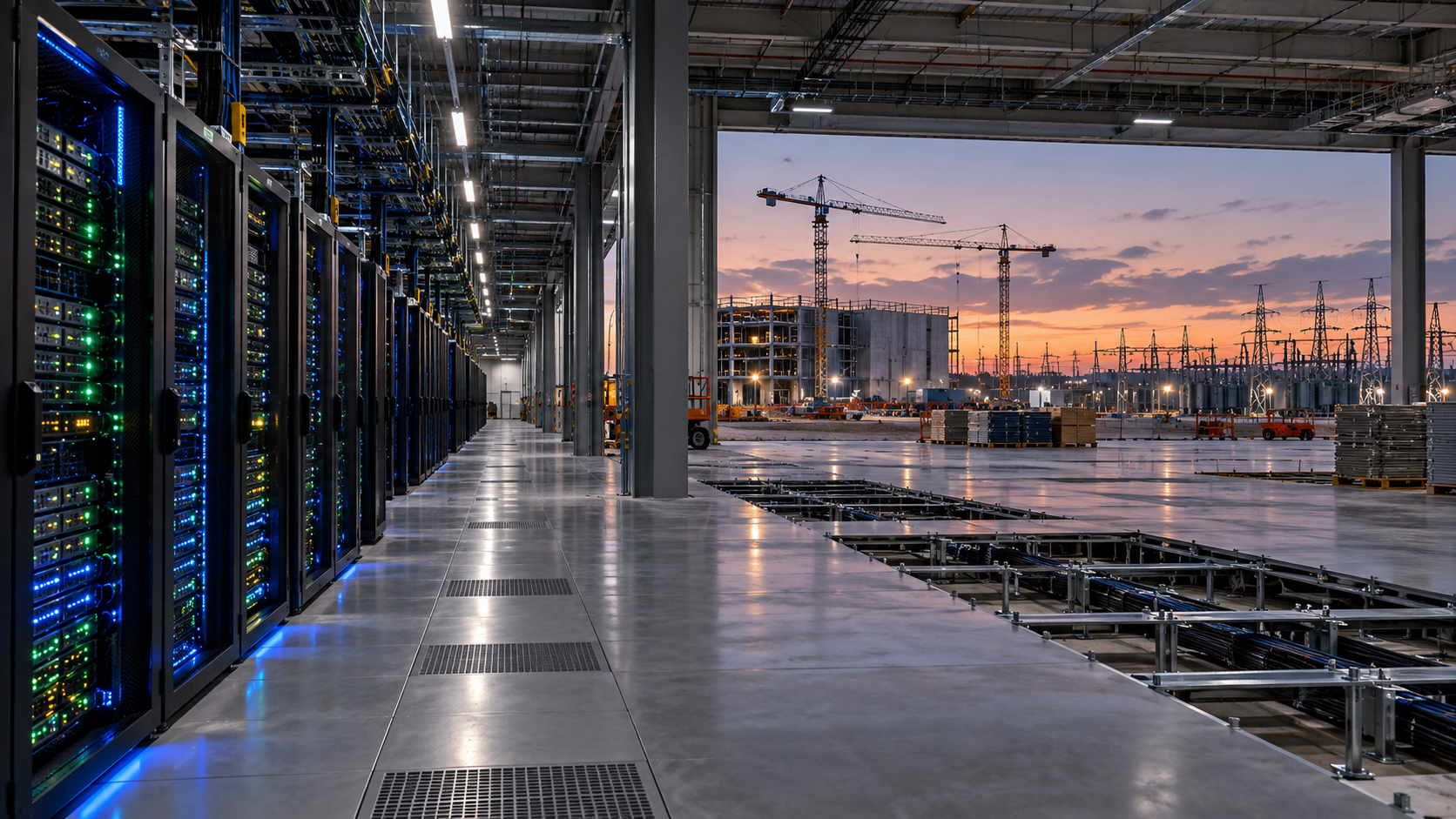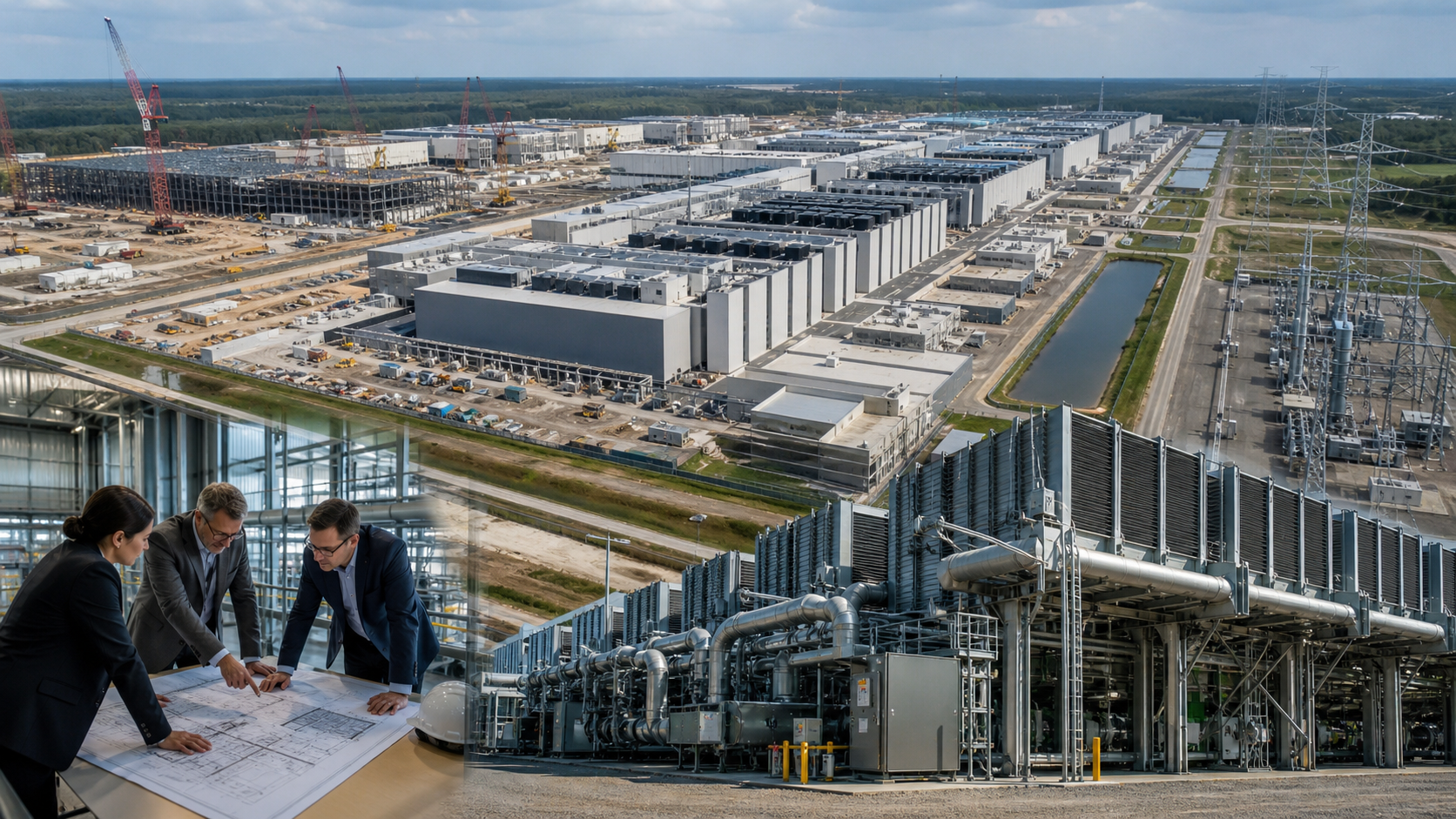
There is a habit in the AI market of talking as if intelligence were the scarce input and everything else were procurement detail. That story is getting harder to defend. The frontier still cares about algorithms, model design, and product execution, but the bottleneck shaping the industry is increasingly physical. It lives in substations, turbine schedules, cooling systems, land use approvals, and the slow, political mechanics of building enough infrastructure to run large-scale AI reliably. If you track the broader coverage on Reuters' AI and technology desk or watch the steady drumbeat of infrastructure positioning on Google's AI blog, the pattern is obvious: the race is no longer just who can design the smartest model. It is who can convert capital into sustained compute.
This matters because the industry is moving from a software narrative to an industrial one. In the early phase of an AI cycle, software advantages dominate the story. Better training methods, better product interfaces, better distribution. As systems scale and demand hardens, the center of gravity shifts. Suddenly, lead times matter. Utility relationships matter. Financing structures matter. A datacenter delayed by permitting or interconnection is not a minor operational nuisance; it is deferred product capacity. A shortage of transformers or cooling equipment is not an abstract supply-chain anecdote; it is a direct constraint on how much inference you can sell and how quickly you can train the next model.
Capital now behaves like product strategy
That shift changes what a moat looks like. For years, AI commentary was obsessed with model weights, open versus closed ecosystems, and benchmark supremacy. Those debates still matter, but they can distract from the fact that infrastructure access has become a strategic asset in its own right. The companies with the strongest positions may not simply be the ones with better model research. They may be the ones that can secure long-term power, deploy capacity predictably, and survive a world where AI demand arrives in lumpy waves rather than smooth curves. That is less romantic than talking about emergent reasoning. It is also how real industries mature.
There is a useful historical rhyme here. Every major computing era eventually discovers that abstraction depends on physical discipline. Cloud looked lightweight until everyone realized the winners were also experts in datacenter operations, network design, and capital planning. AI is following a similar path, only faster and with a heavier power footprint. The fashionable fiction is that all software businesses can remain asset-light if they outsource enough. The reality is that in a compute-constrained market, someone always has to own the industrial problem. If not you, then your margin structure will depend on whoever does.
This has strategic consequences for different kinds of companies. The biggest model providers are pulled toward vertical integration because they need tighter control over cost, latency, and supply certainty. Large platforms and hyperscalers gain leverage because they already understand capacity planning at planetary scale. Meanwhile, smaller AI startups face a more interesting choice than the usual build-versus-buy cliché. They can either spend energy pretending to compete in a brute-force infrastructure race they are unlikely to win, or they can design businesses that are intentionally compute-efficient, domain-specific, and priced around scarce expertise rather than raw token throughput.
That second path deserves more respect. Not every serious AI company needs to become a mini-hyperscaler. In fact, many should do the opposite: treat abundant generic model capability as a utility and build advantage in workflow control, proprietary context, domain trust, and careful human integration. The industry will create plenty of value in those layers. But founders and investors need to be honest about what they are not controlling. If your economics depend on cheap, always-available frontier inference that someone else must finance, permit, cool, and power, then your business is less software-native than your pitch deck suggests.
There is also a policy angle that executives underestimate. Infrastructure expansion is not purely a private-sector optimization problem. It runs into community concerns, environmental review, labor availability, transmission buildout, and the ordinary friction of regional politics. That means AI competition will not be determined only by clever engineers and large balance sheets. It will also be shaped by which companies can build legitimate local relationships and operate credibly in heavily constrained physical systems. Reading the institutional framing in places like MIT Technology Review's AI coverage alongside official updates from OpenAI, you can see the same tension emerging: the software ambition is global, but the infrastructure reality is stubbornly local.
What this means for the rest of the market
For customers, this industrial turn should prompt more skepticism about simple price narratives. Cheap access today does not guarantee cheap access tomorrow if the provider's capacity assumptions break. Reliability, queueing behavior, regional availability, and service priority will matter more than many buyers expect. For boards and operators, it means AI strategy can no longer be separated from infrastructure strategy. The wrong computing dependencies can become a hidden source of product risk. For investors, it means a lot of supposed differentiation will prove cyclical, while boring-seeming advantages in energy access and deployment discipline compound over time.
The most interesting thing about the current AI market is not that it is becoming more magical. It is that it is becoming more physical. The industry is discovering that intelligence at scale is an infrastructure business wearing a software narrative. That does not diminish the importance of research. It clarifies the real contest. The next durable winners will be the companies that can translate ambition into megawatts, steel, permits, and dependable service. Everyone else will be building on top of someone else's industrial competence, whether they admit it or not.
Advertisement