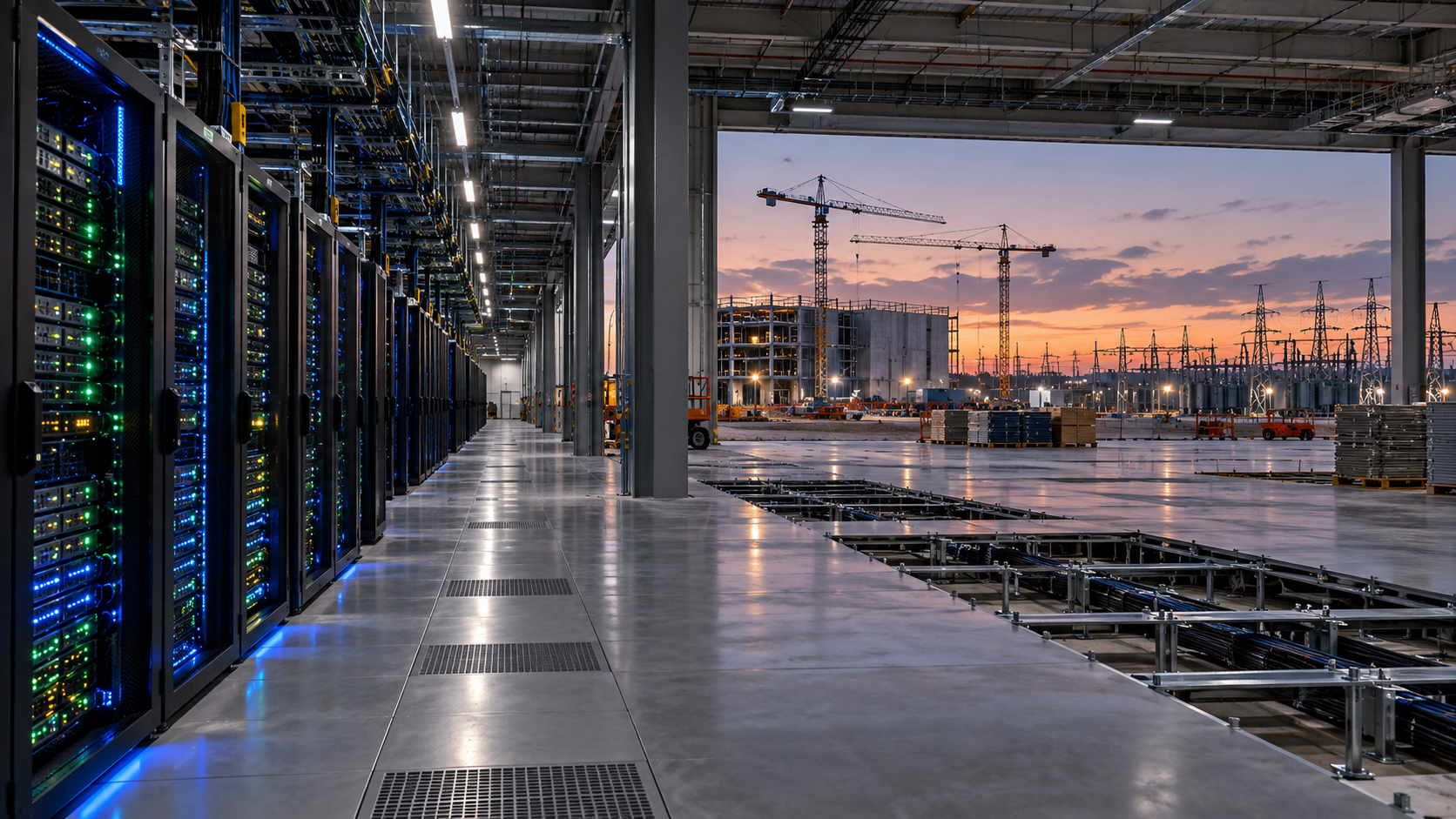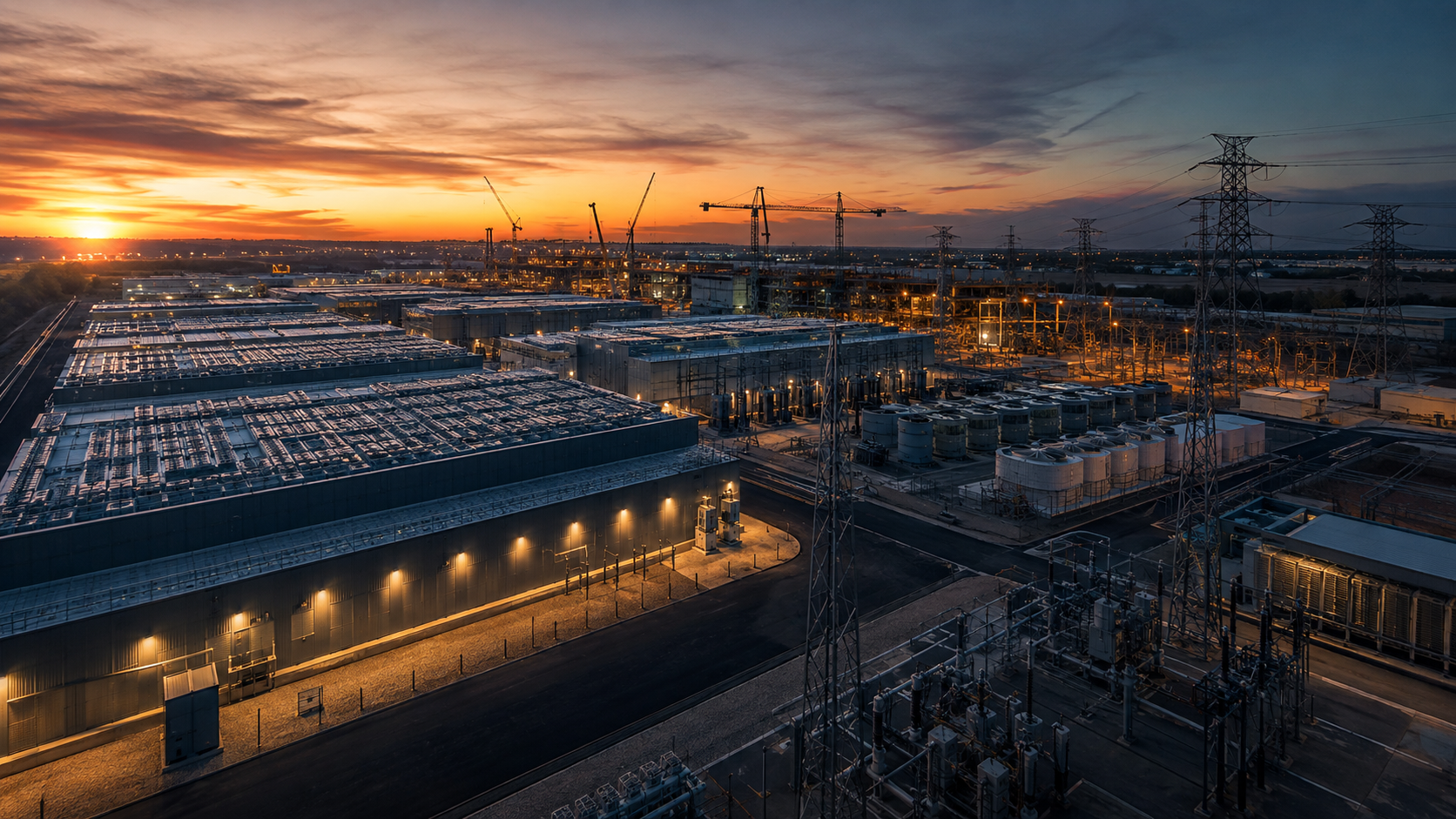
There is a comfortable fiction in AI commentary that software remains the center of gravity and everything else is support. The model is the star; chips, power, permits, water, debt, and transmission are background logistics. That framing no longer matches the market. AI is turning into an infrastructure business in plain sight, and the companies that understand this earliest are changing the terms of competition.
You can see the argument stated openly in OpenAI's recent writing on the full stack: progress compounds when models, serving software, chips, data centers, and products improve together. That is not a narrow technical claim. It is a statement about industrial organization. Meanwhile, the steady flow of announcements and research on Google DeepMind's news page underscores the same reality from another angle: frontier capability is inseparable from the infrastructure required to train, deploy, and continuously refine systems at scale.
Once you accept that premise, a lot of current AI strategy starts to look different. The important question is no longer just who has the best model this quarter. It is who can sustain the feedback loop between compute supply, model improvements, product adoption, and pricing power without getting trapped by their own capital intensity. That loop is expensive, lumpy, and increasingly physical. It depends on power agreements, land, specialized construction, networking, and a tolerance for lead times that software founders historically loved to ignore.
From Cloud Spend to Capital Structure
For most of the cloud era, infrastructure could be treated as elastic. You rented what you needed, paid the bill, and abstracted away the steel and concrete. AI is weakening that abstraction. At frontier scale, compute is not just an operating expense. It is a strategic asset with supply risk, geographic constraints, and financing implications. That changes who gets to compete seriously.
The market consequence is that AI is becoming friendlier to organizations that can coordinate across layers. The advantage is not just money, although money obviously matters. It is the ability to make long-duration bets across procurement, chip relationships, data center development, enterprise distribution, and policy negotiation. Startups can still build excellent products, especially in application layers where focus beats breadth. But the idea that every layer of the stack remains equally contestable is getting harder to defend.
This is also why the current wave of discussion around data center backlash is not peripheral politics. It is core business risk. Work like SemiAnalysis's energy model has made the constraint legible in unusually concrete terms: AI demand is now translated into utility bottlenecks, generator inventories, and where the grid is likely to fall short. Communities do not experience AI as a benchmark chart. They experience it as new substations, water demands, diesel backup plans, tax incentives, and land use fights. Investors may talk about tokens per second; counties talk about roads and grid upgrades. Both are now part of the same product equation.
That should change how executives think about AI defensibility. The old story said moats would come from model weights, proprietary data, or distribution. Those still matter, but the new moat is often coordination capacity. Can a company line up financing before costs move? Can it secure power fast enough to keep deployment promises? Can it diversify suppliers without turning its platform into an integration mess? Can it keep margins intact if inference demand grows faster than expected? These are finance and operations questions, yet they increasingly determine technical roadmaps.
There is a temptation to romanticize this shift as proof that AI has matured. That is only partly true. Industrialization also introduces a different category of fragility. Big infrastructure bets are path dependent. If model efficiency improves faster than expected, some physical investments may look bloated. If demand concentrates around a few dominant interfaces, a lot of compute capacity could end up serving thinner-margin markets than planned. If regulation tightens around energy, copyright, or safety audits, the cost of being a frontier provider may rise faster than most business models assume. Industrial systems create leverage, but they also create fixed commitments that are harder to unwind than a bad SaaS motion.
That is why the smartest AI companies are not merely scaling. They are trying to preserve optionality while scaling. They want multi-provider access, custom silicon where it helps, premium infrastructure for premium workloads, cheaper paths for commoditized inference, and product design that converts efficiency gains into actual revenue rather than just lower prices. This is a sophisticated balancing act, not a brute-force spend race.
XioX's view is that the next chapter of AI competition will look less like a sprint between models and more like a contest between operating systems for capital. The winners will be able to translate technical gains into infrastructure strategy and infrastructure strategy back into product advantage. That is a harder discipline than posting a new benchmark high. It requires engineering taste, yes, but also institutional patience, financial imagination, and a very grounded understanding of the physical world. AI is still software. It is just no longer only software, and the companies that keep talking about it that way are already behind.
Advertisement